










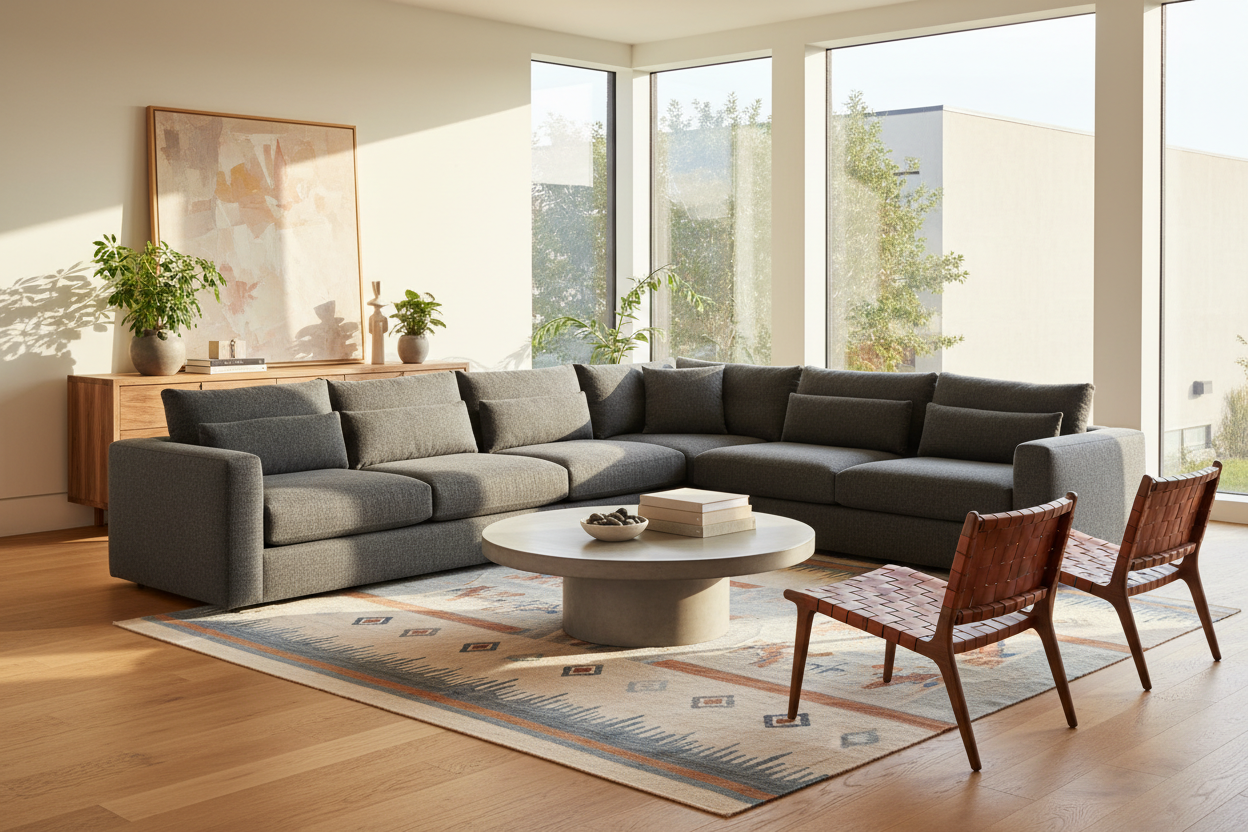
The living room anchors your home’s aesthetic, and the sofa is arguably the most critical investment piece within that space. It is where visual impact meets daily utility. Many homeowners fall into the trap of prioritizing a specific color or silhouette they saw on Pinterest, only to realize six months later that the fabric pills or the cushions have lost their loft. Finding a truly **beautiful sofa set** requires looking past the showroom styling and understanding the engineering and ergonomics beneath the upholstery.
Key Features to Look For
Before committing to a purchase, evaluate these four critical pillars of furniture quality to ensure your investment holds its value:
- Kiln-Dried Hardwood Frame: Avoid particle board or softwoods; kiln-drying prevents warping and cracking over time.
- Suspension System: Look for 8-way hand-tied springs or high-gauge sinuous springs for superior, long-lasting support.
- Cushion Fill: High-resiliency foam wrapped in down provides the best balance of structure and softness.
- Fabric Durability: Check the "double rub" count; a rating over 15,000 is necessary for residential durability.
Analyzing Silhouette and Visual Weight
When I walk a client through a floor plan, we discuss "visual weight" before we even look at fabric swatches. A beautiful sofa set must harmonize with the room's architecture, not compete with it.
The Profile
Low-profile sofas with deep seats suggest a lounge-like, contemporary vibe, perfect for open-concept spaces where you don't want to obstruct sightlines. Conversely, a tuxedo sofa (where the arms and back are the same height) offers a tailored, formal aesthetic that works beautifully in traditional sitting rooms. If your ceilings are low, avoid high-backed sofas, as they can make the room feel claustrophobic.
Leg Style and Airflow
Consider the legs. A sofa with a skirt feels grounded and substantial, adding weight to the room. Exposed legs, particularly tapered mid-century styles or sleek metal bases, create a sense of "negative space" underneath the furniture. This allows light to travel under the piece, making smaller living rooms appear significantly larger.
Material Selection: Tactility vs. Reality
The difference between a showroom piece and a livable sofa lies in the textile choice. Aesthetics are important, but maintenance is paramount.
Performance Velvets: For clients who want luxury without anxiety, I often recommend performance velvet. It offers depth and rich color saturation but cleans surprisingly well compared to cotton velvets, which are prone to crushing.
Linen and Natural Blends: Linen is breathable and offers a relaxed, organic texture. However, it wrinkles the moment you sit on it. If you prefer a crisp, architectural look, avoid 100% linen and opt for a linen-poly blend that retains shape while mimicking the natural weave.
Lessons from My Own Projects
I want to share a specific mistake from my early design days so you don't repeat it. I once specified a stunning, unstructured, "cloud-style" modular sectional for a busy family room. It looked incredible in the photos—ethereal, soft, and inviting.
However, the reality of living with it was different. Because the cushions were 100% down-filled with no foam core, the homeowners had to fluff the sofa every single time they stood up. Without constant maintenance, it looked deflated and messy, not "beautiful." Furthermore, the connector clips between the modules weren't ratcheted, so the pieces slowly drifted apart on their hardwood floors. Now, I always insist on a high-density foam core wrapped in down for that plush look without the high-maintenance "pancake" effect, and I always check the friction of the feet on the specific flooring material.
Final Thoughts
Curating a space is about balancing beauty with behavior. By focusing on the frame quality, the appropriate scale for your room, and a fabric that suits your lifestyle, you ensure that your sofa remains a centerpiece rather than a source of frustration. Choose wisely, and your living room will thank you.
Frequently Asked Questions
Q: How do I know if a sofa is too big for my room?
A: A good rule of thumb is to ensure there is at least 18 inches of walking space between the sofa and the coffee table, and at least 30 inches of clearance for main traffic paths around the sofa.
Q: What is the best color for a timeless sofa set?
A: Neutrals like taupe, charcoal, and navy are the safest investments. They allow you to change the room's palette cheaply through throw pillows and rugs without replacing the expensive upholstery.
Q: How do I read furniture cleaning codes?
A: Look for the tag under the cushion. "W" means water-based cleaners are safe; "S" means solvent-based dry cleaning only (avoid water); "WS" allows both; and "X" means vacuum only.



Dejar un comentario
Este sitio está protegido por hCaptcha y se aplican la Política de privacidad de hCaptcha y los Términos del servicio.