










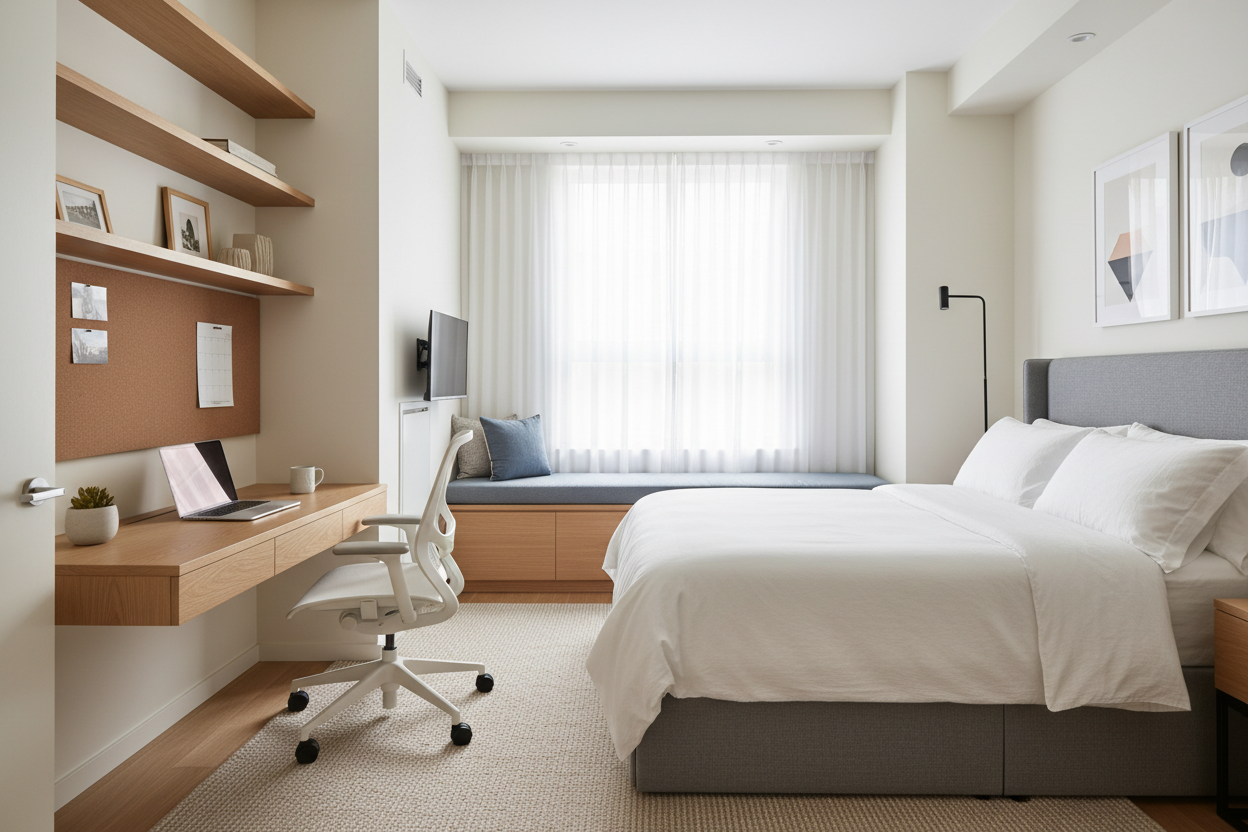
Integrating a workspace into your sanctuary is one of the most delicate balancing acts in interior design. The challenge isn't just physical space; it is psychological. How do you cultivate a mindset of productivity during the day without letting stress bleed into your restorative hours? If you are navigating the complexities of bedroom office ideas, you aren't just looking for a desk—you are looking for a way to coexist with your career.
Key Elements of a Successful Dual-Purpose Room
- Visual Zoning: Using rugs, lighting, or room dividers to psychologically separate 'work' from 'rest'.
- Scale and Proportion: Selecting a desk that complements, rather than dominates, the bed frame and nightstands.
- Concealed Storage: Ensuring paperwork and tech clutter can be completely hidden when the workday ends.
- Lighting Layers: Combining cool task lighting for focus with warm ambient lighting for relaxation.
- Ergonomics vs. Aesthetics: Finding a chair that supports lumbar health without looking like industrial office equipment.
Mastering the Layout: Zoning Your Sanctuary
The most common mistake I see in master bedroom office ideas is placing the desk strictly where it fits, rather than where it flows. To maintain the integrity of your sleeping quarters, the office corner in bedroom layouts must respect the room's circulation paths.
The Command Position
Ideally, position your desk so you have a view of the door but aren't directly in line with it. This is standard Feng Shui, but practically, it reduces anxiety. If possible, avoid facing a blank wall. Facing into the room allows you to enjoy the depth of the space, but ensure your back is to the bed to avoid the temptation of a midday nap. This setup creates a distinct office and bedroom separation.
The Floating Desk Technique
For a sophisticated master bedroom with office ideas approach, consider floating the desk in the center of the room or placing a console desk directly behind the bed's headboard (if the room length allows). This acts as a room divider and keeps the technology out of your direct line of sight when you are in bed.
Furniture Selection: Materiality and Form
When selecting pieces for home office bedroom design, the finish is paramount. A cold, melamine white desk often screams "corporate cubicle." Instead, lean into materials that bridge the gap between utility and comfort.
The Desk: Solid Wood vs. Veneer
For a bedroom home office, I often recommend walnut or oak solids. Natural wood grain adds warmth that complements bedding textures. If you are tight on space, a glass top desk can reduce visual weight, making a small space feel less cluttered. However, be wary of glass if you are sensitive to fingerprints or cold surfaces.
The Chair Dilemma
The chair is where bedroom office decorating ideas often fail. A massive, black mesh high-back chair ruins the serene vibe of a bedroom. Look for 'executive dining chairs' or mid-century modern task chairs upholstered in bouclé, velvet, or high-quality leather. They offer decent support for an 8-hour day but read as furniture, not machinery.
Lighting and Ambiance
Lighting defines the mood. Your bedroom office set up requires a dedicated task lamp—preferably one with a dimmer and adjustable color temperature. During the day, a cooler light (4000K) boosts alertness. In the evening, switching to the room's ambient lamps (2700K) signals the brain that the workday is over. Avoid relying solely on the overhead fixture, which flattens the room and creates harsh shadows.
Lessons from My Own Projects
I learned a hard lesson about office in bedroom ideas regarding 'visual noise' a few years ago. I designed a stunning custom built-in desk for a client's guest suite. It looked incredible in photos. However, two weeks later, the client called me complaining about insomnia. The culprit? The tiny, blinking standby LED lights on the monitor and the printer.
I hadn't accounted for the fact that even with the devices 'off,' the peripherals were creating light pollution directly in her line of sight from the pillow. We ended up having to install a dedicated power kill-switch inside a cabinet to ensure total darkness. Now, whenever I plan an office with bed layout, I always sit on the bed myself to check what tech is visible. If I can see a router light or a messy tangle of cords, the design isn't finished. It’s these unpolished details that determine whether you sleep soundly or wake up thinking about emails.
Conclusion
Designing a bedroom and office space is less about squeezing furniture in and more about curating a lifestyle. By prioritizing concealment, selecting residential-grade finishes, and respecting the lighting hierarchy, you can create a work from home space in bedroom environments that serve your ambition without sacrificing your rest.
Frequently Asked Questions
How do I hide my computer in a bedroom office?
Invest in an armoire desk or a secretary desk with a fold-down front. These bedroom office design ideas allow you to physically close off your workspace at the end of the day, signaling a mental transition from work to rest.
Can a bedroom office work in a small room?
Absolutely. For office space in bedroom ideas where square footage is tight, utilize vertical space with wall-mounted shelving units that include a drop-down desk surface. Ghost chairs (acrylic) are also excellent as they disappear visually.
What is the best color for a bedroom office?
Stick to calming neutrals or deep, moody tones like sage green or navy. Avoid high-energy colors like red or bright yellow in office bedroom designs, as they can inhibit sleep quality.
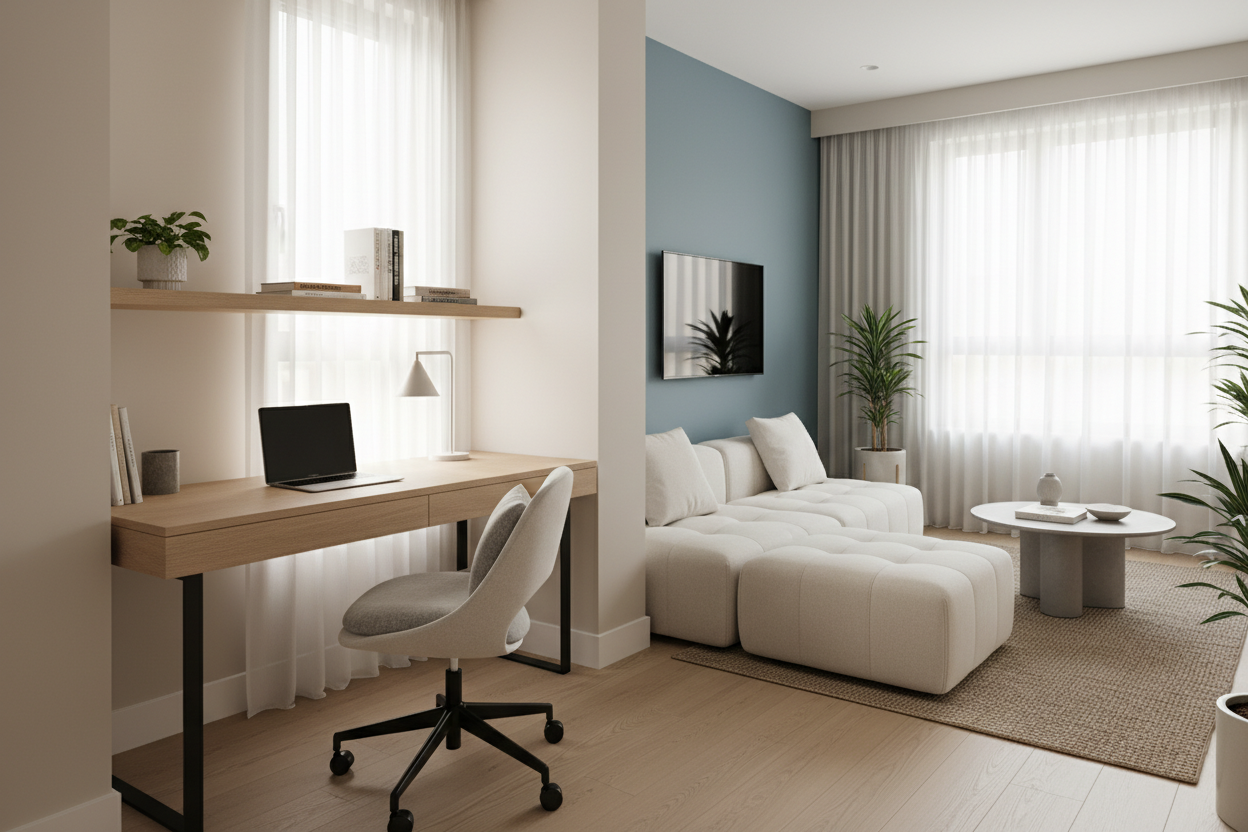

Dejar un comentario
Este sitio está protegido por hCaptcha y se aplican la Política de privacidad de hCaptcha y los Términos del servicio.