










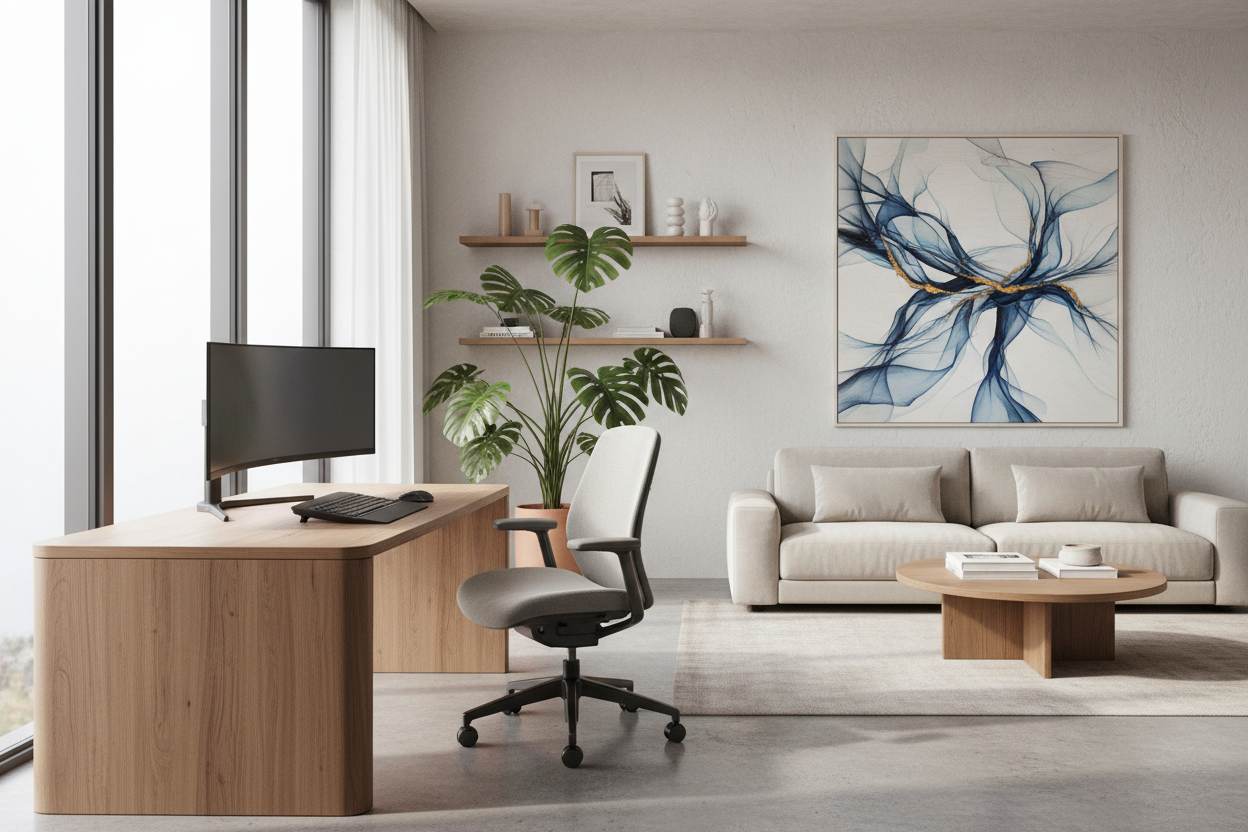
Staring at a chaotic, uninspired workspace kills creativity faster than a looming deadline. We have all been there: trying to find focus in a room that feels disjointed, cluttered, or simply outdated. A truly effective workspace isn't just about a desk and a chair; it is about creating an environment that facilitates deep work while looking impeccable. This is where the contemporary modern office shines—blending the clean lines of modernism with the warmth and adaptability of current design trends.
Key Elements of a Modern Workspace
- Ergonomics First: Prioritize chairs with lumbar support and adjustable height over purely sculptural pieces.
- Material Palette: Look for a mix of natural woods (walnut, white oak) and industrial metals (matte black, brushed brass).
- Lighting Layers: Combine ambient overhead lighting with focused, adjustable task lighting.
- Negative Space: Embrace open floor areas to reduce visual noise and promote mental clarity.
- Tech Integration: Select furniture with hidden cable management to maintain a sleek silhouette.
Defining the Aesthetic: Sleek yet Livable
Many clients confuse "modern" with "sterile." In a contemporary context, we are moving away from the cold, hospital-like white glossy finishes of the early 2000s. Today, it is about warm minimalism. We want the silhouette of the furniture to be sharp and geometric, but the textures should invite touch.
Choosing the Right Desk Surface
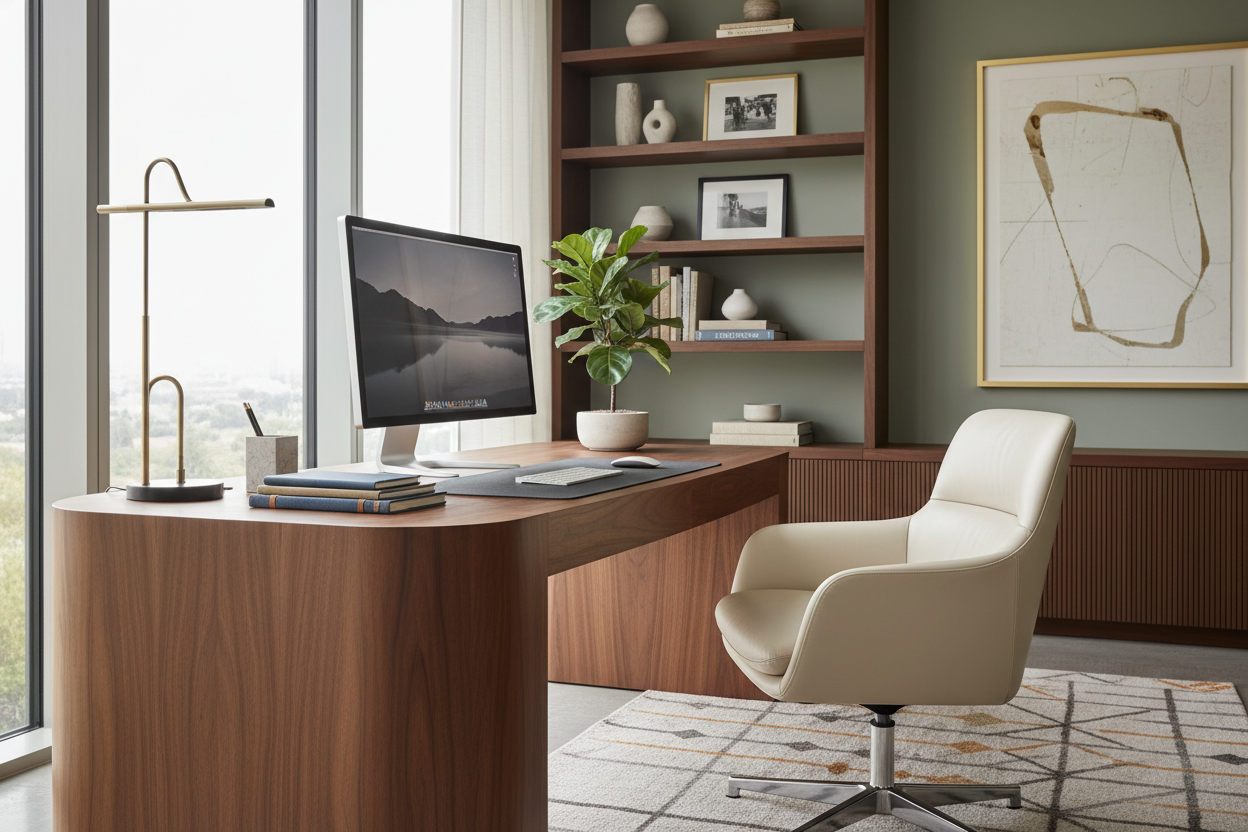
The desk is your command center. For a contemporary look, a "floating" top design—where the surface appears separated from the legs—adds immediate visual lightness.
Regarding materials, solid wood offers longevity and character that veneer simply cannot match. However, high-quality matte laminates (like Fenix) are increasingly popular in high-end design because they are soft to the touch and resist micro-scratches. Avoid glass tops if you plan on working long hours; they are cold on the wrists and create distracting reflections.
Visual Balance and Layout
In a contemporary modern office, where you place furniture is just as critical as what you buy. The goal is flow.
The Power of Asymmetry
Avoid the rigid symmetry of traditional studies. Place your desk slightly off-center or balance a heavy storage credenza on one side with a large, potted fiddle leaf fig or a floor lamp on the other. This creates a dynamic tension that keeps the eye moving and makes the room feel larger.
Storage Solutions
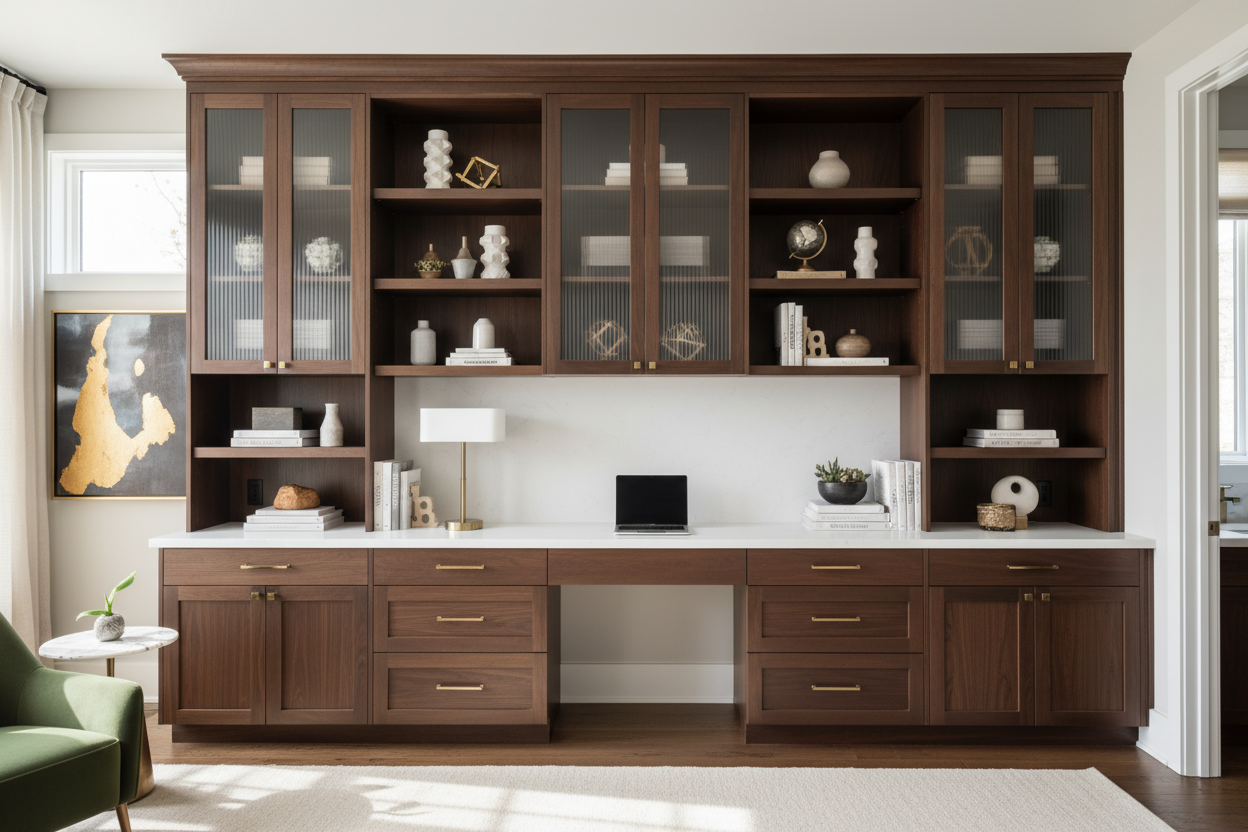
Clutter is the enemy of modern design. Opt for low-profile credenzas rather than tall, looming bookshelves. This keeps the sightlines open. Look for units with "push-to-open" hardware to eliminate handle clutter, maintaining that seamless, architectural look.
Lighting: The Unsung Hero
You cannot rely on a single ceiling fixture. A contemporary office requires a lighting scheme that mimics natural daylight. A sleek, architectural task lamp with a warm LED bulb (2700K-3000K) is essential. It provides focus without the harsh blue light that causes eye strain. Consider a floor lamp with a linen shade in the corner to soften the hard edges of your desk and cabinets.
Lessons from My Own Projects
I want to share a specific mistake I made early in my career—and one I see homeowners make constantly. I once designed a home office entirely around a stunning, matte black laminate desk and matching shelving. It looked incredible in the portfolio photos.
However, living with it was a different story. Within a week, I realized that matte black finishes are magnets for skin oils. Every time I rested my hand on the desk, it left a smudge. I spent more time wiping the surface than working. Furthermore, dark surfaces absorb light, making the room feel smaller as the sun went down.
Now, when I curate a contemporary modern office, I almost always steer clients toward mid-tone woods or textured greys for the primary work surface. They hide dust and fingerprints forgivingly. I save the matte black for the chair frame or the lamp legs—places you don't constantly touch. It is these unpolished, practical details that determine whether a room is just for show or actually usable.
Designing for Longevity
Creating a workspace that resonates with your personal style while boosting productivity is an investment in your career and mental well-being. By focusing on tactile materials, ergonomic integrity, and smart lighting, you build a space that evolves with you.
Frequently Asked Questions
What is the difference between modern and contemporary office design?
"Modern" refers to a specific time period (mostly mid-20th century) featuring specific styles like Mid-Century Modern. "Contemporary" is fluid—it is what is happening right now. A contemporary office might mix a vintage modern chair with a current, high-tech standing desk.
How do I add warmth to a modern office without clutter?
Texture is key. Add a low-pile wool rug, use acoustic felt panels on the wall, or choose a desk chair upholstered in fabric rather than mesh. These elements absorb sound and soften the visual hardness without adding physical clutter.
Is a standing desk necessary for a contemporary office?
It is not mandatory, but it is highly recommended for health. If you dislike the look of mechanical standing desks, look for models with concealed motors and solid wood tops that mimic the look of a traditional writing table.

Dejar un comentario
Este sitio está protegido por hCaptcha y se aplican la Política de privacidad de hCaptcha y los Términos del servicio.