










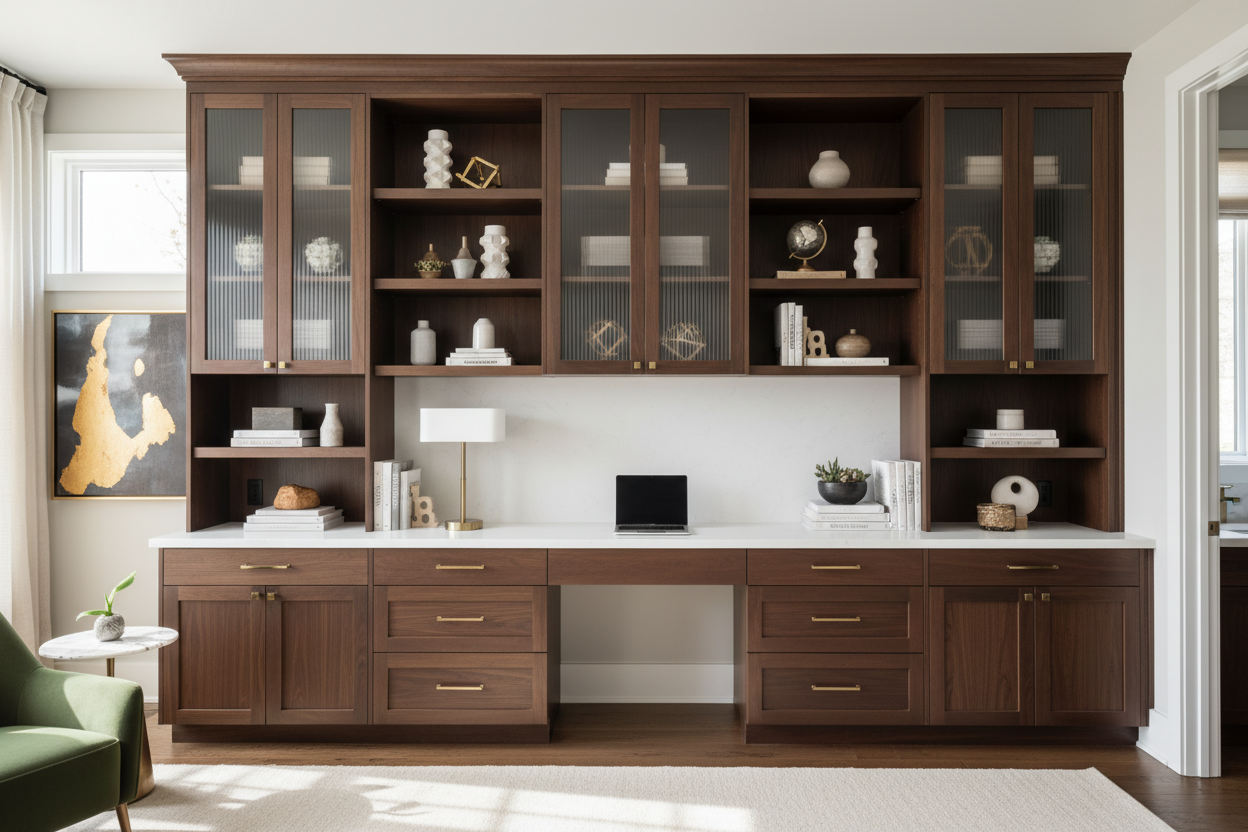
There is a distinct difference between a workspace that feels like a chaotic storage unit and one that feels like a curated executive suite. The secret rarely lies in the desk you choose, but rather in the perimeter—specifically, the millwork. As a designer, I see many homeowners treat cabinetry as an afterthought, buying generic boxes to hide clutter. However, the best office room cabinet ideas do more than store paper; they anchor the room's architecture and define its aesthetic.
Key Features to Look For
Before committing to a purchase or a custom build, review this checklist to ensure your cabinetry meets professional standards:
- Depth Requirements: Ensure shelves are at least 12-14 inches deep if you plan to store standard binders or large reference books.
- Material Core: Look for plywood or solid wood construction over particle board to prevent sagging under heavy file loads.
- Hardware Quality: Opt for soft-close hinges and full-extension drawer slides for daily ergonomic comfort.
- Cable Management: Verify there are pre-drilled grommets or routed channels for printers and charging stations behind closed doors.
Balancing Visual Weight with Office Wall Cabinet Ideas
One of the most frequent errors in home office design is "bottom-heaviness." If you line the floor with heavy credenzas and leave the walls bare, the room feels unbalanced. Conversely, floor-to-ceiling cabinetry in a small room can feel claustrophobic.
To solve this, I often recommend a hybrid approach to office wall cabinet ideas. Use closed cabinetry on the lower half to hide unsightly items (routers, paper reams, cables) and open shelving or glass-fronted cabinets on the upper half. This reduces the visual weight of the furniture. If you are working with a compact footprint, consider floating wall cabinets. By keeping the floor visible beneath the unit, you trick the eye into perceiving the room as larger than it actually is.
Materiality and Texture
In a commercial setting, durability is king. in a residential office, texture is the priority. Avoid high-gloss lacquers if you are placing cabinets near a window; the glare can be distracting during the workday. Instead, lean towards matte finishes or natural wood veneers like walnut or white oak. These materials absorb light and add warmth, preventing the space from feeling sterile.
Integrating Office Cabinet Decor
Once the structure is in place, styling is what separates a showroom look from a lived-in home. When approaching office cabinet decor, apply the concept of "negative space." Do not fill every inch of an open shelf. Group items in odd numbers (threes or fives) and mix textures—place a ceramic vase next to leather-bound books and a metallic sculptural object. This variation keeps the eye moving and prevents the cabinetry from looking like a library archive.
Lessons from My Own Projects
I want to share a specific mistake I made early in my career so you don't have to repeat it. I was designing a custom built-in for a client who was a lawyer. We designed these beautiful, sleek shelves with a depth of 11 inches to keep the room feeling airy. It looked perfect on the blueprints.
However, once we installed it, we realized that standard legal binders and arch-lever files are often 11.5 to 12 inches deep. When the client loaded his files, every single binder hung over the edge of the shelf by half an inch. It ruined the clean lines we had worked so hard to achieve and looked messy. Now, I never specify a shelf depth less than 13 inches for an office, and I always measure the client's actual equipment—printers specifically—before finalizing the millwork drawings. Also, watch out for "push-to-open" hardware on lower cabinets; if you sit in a rolling chair, you will accidentally pop them open with your knees constantly. Stick to handles for the lower units.
Conclusion
Investing in the right cabinetry transforms your office from a temporary workspace into a permanent, value-adding part of your home. By focusing on proper depth, balancing visual weight, and selecting matte finishes, you create a space that promotes focus rather than distraction. Measure twice, consider your workflow, and build for longevity.
Frequently Asked Questions
What is the ideal depth for office cabinets?
For upper wall cabinets, 12 inches is standard. For lower base cabinets, 18 to 24 inches is preferred to accommodate printers and provide a substantial work surface if needed.
Should I choose custom built-ins or freestanding units?
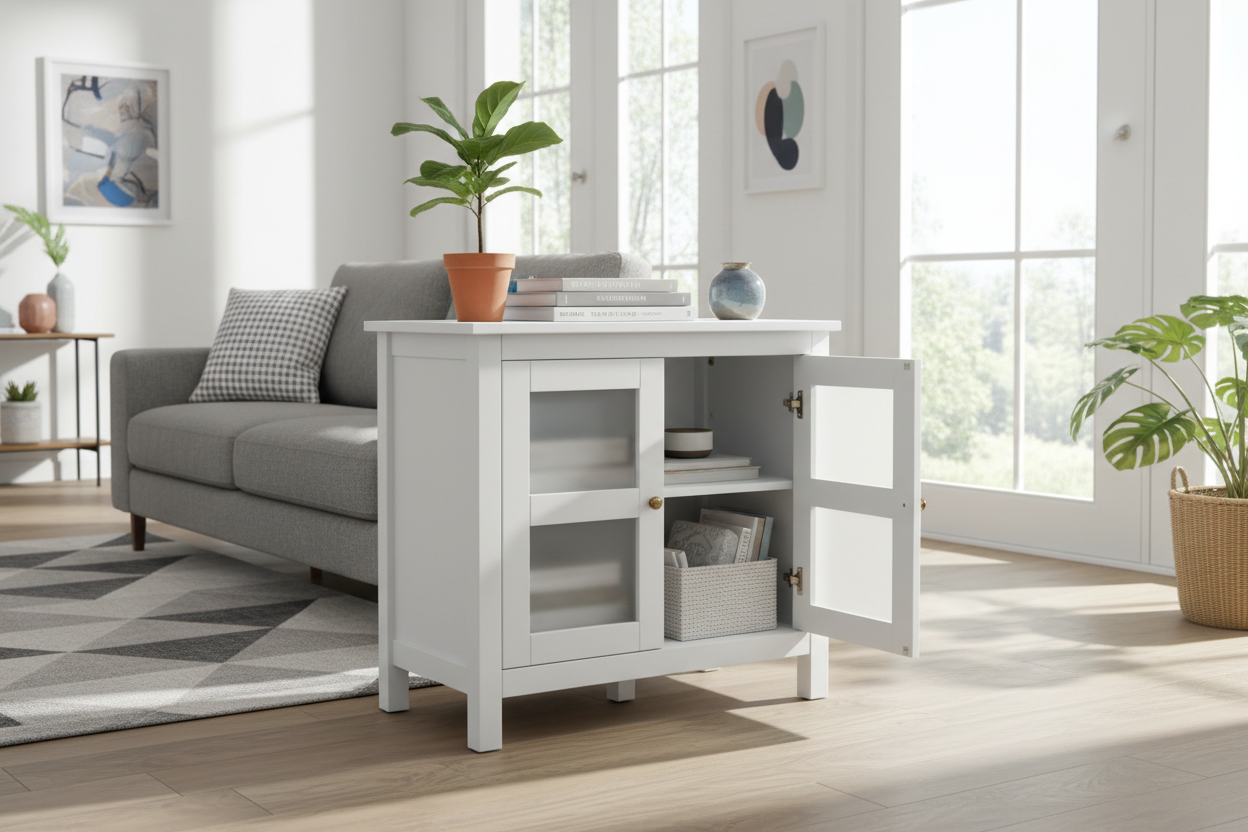
Built-ins offer a high-end, seamless look and maximize every inch of space, making them ideal for odd-shaped rooms. Freestanding units are flexible and budget-friendly but may leave awkward gaps that collect dust.
How do I light my office cabinets?
LED strip lighting routed into the underside of shelves (channels) provides excellent ambient light. For glass-front cabinets, consider interior puck lights to highlight decor items.

Dejar un comentario
Este sitio está protegido por hCaptcha y se aplican la Política de privacidad de hCaptcha y los Términos del servicio.