











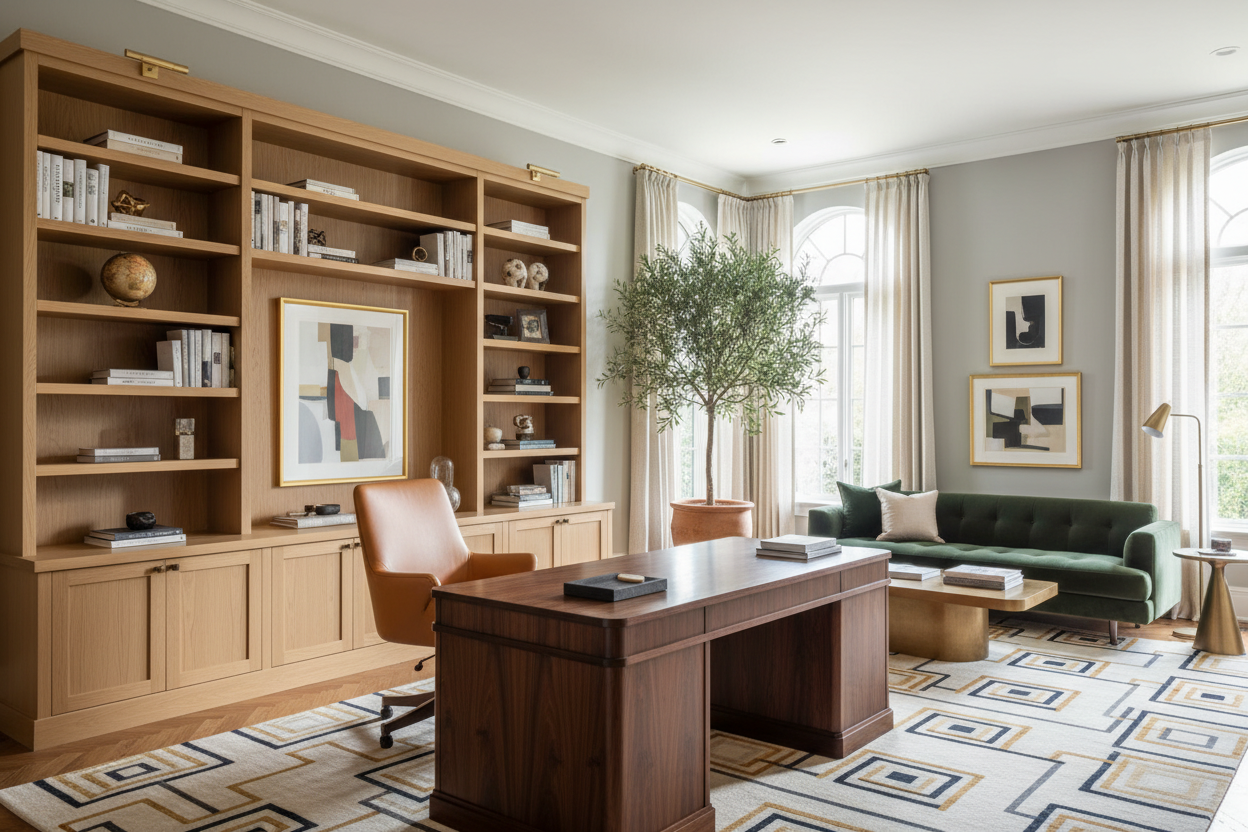
There is a distinct difference between a workspace that simply functions and one that inspires. As a designer, I often see clients prioritize utility to the point of sterility, or conversely, prioritize decor to the point of clutter. The secret to a truly sophisticated office room aesthetic lies in the tension between these two forces: visual serenity and ergonomic integrity. It is not about buying the most expensive desk; it is about curating a narrative that signals to your brain that it is time to focus, without sacrificing the warmth of a well-lived-in space.
Key Elements for a Cohesive Workspace
- Visual Weight: Balancing heavy furniture (like solid wood desks) with lighter elements (glass shelving or slender legs) to avoid a cramped feel.
- Texture Layering: Mixing materials like leather, metal, and textiles to prevent the space from feeling flat or clinical.
- Lighting Temperature: Utilizing 3000K-4000K bulbs for alertness, layered with warmer accent lights for evening ambiance.
- Ergonomic Integration: Selecting chairs and desks where the mechanism is hidden or beautifully integrated into the silhouette.
- Cable Management: Ensuring technology supports the workflow without disrupting the visual lines of the room.
Defining Your Design Narrative
Before selecting a single piece of furniture, we must establish the mood. An aesthetic home office design should reflect your workflow. If you are a creative director, you might lean towards maximalism—rich velvets, dark walnut, and gallery walls that spark ideation. If you are a financial analyst, a Japandi or Minimalist approach with clean lines, light oak, and negative space might better serve your need for clarity.
The goal is to create a backdrop that looks curated, not staged. This means avoiding matching furniture sets, which often look generic. Instead, we aim for a collected look—pairing a vintage rug with a modern glass desk, for instance.
The Materiality of Focus: Choosing Your Desk
The desk is the anchor of your aesthetic office design. The material you choose dictates the room's tactile experience.
Solid Wood vs. Veneer
In high-end design, we often debate the merits of solid wood versus veneer. Solid wood offers longevity and the ability to refinish the surface over decades. It develops a patina—a subtle sheen and character—that tells the story of its use. However, high-quality architectural veneers (often applied over MDF) are actually superior for stability in fluctuating climates, preventing the warping that can occur with solid slabs. For a luxury aesthetic, look for "book-matched" veneers where the grain mirrors itself, creating a stunning visual pattern.
Lighting: The Invisible Architecture
Bad lighting kills good design. To achieve a sophisticated atmosphere, you must banish the single overhead ceiling fixture. Instead, employ a three-point lighting strategy:
- Task Lighting: An articulated desk lamp with a high CRI (Color Rendering Index) to reduce eye strain.
- Ambient Lighting: Soft, diffused light from floor lamps or architectural cove lighting to soften shadows.
- Accent Lighting: A picture light over artwork or LED strips in shelving to add depth and drama.
Ergonomics Hidden in Style
The most common failure in DIY office design is the chair. The iconic Eames Aluminum Group chair is popular not just for its silhouette, but because its suspension creates a "sitting pocket." However, if you require lumbar support for 8-hour days, look for high-performance task chairs that offer aesthetic customization. Many high-end manufacturers now offer performance fabrics like commercial-grade wool or breathable mesh in monochromatic tones, allowing you to ditch the hideous black plastic look while maintaining spinal health.
My Personal Take on Office Room Aesthetic
I learned a hard lesson about "aesthetic over function" early in my career during a project for a tech executive. We selected a stunning, high-gloss white lacquer desk that looked incredible in the renderings. It was the centerpiece of the room.
Two weeks after installation, the client called me. The issue wasn't the look—it was the usability. The high-gloss finish acted like a mirror for the overhead lighting, creating a constant, subtle glare that caused eye fatigue. Furthermore, every single fingerprint, coffee cup ring, and speck of dust was visible instantly. It became a source of anxiety rather than a tool for work.
Since then, I always steer clients toward matte or satin finishes for horizontal work surfaces. We swapped that desk for a honed marble top with a leather writing inlay. It absorbed the light rather than reflecting it, and the leather provided a tactile warmth that glass and lacquer simply cannot provide. A true aesthetic triumph is one that ages gracefully with your daily routine, not one you have to police with a microfiber cloth.
Conclusion
Your workspace determines the quality of your output. By thoughtfully selecting materials that age well, layering your lighting, and prioritizing ergonomic pieces that don't scream "corporate," you can build a space that pulls you in. Invest in pieces that feel good to the touch and easy on the eyes.
Frequently Asked Questions
How do I make a small office look aesthetic but spacious?
Focus on "leggy" furniture. Desks and chairs with slender legs reveal more floor space, tricking the eye into thinking the room is larger. Also, use a large mirror to reflect light and double the visual depth of the room.
What is the best color palette for productivity?
While subjective, color psychology suggests that greens (Sage, Olive) reduce eye fatigue and promote calmness, while deep blues aid in concentration. Avoid overly bright reds or yellows for main walls, as they can induce anxiety over long periods.
Is it worth investing in a custom rug for a home office?
Absolutely. A rug anchors the furniture, improves acoustics by dampening echo (essential for video calls), and adds immediate texture. Ensure the rug is large enough that your chair casters don't constantly roll off the edge, or choose a low-pile flatweave for smooth movement.


Dejar un comentario
Este sitio está protegido por hCaptcha y se aplican la Política de privacidad de hCaptcha y los Términos del servicio.