










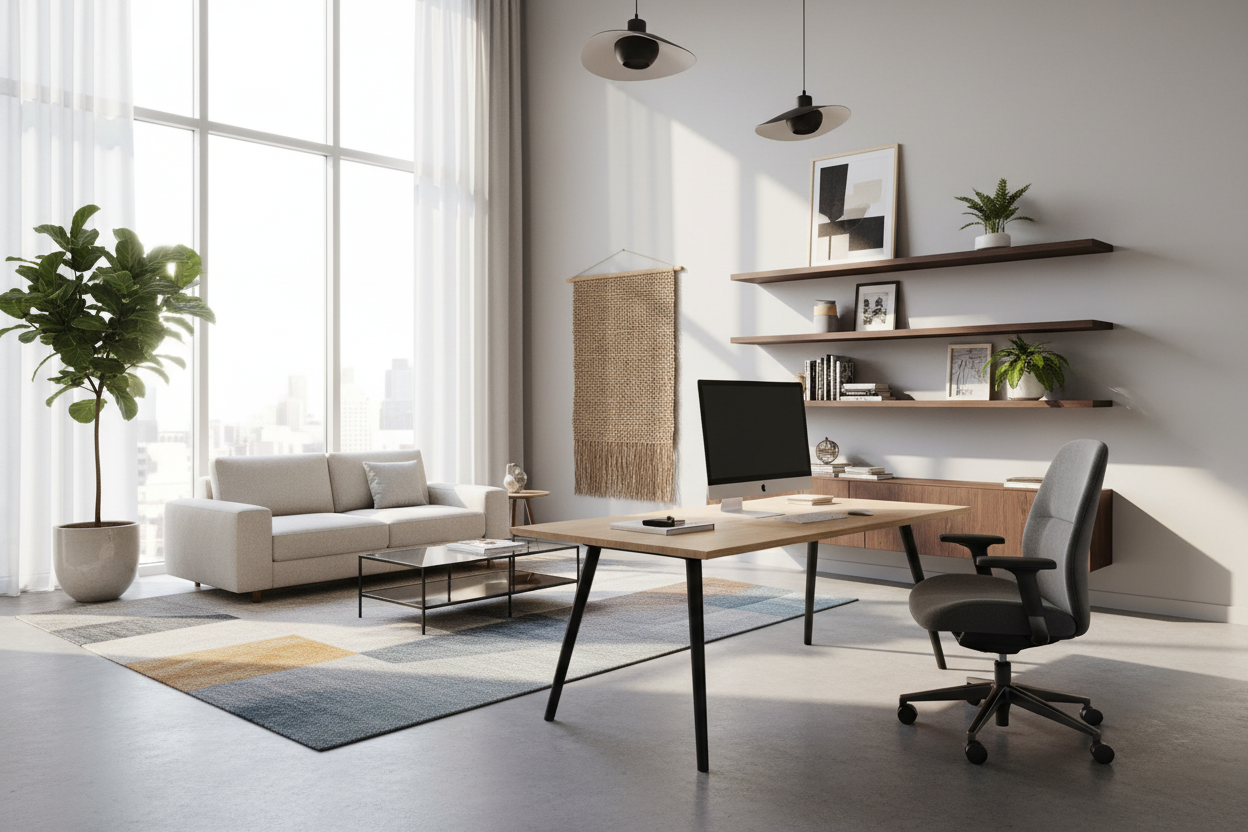
We have all seen the Pinterest boards: pristine, monochromatic workspaces that look stunning but feel sterile. The challenge isn't finding furniture; it is creating an environment that balances high-end aesthetics with the grueling reality of an eight-hour workday. A truly successful design takes office ideas modern conventions—clean lines, minimalism, open space—and injects them with warmth and ergonomic utility. This guide will walk you through curating a space that commands respect without sacrificing comfort.
Key Elements of a Modern Workspace
- Ergonomic Integrity: Prioritize chairs with lumbar support and adjustable depth over purely sculptural pieces.
- Material Contrast: Mix cold elements (glass, steel) with warm textures (walnut, leather, wool) to avoid a clinical look.
- Lighting Layers: Incorporate ambient, task, and accent lighting to reduce eye strain and define the room's mood.
- Hidden Tech: seamless cable management is the hallmark of a sophisticated office; visible wires kill the modern aesthetic immediately.
Selecting the Right Foundation: Modern Office Furniture Ideas
When selecting your primary pieces, think about the silhouette and visual weight. In a modern office, the desk is the anchor. For a sophisticated office, move away from heavy, blocky mahogany desks of the past. Instead, look for floating tops or desks with slender metal legs that allow light to pass through, making the room feel larger.
The Desk: Material Matters
While tempered glass is a staple of modern office inspiration, it can feel cold to the touch and creates harsh acoustic reflections. I often steer clients toward matte-finished wood veneers or linoleum-topped desks. These materials offer a soft, tactile surface that is comfortable for your wrists while absorbing sound. If you insist on a stone look, opt for honed quartz over polished marble to reduce glare from your monitors.
The Chair: Function Meets Form
This is where many modern office setup ideas fail. Do not buy a dining chair for your desk just because it matches the drapes. Look for performance seating that hides its mechanisms. Brands like Herman Miller and Steelcase now offer high-performance chairs in fabric options that feel residential rather than corporate. The goal is a chair that supports your posture for distinct work phases: deep focus, reading, and video conferencing.
Layout and Flow: Beyond the Wall
The most common mistake I see is pushing the desk directly against a wall. This limits your visual depth and creates a claustrophobic "time-out" feeling. To elevate the space, position your desk in the "command position"—facing the door, ideally floating in the center of the room or perpendicular to a window. This layout asserts authority and allows you to curate the background visible during video calls, turning your shelving into a deliberate focal point rather than storage overflow.
Lighting: The Invisible Architecture
Lighting dictates the energy of the room. A single overhead fixture is insufficient. You need a 4000K (cool white) task lamp for focused work, but the ambient lighting should be warmer (3000K) to make the space inviting. Consider architectural track lighting or a sleek, linear pendant above the desk to define the work zone without cluttering the surface.
Lessons from My Own Projects: The "Soft-Touch" Trap
I want to share a specific lesson from a project I designed last year for a tech executive. We went all-in on the "matte black" trend, selecting a stunning desk and cabinetry with a "soft-touch" laminate finish. It looked incredible on installation day—absolutely seamless and absorbing light beautifully.
However, two months later, I visited for a follow-up. The surfaces were a map of oily fingerprints. Every time the client touched the desk, it left a mark that required a specific solvent to clean. It drove him crazy. The lesson? If you want that dark, moody modern look, choose a textured wood grain (like ebonized oak) or a high-quality Fenix material that is actually anti-fingerprint. Do not just buy the look; buy the maintenance reality. A workspace that requires constant cleaning is not a productive one.
Final Thoughts
Designing a modern office is about subtraction as much as addition. It is about removing visual noise so your mind can focus. By investing in tactile materials, proper lighting, and a layout that breathes, you create more than just a place to work—you create a space that respects your time and your taste.
Frequently Asked Questions
How do I integrate storage without ruining the minimal look?
Focus on closed storage. Open shelving should be reserved for decor and books you want to display. For files and tech, use low-profile credenzas with push-to-open doors to eliminate hardware visual clutter.
Can I mix vintage pieces with modern office furniture?
Absolutely. In fact, adding a vintage rug or a mid-century modern lounge chair adds soul to the room. The key is keeping the color palette cohesive so the eras blend rather than clash.
What is the best way to handle cables in a floating desk setup?
If your desk is floating, you cannot hide wires behind it. Use a floor-mounted outlet box if possible. If not, run a cord cover painted the same color as your floor, and mount a cable tray specifically to the underside of the desk to house your power strip.

Dejar un comentario
Este sitio está protegido por hCaptcha y se aplican la Política de privacidad de hCaptcha y los Términos del servicio.