










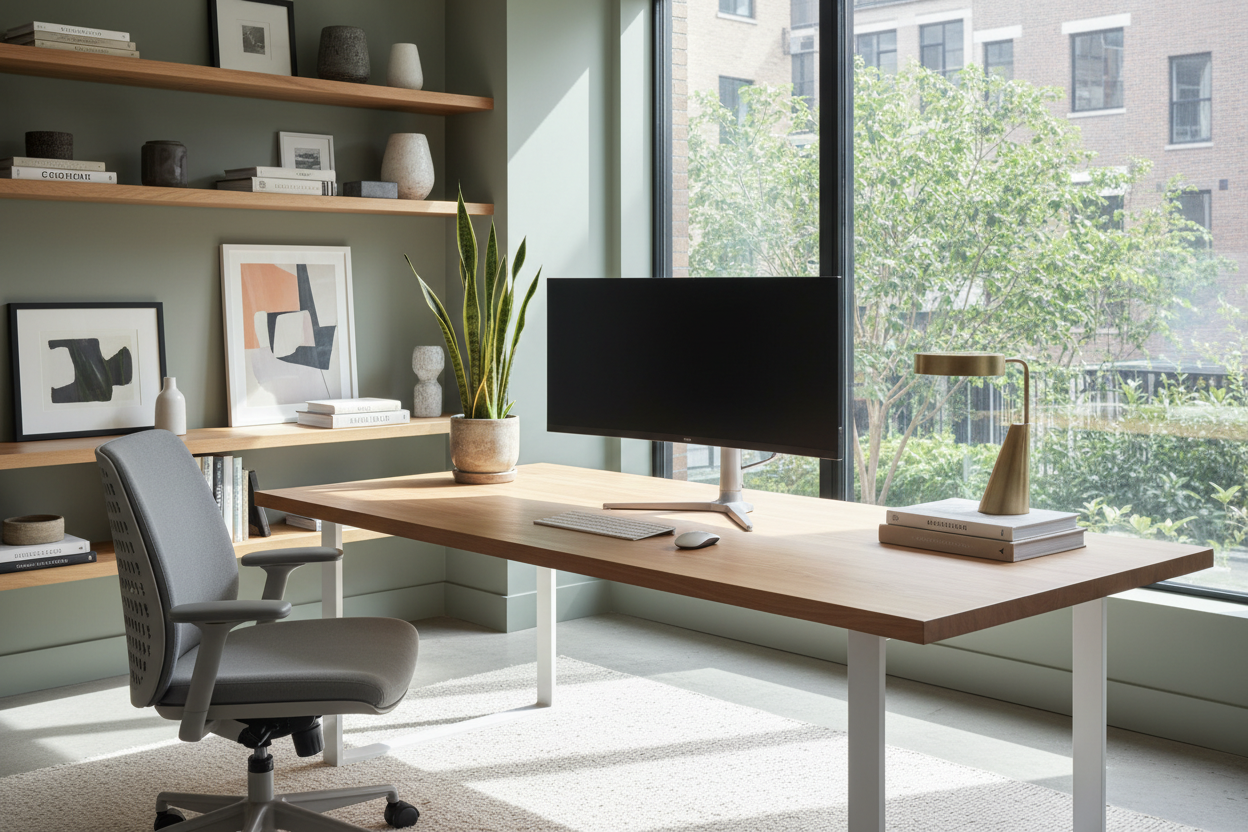
We've all been there: you buy a beautiful desk online, set it up in your spare bedroom, and suddenly the room feels entirely swallowed by bulky furniture. Or worse, you sit down to work and realize the drawer hits your knees, and your monitor is uncomfortably close to your face. Choosing the right desk design for office environments—whether a dedicated corporate space or a corner of your living room—is about marrying ergonomics with visual harmony.
In this guide, I'll walk you through the structural and spatial rules I use when sourcing workspaces for my clients, so you can walk away knowing exactly what dimensions, materials, and silhouettes will actually work in your home.
Quick Decision Guide
- Mind the depth: Always aim for at least 24 to 30 inches of surface depth to comfortably accommodate a monitor, keyboard, and resting forearms.
- Scale to the room: A heavy executive desk will suffocate a small room. Use open-leg designs to maintain negative space in tight quarters.
- Prioritize wire management: A beautiful silhouette is instantly ruined by dangling cords. Look for built-in grommets or hidden routing channels.
- Check the clearance: Leave a minimum of 36 inches between the edge of your desk and the wall or nearest piece of furniture to allow your chair to roll back easily.
Space Planning & Layout
Sizing Your Desk for the Room
The biggest mistake people make is treating their desk like an island. Before you even look at different office desk designs, you need to map out your floor plan. If you are placing the desk against a wall, ensure you aren't blocking natural light sources. If you want to "float" the desk in the middle of the room facing the door, you need a room that is at least 12 feet deep to accommodate the desk, the chair clearance, and guest seating.
Visual Weight and Placement
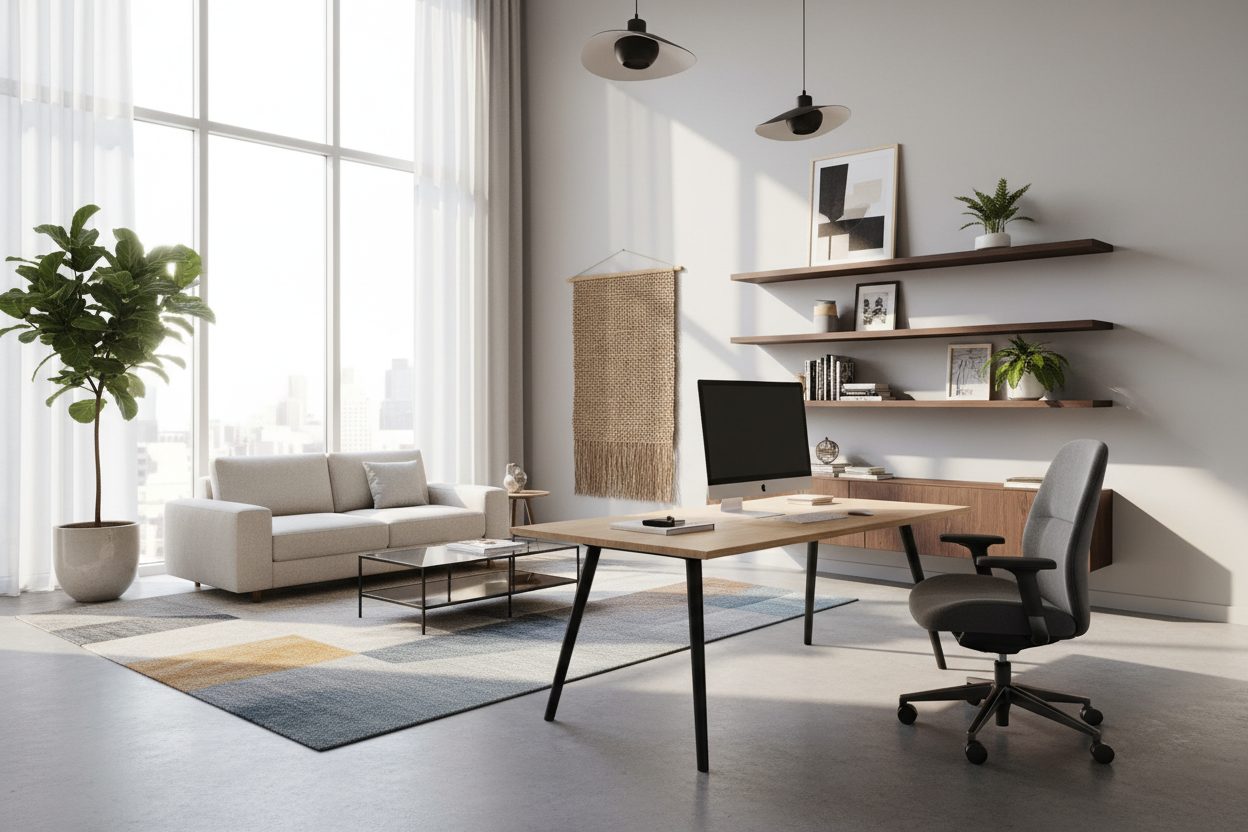
Visual weight is just as critical as physical dimensions. A solid mahogany pedestal desk carries massive visual weight; it grounds a large, airy room but will make a standard suburban bedroom feel like a closet. For smaller spaces, a writing desk with tapered metal or wood legs allows light to pass underneath, keeping the room feeling expansive.
Comfort & Ergonomics
The 29-Inch Rule
Most standard desks sit at 29 to 30 inches high. However, if you are under 5'8", this height often forces you to shrug your shoulders to type, leading to neck strain. A truly functional work desk design accounts for your body mechanics. If you fall in love with a desk that feels too tall, you will need a highly adjustable ergonomic chair and a footrest to compensate. Alternatively, consider a sit-stand chassis paired with a custom solid wood top so you can dial in the exact millimeter of height you need.
Material & Build Quality
Solid Wood vs. Engineered Finishes
Material dictates how your workspace ages. Solid oak or walnut offers incredible longevity and can be sanded down if damaged. However, solid wood expands and contracts with North American humidity shifts, so ensure the joinery allows for movement. Engineered wood with a high-quality veneer is incredibly stable and often more affordable, but check the edge banding. If the edges feel sharp or look like they are glued on cheaply, they will start peeling within six months of your forearms rubbing against them.
Designer's Honest Take
Early in my career, I sourced a breathtaking, custom matte black ash desk for a client's home office. It had a sleek, minimalist profile and cost a small fortune. It looked stunning on installation day. Then, reality hit. Every single fingerprint, coffee cup ring, and speck of dust became a permanent, glowing feature on that dark, matte surface. The client was wiping it down three times a day. I learned the hard way that high-contrast, matte finishes in high-touch zones are a maintenance nightmare. Now, I almost exclusively recommend mid-tone woods or subtly textured laminates for the primary work surface, saving the dramatic black finishes for shelving or accent chairs.
Frequently Asked Questions
How do I choose a desk for a small home office?
Focus on negative space. Choose a desk with slim, open legs rather than solid side panels or heavy drawer pedestals. A glass top can also trick the eye into thinking the piece takes up less square footage.
What is the standard depth for an office desk?
A standard work surface should be between 24 and 30 inches deep. Anything less than 24 inches is strictly a writing desk or laptop station; it will not comfortably fit a monitor and a keyboard without straining your eyes.
How do I hide cords on an open-leg desk?
If your desk doesn't have a modesty panel or built-in routing, use adhesive cable clips along the back edge of the desk and run a braided cable sleeve down one of the back legs. It keeps the silhouette clean and intentional.

Dejar un comentario
Este sitio está protegido por hCaptcha y se aplican la Política de privacidad de hCaptcha y los Términos del servicio.