










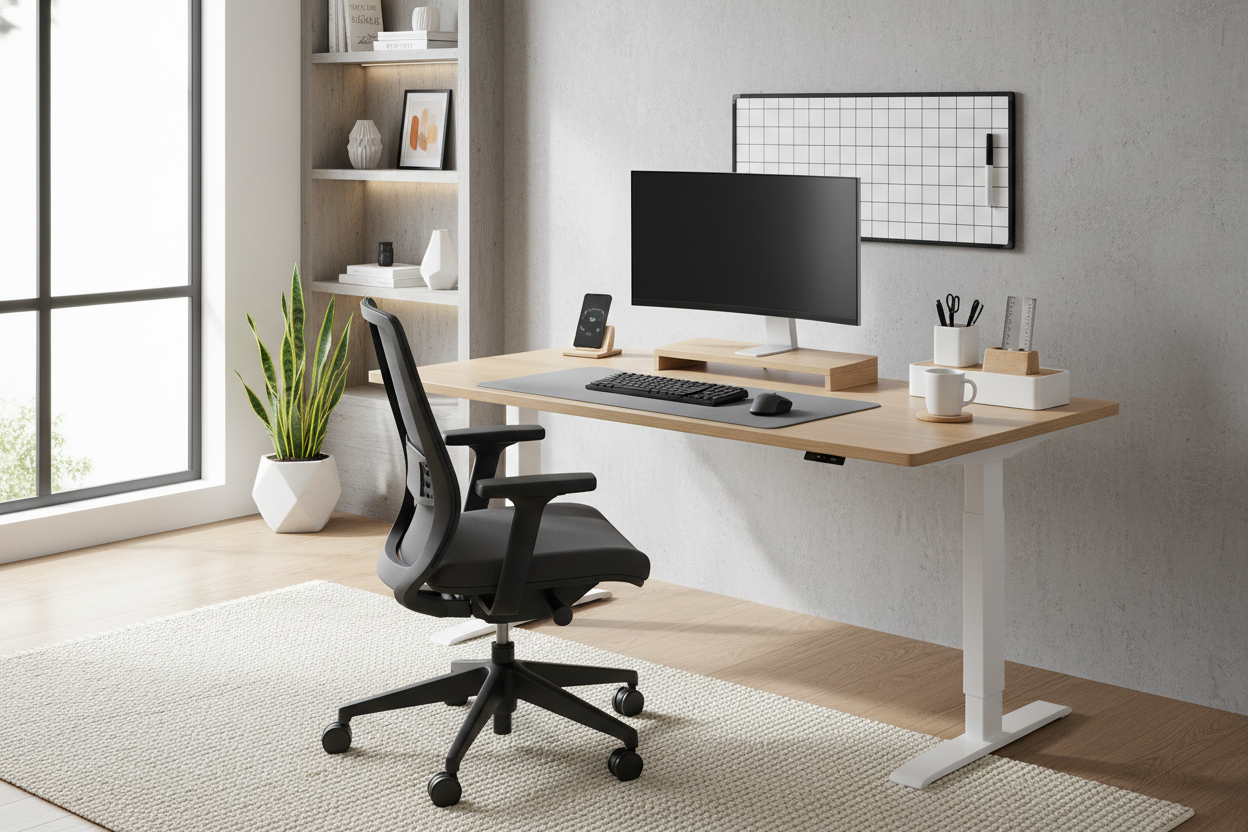
You have invested in a statement desk—perhaps a solid walnut executive piece or a minimalist glass architectural table—yet the workflow feels disjointed. The disconnect often lies not in the furniture itself, but in how we accessorize the surface. As a designer, I see clients treat organization as an afterthought, cluttering high-end surfaces with cheap plastic bins. True efficiency comes from selecting desk productivity tools that respect the integrity of your design while streamlining your cognitive load.
Quick Decision Guide: Selecting Desktop Essentials
- Material Continuity: Choose accessories that complement your desk's finish (e.g., leather on wood, matte metal on glass) to reduce visual noise.
- Acoustic Profile: Consider how items sound. Felt and leather dampen noise; raw metal and acrylic amplify clicks and clatters.
- Verticality: Utilize risers and vertical sorters to preserve the "work triangle" (the immediate reach zone) on the desktop surface.
- Weight & Stability: Quality office supplies for productivity should have enough heft to stay in place when you pull a pen or file.
The Art of Desktop Curation
When styling a workspace, we must move beyond mere utility. The goal is to create a vignette that invites focus. The best office supplies for productivity are those that disappear until you need them, merging seamlessly with the room's aesthetic.
Materiality and Texture
The tactile experience of your tools influences your mindset. I often steer homeowners toward natural materials that age gracefully. A plastic tray will crack or yellow; a full-grain leather desk blotter, however, develops a rich patina over time. If your desk is a heavy, dark wood, contrast it with brushed brass or lighter marble organizers to prevent the setup from feeling too heavy. For modern, white lacquer desks, warm wood accents (like oak or teak) bring necessary warmth to the sterile surface.
Ergonomics Meets Aesthetics
Productivity is physically rooted in ergonomics, but that doesn't require bulky, industrial-looking equipment. The placement of your tools dictates your posture.
Monitor Risers and Stands
Instead of the standard plastic risers, look for bent plywood or solid timber stands that match your shelving. This elevates your screen to eye level while providing a "garage" underneath for keyboards or notebooks. This is a crucial space-planning technique: by reclaiming the footprint of your technology, you maintain a clear mental space.
The "Tray Theory" of Organization
One design rule I swear by is containing the clutter. Loose items create visual anxiety. By placing your stapler, tape dispenser, and pens onto a dedicated tray, you convert scattered office supplies for productivity into a single, intentional design element. This is known as "grouping," and it instantly makes a desk look curated rather than messy.
Lessons from My Own Projects
I learned a hard lesson about acoustic design early in my career while outfitting a home office for a client who did frequent video recording. I specified a stunning, raw brass organizer set. It looked sculptural and photographed beautifully against the navy blue walls.
However, two weeks later, the client called me. The issue? The noise. Every time he dropped a pen into the metal cup or tossed his keys in the tray, it created a sharp, high-pitched clang that broke his concentration and spiked on his microphone. I had prioritized the visual over the auditory. We swapped them out for felt-lined leather accessories. The difference was immediate—the soft thud of a pen hitting leather felt luxurious and kept the room quiet. Now, I always test the "drop sound" of an accessory before recommending it.
Conclusion
Your workspace should be a sanctuary of focus, not a storage unit. By investing in high-quality materials and thoughtful layouts, you turn necessary tools into design assets. Clear the surface, curate your essentials, and watch your workflow improve.
Frequently Asked Questions
How do I maintain leather desk accessories?
Leather requires hydration to prevent cracking, especially in sun-drenched home offices. Dust them weekly with a microfiber cloth and apply a high-quality leather conditioner every six months. Avoid placing hot coffee mugs directly on leather blotters to prevent heat rings.
What are the best desk productivity tools for small desks?
For compact writing desks or secretaries, focus on wall-mounted organizers or monitor arms that clamp to the back edge. This frees up the surface area. Avoid wide, horizontal paper trays; opt for vertical file sorters instead.
Should I mix or match my desk metals?
While mixing metals is acceptable in general interior design, I recommend sticking to one metal finish (e.g., all matte black or all brushed nickel) for desktop accessories. Because the items are small and sit close together, mixing finishes can look accidental and cluttered rather than eclectic.

Dejar un comentario
Este sitio está protegido por hCaptcha y se aplican la Política de privacidad de hCaptcha y los Términos del servicio.