










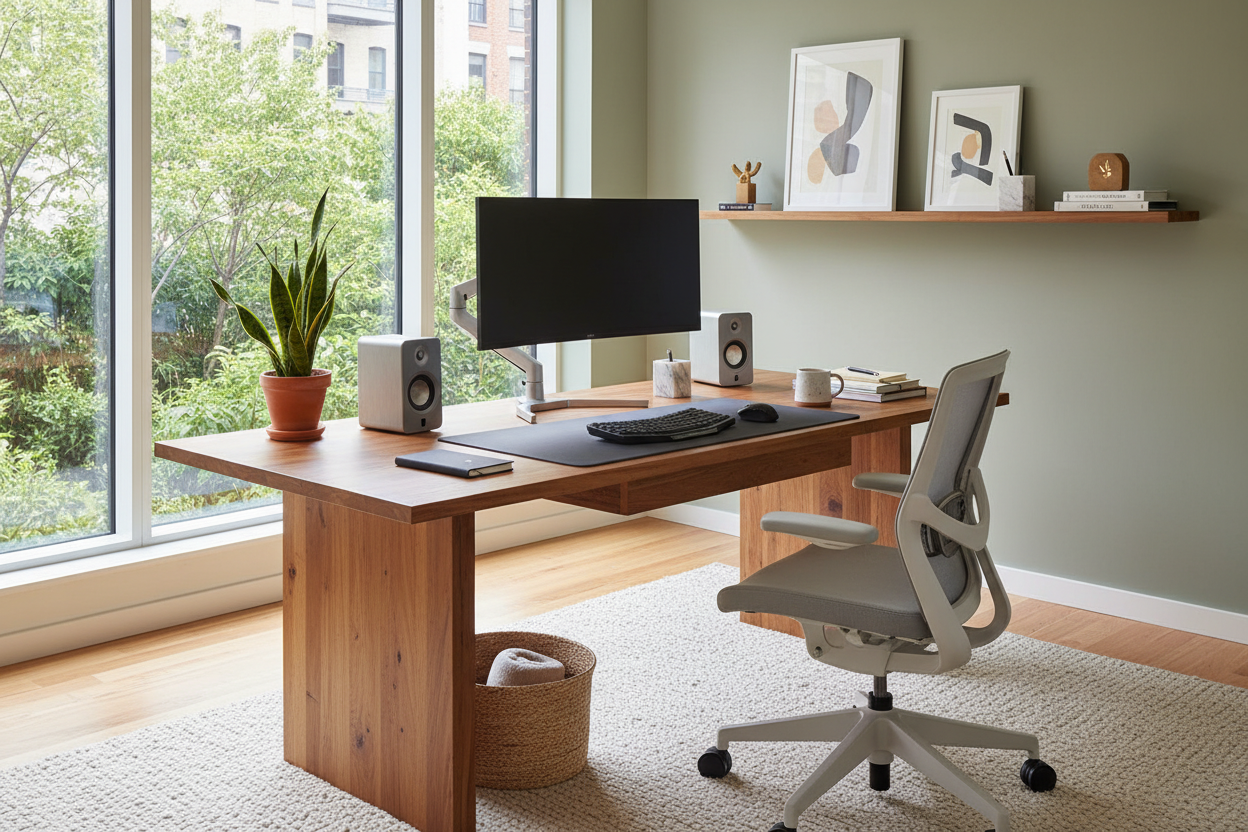
There is a distinct difference between a workspace that merely functions and one that inspires. As a designer, I see too many home offices treated as afterthoughts—cobbled together with utilitarian pieces that ignore the flow of the room. The focal point of any productive sanctuary is the **office desktop furniture**, and selecting the right pieces requires balancing architectural beauty with rigorous functionality.
Quick Decision Guide
If you are rushing to furnish your space, prioritize these four pillars of design and utility to ensure a lasting investment:
- Material Integrity: Solid wood offers tactile warmth and longevity, while high-pressure laminate provides resistance against scratches and heat.
- Ergonomic Scale: Standard desk height is 29–30 inches; ensure your chair clearance allows for crossed legs without hitting the drawer apron.
- Visual Weight: In smaller rooms, choose legs with open silhouettes (metal or slender wood) to keep the space feeling airy.
- Cable Integration: Look for furniture with built-in grommets or hidden channels to manage the inevitable wiring of an office equipment desk setup.
Defining the Aesthetic and Function
When selecting office furniture and desks, the conversation must start with the 'work triangle'—the relationship between your chair, the desktop surface, and your storage. A common error is prioritizing the facade over the user experience.
Material Selection: Texture and Durability
The surface you touch for eight hours a day matters. While glass tops look sleek and modern, they can feel cold to the touch and often cause optical mouse tracking issues. I often steer clients toward walnut or white oak. These materials develop a patina over time, forgiving minor dents that would ruin a veneer finish. If you need a heavy-duty surface for crafting or drafting, consider a linoleum top—it provides a soft, matte writing surface that absorbs sound and resists fingerprints.
Space Planning and Layout
Before you commit to a purchase, tape out the dimensions on your floor. Desk furniture for office spaces often looks smaller in a catalog than it does in a 12x12 room.
The Flow of the Room
Avoid pushing your furniture flush against the wall if space permits. Floating the desk in the center of the room, facing the door, establishes a 'command position.' This layout allows you to anchor the room with a rug and use the front of the desk to display design elements, rather than hiding them. However, ensure you have adequate clearance (at least 36 inches) behind the chair for movement.
The Showroom vs. Reality
Walking into an office desk showroom can be deceptive. The lighting is perfectly calibrated, and the clutter is non-existent. When evaluating a piece, test the stability. Lean on the front edge. Does it rack or wobble? If a desk shakes when you type, it will vibrate your monitor, leading to subtle eye strain over time. This structural rigidity is often where budget furniture fails compared to investment-grade pieces.
My Personal Take on Office Desktop Furniture
I learned a hard lesson early in my career regarding surface finishes. I once specified a stunning, high-gloss black lacquer desk for a client in a high-rise. It looked sculptural and incredibly chic. However, two weeks later, the client called me in frustration.
The issue wasn't the look; it was the maintenance and acoustics. Every time they set down a ceramic mug or a pen, it made a sharp, distracting 'clack.' Furthermore, the high-gloss finish acted like a mirror, reflecting the overhead recessed lighting directly into their eyes, causing glare. Since then, I always check the 'sound' of a desktop surface and the Light Reflectance Value (LRV) of the finish. A matte, wood-grain texture isn't just about style; it absorbs light and sound, creating a calmer psychological space for deep work.
Conclusion
Your workspace should be a reflection of your professional identity and your personal taste. By investing in quality materials and considering the ergonomics of your layout, you turn a simple room into a powerhouse of productivity. Don't settle for generic; curate a space that makes you want to show up every morning.
Frequently Asked Questions
How do I protect a solid wood desktop from writing indentations?
Solid wood is softer than laminate. To preserve the finish without covering the wood's beauty, use a high-quality leather desk blotter. This adds a layer of sophisticated texture while absorbing the pressure from ballpoint pens.
What is the ideal desk depth for a multi-monitor setup?
If you use multiple monitors, aim for a depth of at least 30 inches. This allows you to place screens at an arm's length, reducing eye strain, while leaving enough foreground space for keyboards and documents.
Can I mix metal office furniture with wood accents?
Absolutely. Mixing materials creates a layered, curated look. A desk with an industrial metal base pairs beautifully with a warm timber top or a leather executive chair, preventing the room from looking too sterile or matchy-matchy.

Dejar un comentario
Este sitio está protegido por hCaptcha y se aplican la Política de privacidad de hCaptcha y los Términos del servicio.