










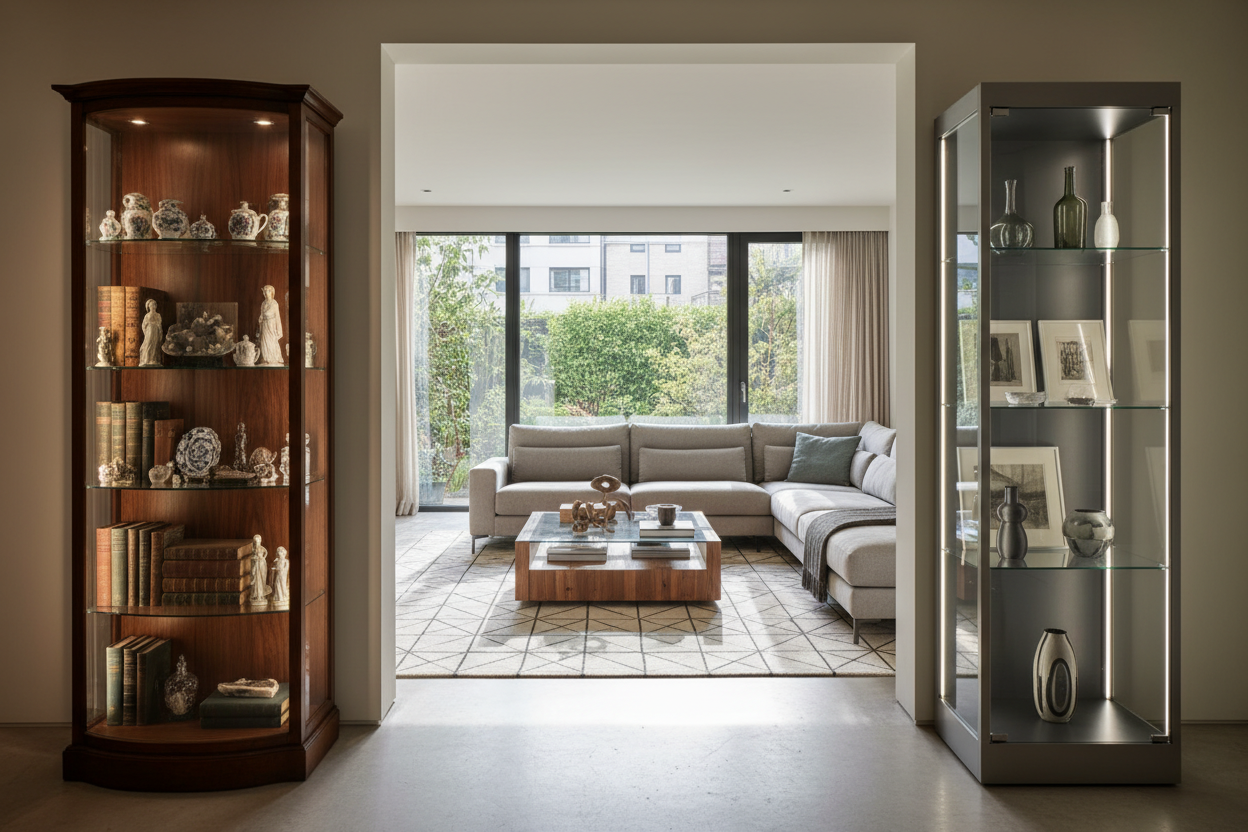
I spent three months staring at a stack of Lego Technic sets that cost more than my first car, wondering why they looked so mediocre on my standard plywood bookshelves. The problem wasn't the sets; it was the shadows. If you've ever tried to show off a collection only for it to look like a cluttered garage sale, you've probably debated between a traditional home curio and a glass cabinet retail display.
- Retail cabinets offer 360-degree visibility that residential furniture can't touch.
- Traditional curios often feel 'heavy' due to thick wood frames and mirrored backs.
- Lighting is the make-or-break factor; swap commercial cool-white LEDs for warm residential tones.
- Negative space is your friend—don't treat your display like a storage unit.
Why Traditional Curios Feel So Heavy
Most residential curios are stuck in a design time warp. They rely on chunky oak or cherry frames and those dated mirrored back panels that reflect your messy living room right back at you. If you're trying to display modern ceramics or tech, that heavy wood framing acts like a visual cage, cutting off sightlines and making your room feel smaller.
I've found that if you aren't ready to go full commercial, a white display case with glass doors is a solid transitional move. It keeps the structure of a home piece but drops the visual weight of dark wood. Still, even the best home-focused cabinets usually have wide 'stiles' (the vertical wood parts) that hide your items when you're looking from an angle.
The Pivot to a Glass Cabinet Retail Display
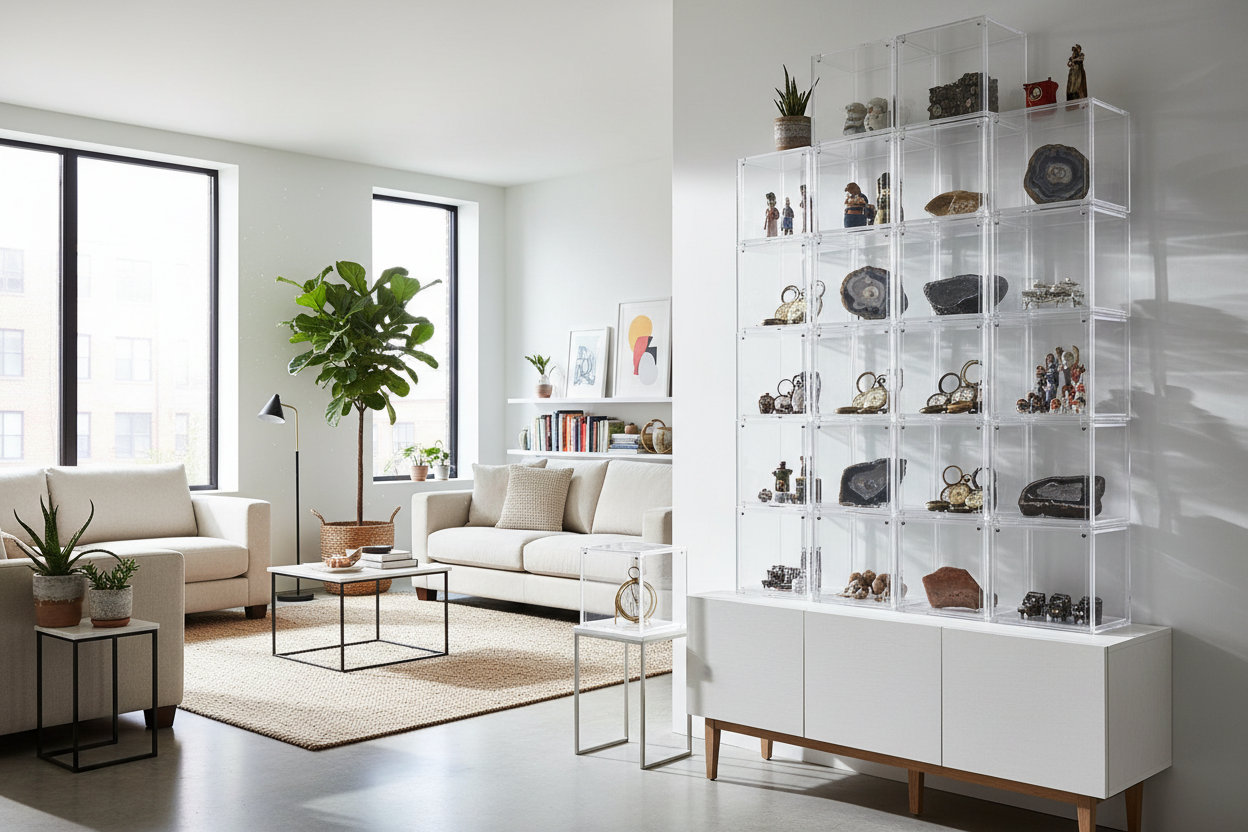
This is where things get interesting. Retail glass cabinets are engineered for one thing: making products look expensive. They usually feature frameless construction or ultra-thin aluminum extrusions. When you use glass display cabinets for shops in a home setting, you suddenly get 360-degree views of your items. No more 'dead zones' where a wooden corner post hides your favorite piece.
Retail glass cabinets also tend to use higher-grade tempered glass. I'm talking 6mm or 8mm thick panels that feel substantial, not the 3mm 'picture frame' glass you find in cheap flat-pack furniture. If you're displaying something with height, like a 1/6 scale figure or a tall vase, the adjustable shelving in these commercial units is usually far more robust than the plastic pegs used in home furniture.
How to Avoid the 'Mall Kiosk' Vibe
The biggest risk of bringing shop display glass cabinets into your house is the 'vape shop' aesthetic. You don't want your living room to feel like a high-security jewelry counter. The key is how you integrate the piece into your existing decor. If the cabinet looks like it's floating in the middle of the room, it feels like a store. Push it against a textured wall or flank it with plants to ground it.
You might also worry about security features. You can actually make a lockable cabinet glass display look like a retail store if the lock is a giant, silver plunger right in the center of the glass. Look for units where the locks are integrated into the base or top rail to keep the residential feel.
Swap the Harsh Commercial Lighting
Most shop display glass cabinet units ship with 5000K or 6000K LED strips. That's 'operating room' white. It’s great for making diamonds sparkle, but it’s terrible for a cozy living room. I always swap these out for 2700K or 3000K warm-white LEDs. It immediately changes the vibe from 'retail floor' to 'private gallery.'
Give Your Objects Room to Breathe
The biggest mistake I see is people cramming their shop display glass cabinets full of every single thing they own. Retailers use negative space to signal value. If a shelf has one item on it, that item looks important. If it has twenty, it looks like inventory. Leave at least 30% of each shelf empty to let the light pass through.
The Final Verdict: Which Wins?
If your home is filled with mid-century modern furniture or sleek, minimalist lines, the retail display wins every single time. It disappears into the room and lets your collection do the talking. I'd personally go with a black cabinet with glass doors for a look that feels intentional and architectural rather than just a 'box' for your stuff.
Save the traditional curios for your grandmother’s hand-painted teacups or heavy leather-bound books. For everything else—sneakers, tech, modern art, or Lego—the commercial route is simply superior for visibility. Just remember to watch those light temperatures and don't overstuff the shelves.
Personal Experience: The 'Used' Trap
I once bought a used retail tower from a closing jewelry store thinking I got a steal. I didn't. The glass was scratched from years of customers leaning on it, and the sliding door mechanism sounded like a dying lawnmower. If you’re going the retail route for your home, buy new. The 'savings' on used commercial fixtures usually vanish when you realize you can't buff out scratches in tempered glass.
FAQ
Is tempered glass really necessary?
Yes. In a retail-style cabinet where the glass is often structural, you want tempered glass that's at least 5mm to 6mm thick. It's safer and won't flex when you're cleaning it.
Do these cabinets come with locks?
Most commercial units do. If you have kids or high-value items, it's a huge plus. Just look for 'discreet' locks that don't ruin the lines of the glass.
Are they hard to assemble?
They can be. Unlike a wooden cabinet, you're dealing with heavy, slippery panels. Always have a second person to hold the glass while you tighten the connectors. One slip and you've got a very expensive pile of glass shards.


Dejar un comentario
Este sitio está protegido por hCaptcha y se aplican la Política de privacidad de hCaptcha y los Términos del servicio.