










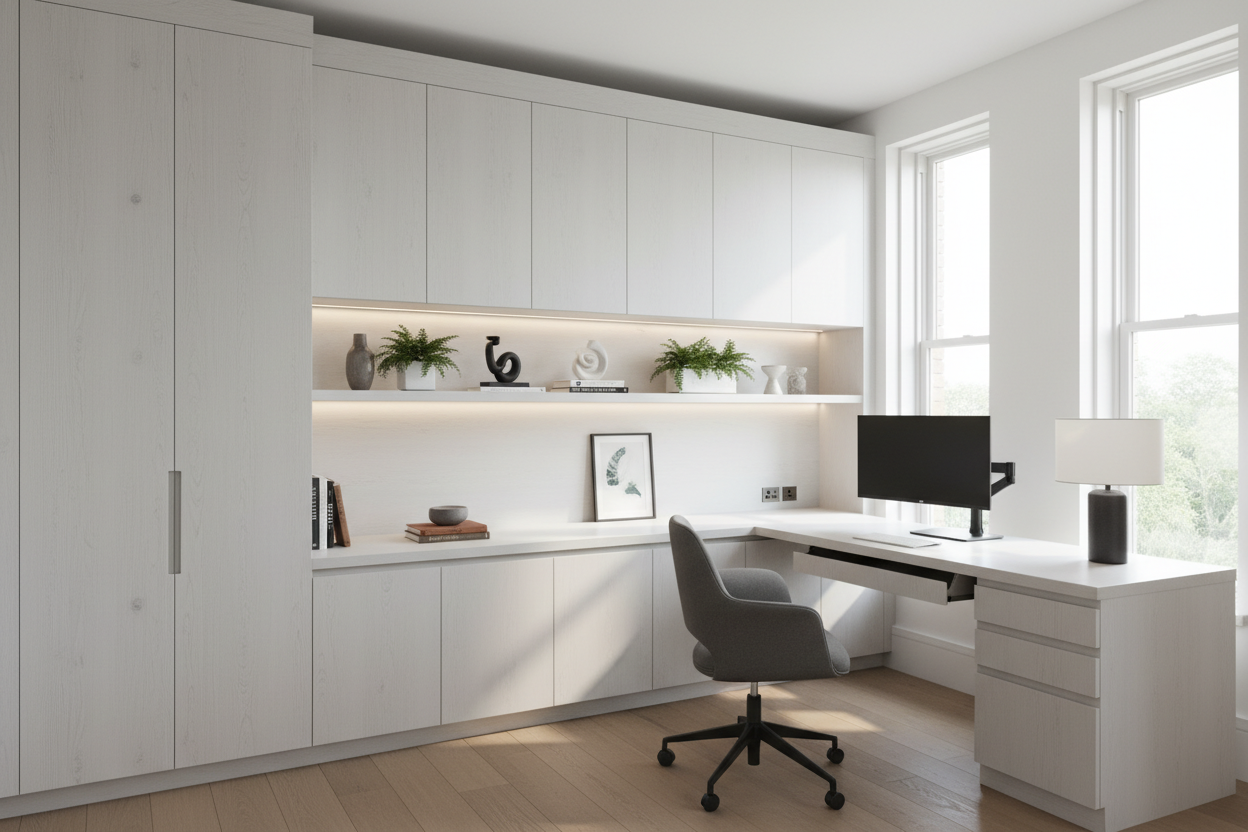
Most of us have experienced the frustration of trying to shoehorn a bulky freestanding desk into a spare bedroom, only to end up with a layout that feels cramped and lacks storage. When you are staring at stacks of paperwork and tangled cords, investing in custom built in desk and cabinets starts to sound incredibly appealing. But before you hire a local millworker or contractor, you need to understand the nuances of depth, material selection, and visual weight. By the end of this guide, you will know exactly how to spec a home office setup that works for your daily routine without overpaying for unnecessary upgrades.
Quick Decision Guide
- Standard desk depth: Aim for 24 inches for laptop use, or 28 to 30 inches if you use multiple large monitors.
- Cabinet proportions: Upper cabinets should sit 18 to 20 inches above the desktop to leave room for monitors and task lighting without feeling claustrophobic.
- Material matters: Use cabinet-grade plywood for the boxes, but save money with MDF for painted doors—it actually resists warping better than solid wood in climate-controlled homes.
- Power planning: Always specify integrated grommets and hidden outlets inside the lower cabinets before construction begins.
Space Planning for the Modern Home Office
Clearances and Ergonomics
A beautiful workspace is useless if your knees hit the drawers every time you pivot your chair. When designing a built-in wall cabinets with desk setup, the negative space is just as important as the cabinetry itself. You need a minimum of 36 inches of clearance behind the desk to push your chair back comfortably. If the office doubles as a guest room, ensure the cabinet doors have enough swing radius to avoid hitting the Murphy bed or pull-out sofa. Pay attention to the desktop height as well; standard desk height is 29 to 30 inches, but if you are petite, dropping it to 28 inches can prevent shoulder strain.
Nailing the Aesthetic and Finishes
Why Lighter Colors Dominate
Dark, moody library studies look fantastic in magazines, but they absorb an enormous amount of natural light. In standard suburban bedrooms with a single window, white built in office cabinets are usually the smartest choice. White or soft greige finishes reflect light, making a small 10x10 room feel expansive rather than heavy. If you want to add warmth, I highly recommend pairing painted cabinetry with a stained white oak or walnut desktop. This grounds the design and adds a tactile, organic texture right where your hands rest.
Where to Spend and Where to Save
The price tag for a built-in office cabinets and desk project can vary wildly depending on the materials. You do not need solid mahogany cabinet boxes. High-quality, 3/4-inch maple or birch plywood is the industry standard for durability and screw retention. However, do not skimp on the hardware. Soft-close, full-extension drawer glides from reputable brands are worth the premium. They handle the heavy weight of file folders and office supplies without sagging or sticking over time.
Lessons from My Own Projects
Early in my career, I designed a massive, wall-to-wall built-in unit for a client in Toronto. We went with a stunning matte black painted finish. It looked incredible on installation day. But I learned a hard lesson when I visited them six months later: matte dark paint in a home office highlights every single speck of dust and every fingerprint. My client was wiping it down daily. Now, I almost always steer clients toward lighter colors or wood grain laminates for high-touch areas. I also learned that a 30-inch deep desk sounds luxurious, but unless you have very long arms, reaching the back to plug in a charger is an ergonomic nightmare. I strictly cap desk depth at 24 to 26 inches now unless the client has specific multi-monitor requirements.
Frequently Asked Questions
How much does a custom built-in desk cost?
In North America, expect to pay between $3,000 and $10,000 depending on the linear footage, materials, and regional labor rates. Painted MDF will sit at the lower end, while stained hardwoods, glass doors, and complex internal organizers push the price up.
Can I take built-in furniture with me if I move?
Generally, no. Built-ins are scribed and attached directly to your wall studs and baseboards to ensure a seamless fit. Removing them usually damages both the cabinetry and the drywall, making them a permanent fixture that adds resale value to the home rather than a portable asset.
How do I hide cords in a built-in desk?
The best method is to have your millworker drill grommet holes into the desktop that lead directly into a shallow channel or a false back in the cabinetry below. You can also have an electrician install an outlet inside a lower cabinet specifically for a power strip, keeping the desktop completely clear of wires.

Dejar un comentario
Este sitio está protegido por hCaptcha y se aplican la Política de privacidad de hCaptcha y los Términos del servicio.