










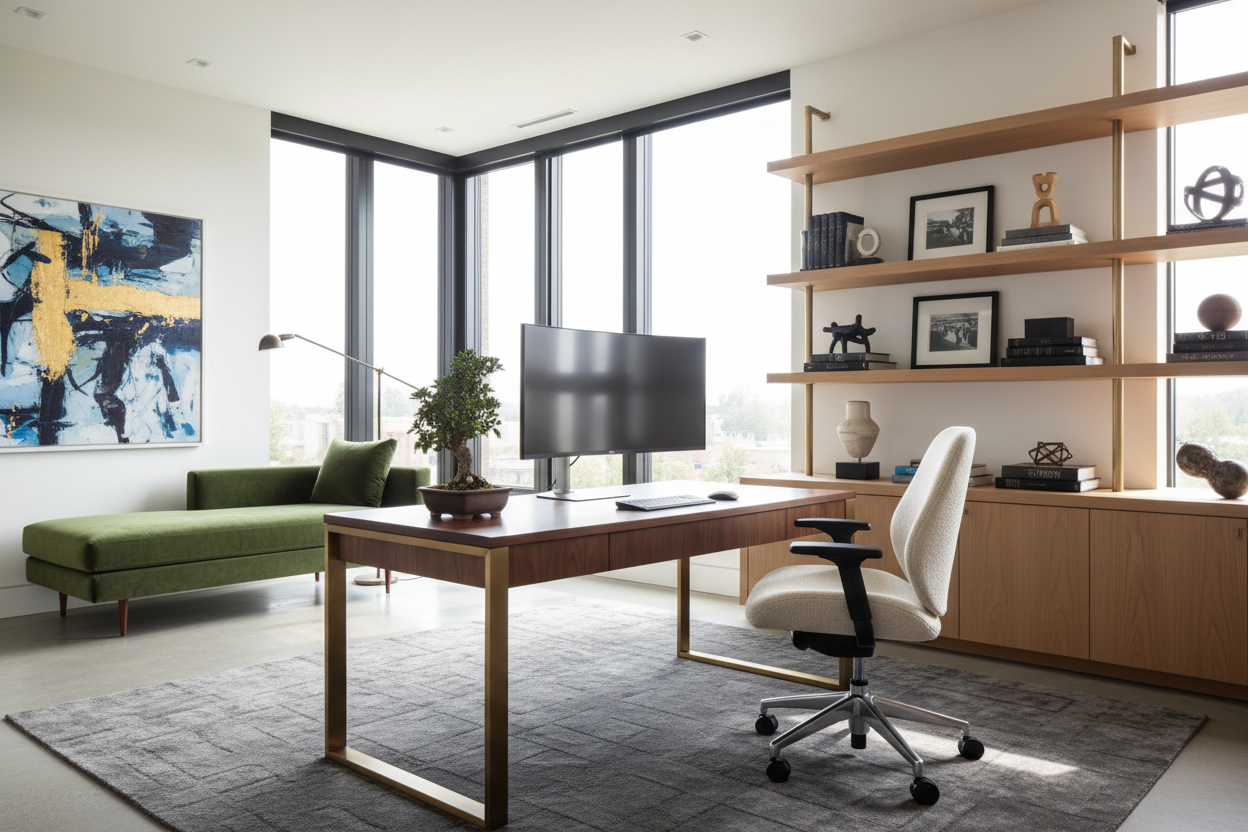
We have all scrolled through social media, pausing on that one image—a pristine workspace that looks equal parts productive and serene. You want that look, but translating a photo into reality is often where the design disconnect happens. You might be struggling with a cluttered corner or a room that feels cold and uninspiring. In this guide, I will deconstruct a prime example of an office that balances high-end aesthetics with the rigorous demands of an actual workday.
Key Features to Look For
- Ergonomic Integrity: The chair and desk height must align to support posture, not just look sculptural.
- Lighting Layers: A mix of ambient, task, and accent lighting is non-negotiable for reducing eye strain.
- Material Durability: Surfaces should resist heat from electronics and the wear of daily use (e.g., solid hardwoods or high-pressure laminates).
- Acoustic Control: Soft furnishings like rugs or drapery to dampen echo and improve focus.
- Concealed Tech: Integrated cable management systems to maintain visual calm.
Analyzing the Layout: More Than Just a Desk
When clients ask for office space examples, they often focus solely on the desk against the wall. However, a sophisticated layout considers the "command position." Ideally, your desk should face the door but not be directly in line with it. This offers a sense of security and authority. If space permits, floating the desk in the center of the room creates a focal point and allows for better circulation, instantly elevating the room from a "spare bedroom with a computer" to a dedicated executive suite.
Zoning for Functionality
A successful office example always includes distinct zones. Beyond the primary workstation, consider a secondary seating area—perhaps a lounge chair with a side table for reading contracts or taking calls away from the screen. This physical shift can help mentally reset your focus during a long day.
Material Selection and Textures
The difference between a sterile cubicle and a luxury workspace lies in texture. When reviewing examples of office designs, notice the interplay of materials. Walnut or white oak brings warmth and grounding, while metals like brushed brass or matte black add a contemporary edge.
Be wary of trends like high-gloss lacquer for desktop surfaces. While they look stunning in photography, they are prone to micro-scratches and reflective glare that can become irritating under task lighting. Instead, opt for satin or matte finishes that offer a tactile, sophisticated feel without the visual noise.
Lighting: The Unsung Hero
Bad lighting kills good design. A single overhead fixture casts harsh shadows and flattens the room's depth. To recreate a high-end office example, you need to layer your light sources. Start with a dimmable overhead fixture for general illumination. Add a dedicated architectural task lamp with adjustable warmth (Kelvin temperature) for your desk work. Finally, consider LED strip lighting in bookshelves or a floor lamp in the corner to create a soft, ambient glow that reduces contrast ratios on your monitor.
Lessons from My Own Projects
I want to share a specific realization from my own home office renovation that you won't find in a brochure. I fell in love with a stunning, reclaimed rough-hewn timber desk. It was visually incredible—full of character and history. However, after two weeks of actually working at it, I realized my mistake.
The texture was so uneven that I couldn't write on a piece of paper without a clipboard, and the mouse skipped constantly. Furthermore, the raw wood snagged my merino wool sweaters. I ended up having to commission a custom glass top to make it functional, which slightly altered the aesthetic I was going for. The lesson? Always run your hand across the surface. If it isn't smooth enough for a ballpoint pen to glide, it belongs in a dining room, not an office.
Conclusion
Creating a space that rivals a professional design portfolio is about prioritizing function just as much as form. By selecting the right materials, planning your lighting, and observing the flow of the room, you can build an environment that respects your workflow. Don't just copy a picture; build a workspace that works for you.
Frequently Asked Questions
How do I choose the right desk size?
Standard executive desks range from 60 to 72 inches wide. Ensure you have at least 30 to 36 inches of clearance behind the desk for your chair to move freely without hitting a wall or bookshelf.
What is the best way to hide cords in an open office?
Look for desks with built-in grommets and modesty panels. If you have an open-leg desk, use vertebrae cable managers that attach to the leg, or run cords down a rug leg to a floor outlet.
Can I mix wood tones in an office?
Absolutely. In fact, matching every piece of furniture perfectly can look dated. Try to keep the undertones (warm vs. cool) consistent, but feel free to mix a dark walnut desk with lighter oak shelving for visual interest.


Dejar un comentario
Este sitio está protegido por hCaptcha y se aplican la Política de privacidad de hCaptcha y los Términos del servicio.