










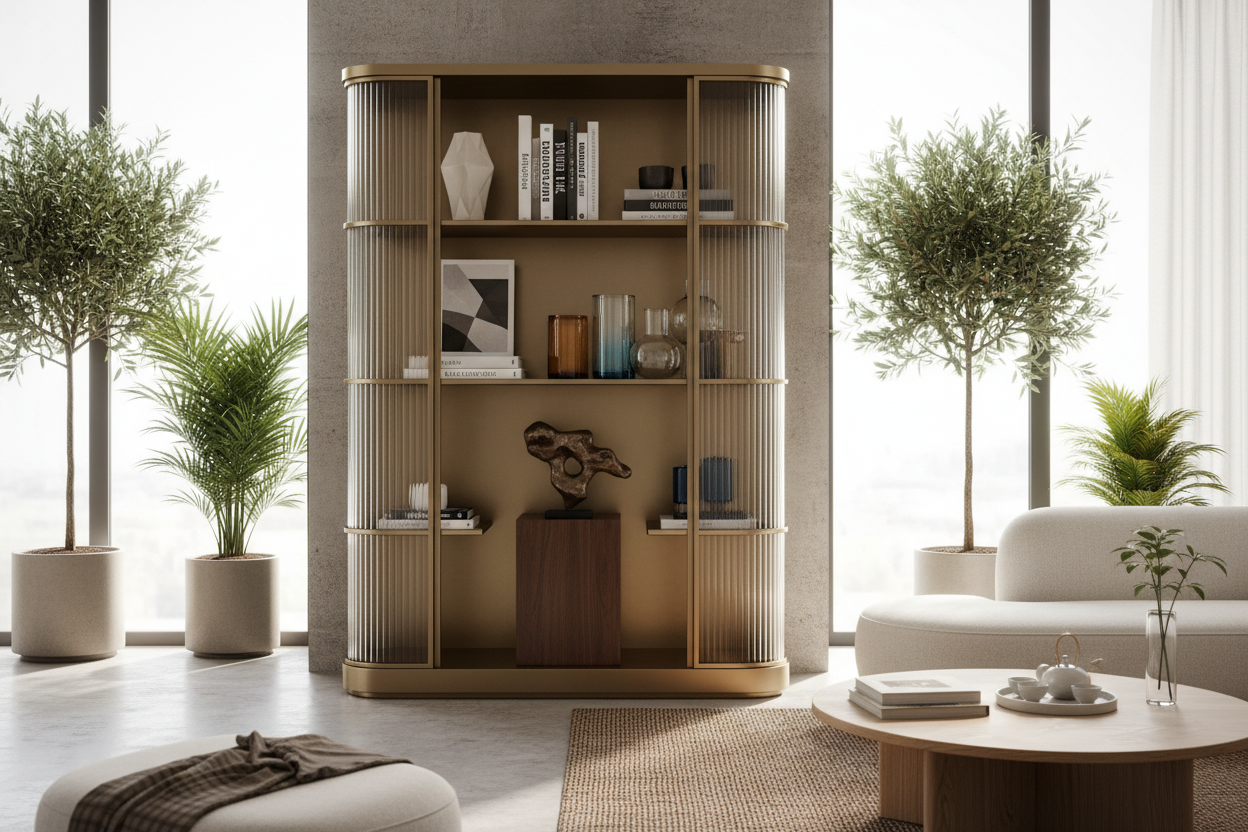
We have all been there: a living room or dining area that feels completely flat, no matter how many expensive art prints you hang or rugs you layer. You buy a few ceramic vases, stack some coffee table books, but the space still lacks a true focal point. Enter the designer display cabinet. It is the architectural anchor that gives your favorite objects, heirlooms, and even everyday dishware a dedicated stage.
But getting it right is much harder than it looks in catalog photos. Buy the wrong scale, and it overwhelms the room. Style it poorly, and it looks like a cluttered antique shop. In this guide, I will walk you through how to select, place, and curate these statement pieces so they actually work with your home's layout and your daily life.
Quick Decision Guide
- Scale to the ceiling: Always leave at least 12 to 18 inches between the top of the cabinet and your ceiling to prevent the room from feeling cramped.
- Lighting is non-negotiable: A dark cabinet turns your beautiful objects into shadowy blobs. Look for integrated, warm-toned LED lighting (around 2700K to 3000K).
- Mind the visual weight: Solid wood doors ground a large room, while glass or open metal framing keeps smaller spaces feeling airy.
- Edit ruthlessly: A display cabinet is not a storage closet. Leave at least 30 percent of the shelf space empty to let your pieces breathe.
Sizing and Space Planning
Managing Visual Weight
In typical North American open-concept homes, furniture tends to float in the middle of the room. A tall display cabinet acts as a necessary vertical counterpoint to low-slung sofas and wide kitchen islands. However, visual weight is just as important as physical dimensions. If you are placing the cabinet in a narrow hallway or a modest apartment dining room, opt for glass sides or a lighter wood finish like white oak. Dark walnut or blackened steel pieces demand more visual breathing room and work best against a wide, blank wall.
The Clearance Rules
Do not trust the showroom floor; pieces always look smaller in massive retail spaces. Before buying, tape out the dimensions on your floor and wall. Crucially, account for the door swing. You need a minimum of 36 inches of clearance in front of the cabinet to comfortably open the doors and walk past. If space is tight, look for sliding glass doors or an open-shelving hybrid.
What Separates 'Designer' from 'Disposable'
Glass Quality and Hardware
The telltale sign of a cheap cabinet is the hardware. High-end pieces use soft-close, concealed hinges or heavy-duty exposed brass hardware that operates smoothly. Pay attention to the glass as well. Tempered glass is standard for safety, but designer pieces often feature beveled edges, seeded glass, or fluted textures. Fluted glass is particularly useful if you want to add texture to a room while slightly obscuring the items inside.
Shelving Strength
If you plan to display heavy ceramic bowls, art books, or a vinyl collection, check the shelf weight capacity. Standard engineered wood shelves will bow over time under heavy loads. Look for solid wood, thick tempered glass, or steel-reinforced shelving. Adjustable shelves are also a must, as your display needs will inevitably change over the years.
Styling Your Cabinet Without the Clutter
The Rule of Thirds
When styling the shelves, avoid lining items up in a straight row like a grocery store aisle. Instead, use the rule of thirds. Group items in odd numbers and vary their heights. Place a tall vase next to a low, wide bowl, and lean a small framed sketch behind them to add depth. Anchor the bottom shelves with heavier, visually dense items like large books or storage boxes, and keep the lighter, more delicate glass and ceramic pieces near the top.
Lessons from My Own Projects
I once specified a stunning, matte-black steel and clear glass cabinet for a client's dining room in Toronto. It looked incredible on installation day. But I learned a hard lesson about practicality: matte black steel shows every single speck of dust, and clear glass requires constant maintenance if you have pets or kids.
Furthermore, the built-in LED lighting came with a 4000K color temperature, which cast a harsh, cool glow that made the dining room feel like a commercial office at night. We had to retrofit the lighting with warm 2700K strips. Now, I always verify the color temperature before ordering, and I frequently recommend fluted or reeded glass for clients with busy households—it bounces light beautifully while hiding minor smudges and less-than-perfect styling.
Frequently Asked Questions
How do I light my cabinet if it lacks built-in LEDs?
You can easily retrofit a cabinet using rechargeable, motion-sensor LED puck lights or thin LED strip lights. Mount them hidden behind the front frame of each shelf, pointing inward, so the light washes over your objects rather than shining directly into your eyes.
How do I clean the glass without leaving streaks?
Skip the blue chemical sprays. Use a mixture of distilled water and a splash of white vinegar in a spray bottle, and wipe with a clean microfiber cloth. Always spray the cloth, not the glass, to prevent liquid from seeping into the wood or metal joints.
Can I put a designer display cabinet in a hallway?
Yes, provided you have the width. Hallways usually require shallow cabinets—look for a depth of 12 to 15 inches. Sliding doors are ideal here so you do not block the walkway when accessing your items.

Dejar un comentario
Este sitio está protegido por hCaptcha y se aplican la Política de privacidad de hCaptcha y los Términos del servicio.