










The distinction between your sanctuary and your workspace has likely blurred over the last few years. You aren't just looking for productivity hacks; you are looking for a way to integrate functionality into your home's aesthetic without compromising on comfort. While you may have stumbled upon this page looking for a general blog about working from home, what you actually need is a design intervention. We aren't discussing software or time-management here; we are discussing the physical architecture of your day. Let’s curate a space that commands respect and fosters creativity.
Quick Decision Guide: The Essentials of WFH Design
Before investing in new pieces, evaluate these core pillars of home office design to ensure longevity and comfort:
- Ergonomic Integrity: Prioritize chairs with adjustable lumbar support and seat depth over purely sculptural shapes.
- Material Durability: Opt for hardwoods (walnut, oak) or high-pressure laminates for desk surfaces to resist heat marks and scratches.
- Lighting Layers: Ensure a mix of ambient (overhead) and task lighting (desk lamp) to reduce eye strain.
- Acoustic Control: Incorporate textiles (rugs, curtains) to dampen echo and improve audio quality for calls.
- Visual Flow: Position your desk to command the room (the "power position") rather than facing a blank wall.
Structuring Your Environment: Beyond the Desk
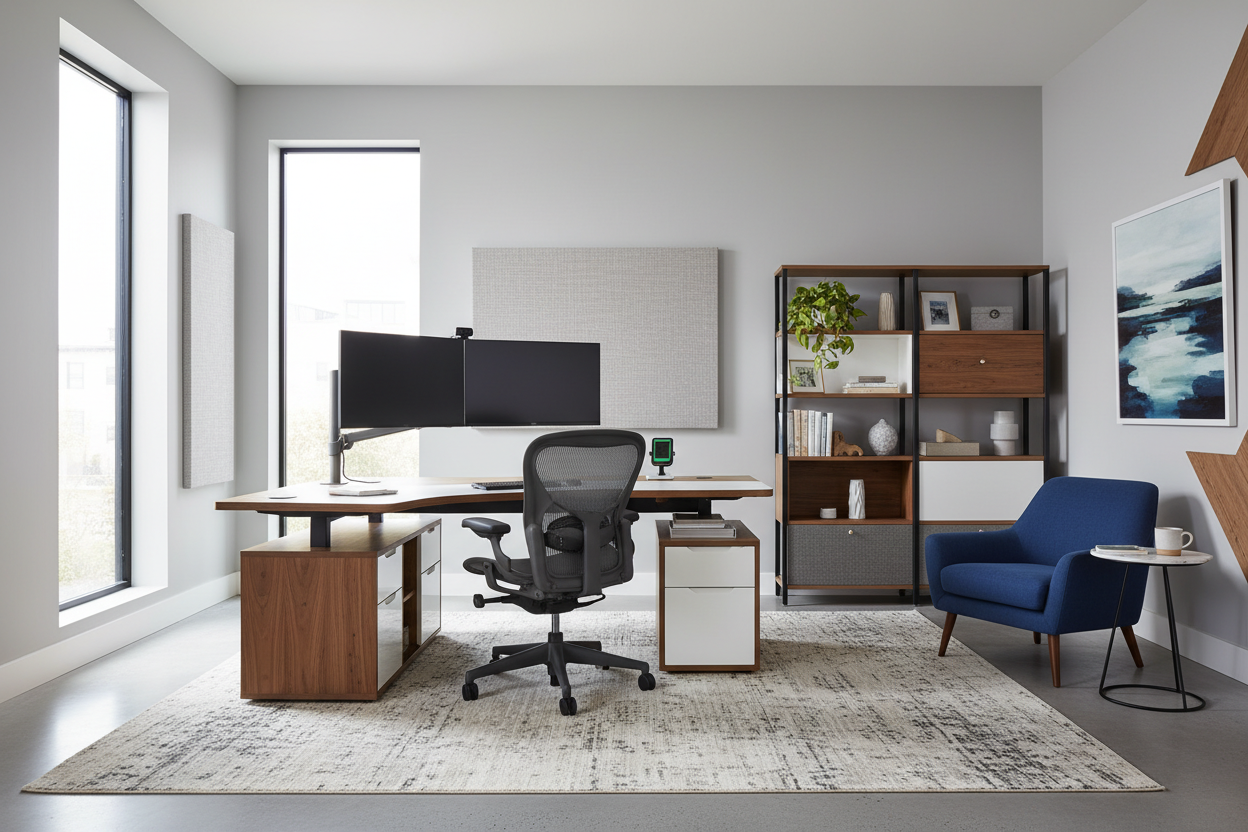
When curating a professional environment, the layout is just as critical as the furniture itself. Many homeowners make the mistake of shoving a desk into a corner. As a designer, I encourage you to consider the "negative space" around your furniture. You need clearance to push back your chair and circulation paths that don't feel cramped.
The Anchor Piece: Selecting the Right Desk
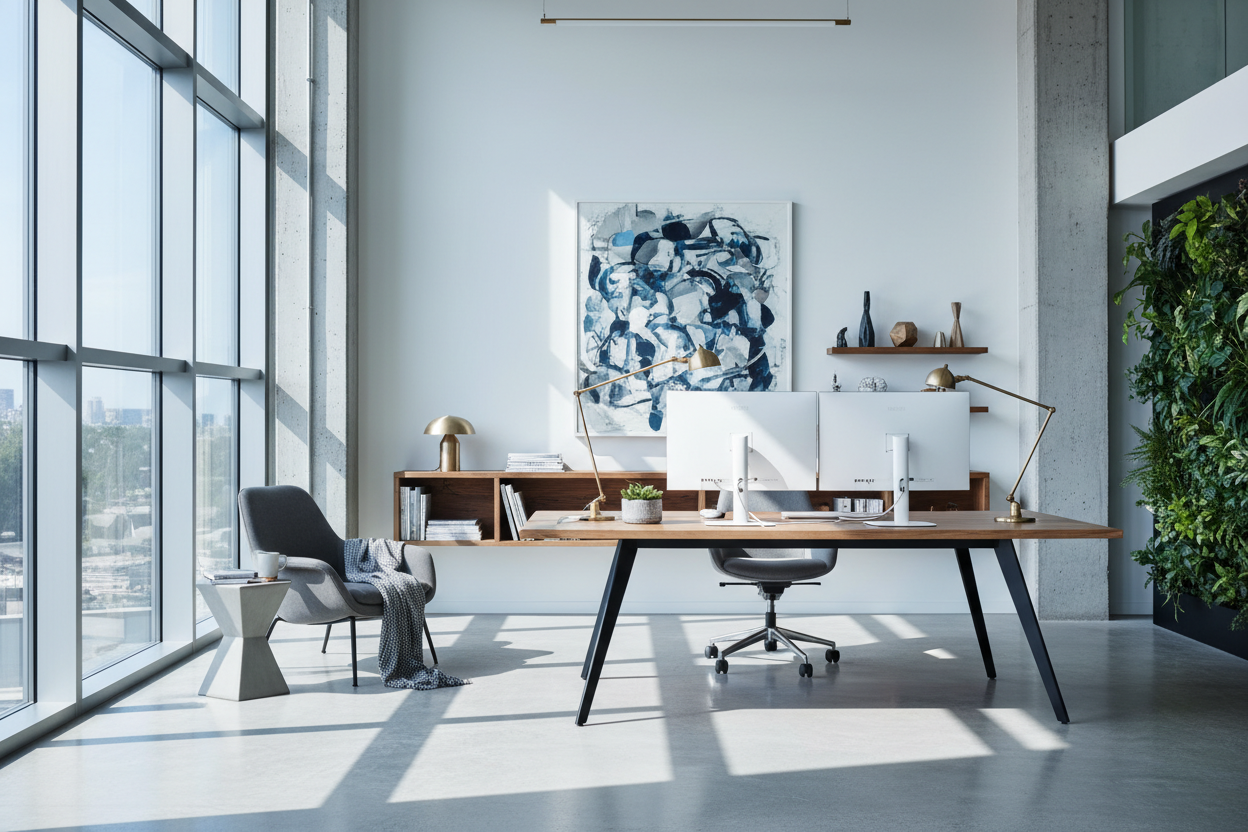
Your desk is the focal point. While a standard work from home blog might recommend a compact writing desk to save space, I advise against it if this is your daily driver. A depth of at least 30 inches is necessary for proper monitor placement to prevent eye fatigue. Look for materials that age well. A solid wood grain adds texture and warmth, contrasting beautifully with the sleek, cold plastic of modern technology.
Seating: The Intersection of Style and Mechanics
If you browse a generic work from home job blog, they often treat the chair as an afterthought. In interior design, the task chair is the most critical tool in the room. Avoid the temptation of buying a dining chair for your desk just because it matches the drapes. Look for a "synchro-tilt" mechanism, which allows the seat and back to move in a coordinated ratio, supporting your posture as you recline. If you crave a softer aesthetic, look for performance fabrics that mimic linen or velvet but offer high abrasion resistance.
Lighting and Ambiance
Lighting defines the mood. An overhead fixture alone casts harsh shadows. You need to layer your lighting. Start with ambient light, then add a task light with an adjustable arm. Pay attention to the Kelvin temperature of your bulbs; 3000K to 4000K is ideal for alertness without being clinical. This is the kind of nuanced advice you rarely find on a general remote work blog, yet it makes the difference between a headache at 3 PM and a productive afternoon.
Lessons from My Own Projects
I want to share a specific failure from my own home office renovation to save you the trouble. Early in my career, I fell in love with a stunning, reclaimed rough-hewn timber desk. It looked incredible in photos—full of character and history. However, I didn't account for the tactile experience of writing on it. Every time I tried to sketch or sign a document, the pen would catch on the wood grain. Furthermore, the unsealed texture became a magnet for dust and coffee rings that were impossible to clean.
I eventually had to have a custom glass top cut for it, which ruined the matte aesthetic I was going for. The lesson? Always prioritize the surface finish (the "hand") of your desk. Smooth, sealed surfaces are non-negotiable for a high-functioning workspace. Unlike the glossed-over photos you see on work at home blogs, real design requires practical foresight.
Conclusion
Your home office should be a reflection of your professional stature and your personal taste. By investing in quality materials, proper ergonomics, and thoughtful lighting, you create a space that you actually want to enter every morning. Don't settle for a makeshift setup; design a space that works as hard as you do.
Frequently Asked Questions
What is the ideal desk height for a home office?
Standard desk height is between 29 and 30 inches. However, if you are shorter or taller than average, an adjustable sit-stand desk is the best investment to ensure your elbows remain at a 90-degree angle while typing.
How do I make my office look professional on video calls?
Focus on your background. Install a bookshelf or artwork behind you to create depth. Ensure your light source is in front of you (behind the camera), not behind you, to avoid the silhouette effect.
Is a rug necessary for a home office?
From a design and acoustic standpoint, yes. A rug anchors the furniture, preventing it from looking like it's floating. It also absorbs sound, reducing the echo that can make empty rooms sound unprofessional during meetings.

Dejar un comentario
Este sitio está protegido por hCaptcha y se aplican la Política de privacidad de hCaptcha y los Términos del servicio.