










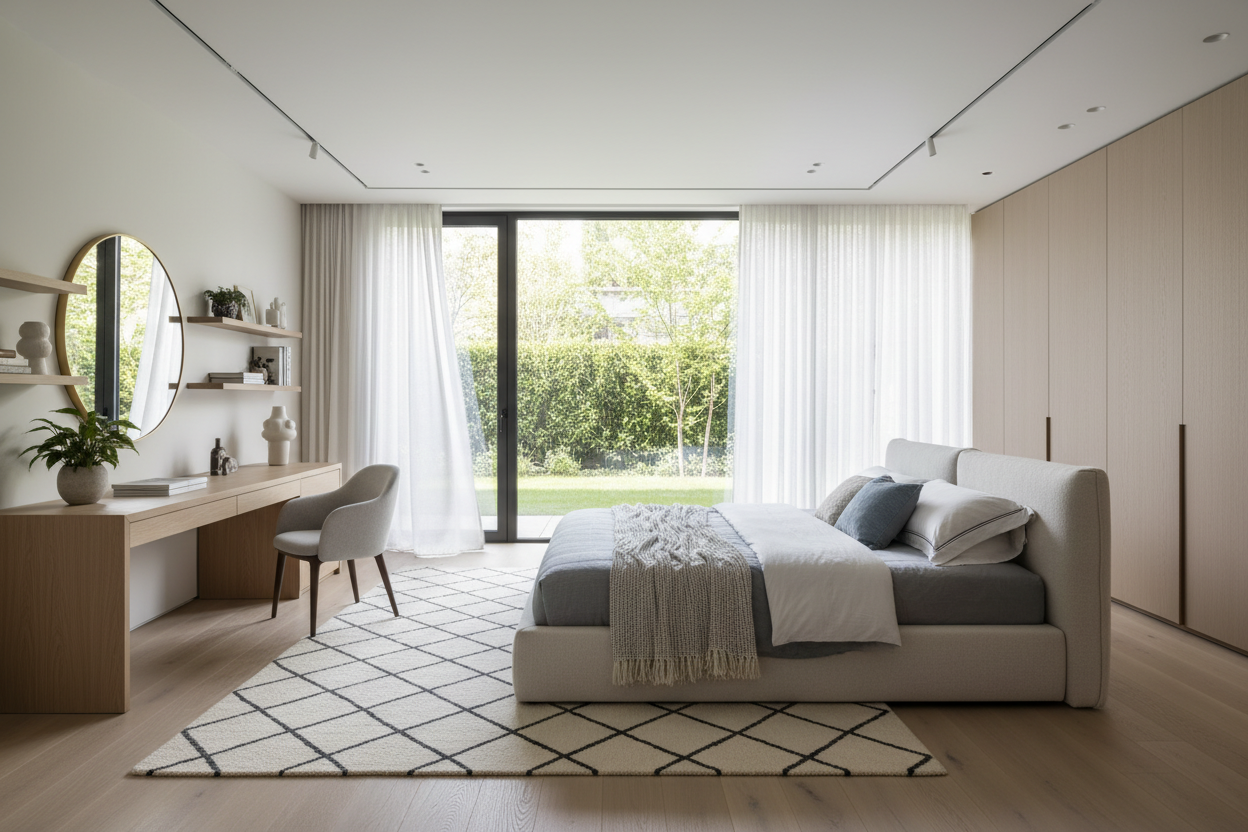
Integrating a workspace into your sanctuary is one of the most delicate balancing acts in interior design. The challenge isn't just physical space; it is psychological. How do you create a zone for high productivity that doesn't sabotage the restorative nature of a sleeping quarter? The secret lies in intentional zoning and selecting furniture that whispers rather than shouts. When executed correctly, a **master bedroom with office area** can actually enhance the room's functionality without compromising its serenity.
Key Features for a Cohesive Layout
- Visual Zoning: Use area rugs or distinct lighting to create a psychological boundary between sleep and work zones.
- Furniture Scale: Opt for desks with slender silhouettes (parsons or writing desks) rather than bulky executive styles to maintain visual flow.
- Light Control: Ensure task lighting is directional to avoid light spill into the sleeping area, while utilizing dimmers for ambient transitions.
- Concealed Storage: Prioritize closed cabinetry or "secretary" style desks to hide technology and paper clutter when the workday ends.
- Material Warmth: Select natural woods and textiles that complement the bedroom's palette, avoiding cold, corporate laminates.
Mastering the Layout and Flow
The placement of your desk dictates the energy of the room. If you are fortunate enough to have an architectural alcove or an office off of master bedroom layout, the separation is organic. However, within a standard rectangular footprint, orientation is everything. Never position the desk so that you are facing the bed while working; it induces grogginess. Conversely, facing the desk while in bed can trigger stress.
The ideal placement is often perpendicular to a window or floating the desk behind a sofa or at the foot of the bed (if space permits), acting as a console. This creates a dedicated "command position" that turns its back on the sleeping area.
Selecting the Right Materials: Solid Wood vs. Veneer
In a bedroom setting, the tactile quality of furniture becomes paramount. Unlike a dedicated corporate office, where durability against high traffic is key, a bedroom office requires warmth.
Solid Wood Considerations
Solid wood desks, particularly in walnut or white oak, offer an organic texture that ages beautifully. They bring a sense of permanence and luxury. However, be mindful of humidity fluctuations if your bedroom has an ensuite bathroom without adequate ventilation, as solid wood can expand and contract.
High-End Veneers
Don't dismiss veneers. A high-quality wood veneer over a stable substrate allows for intricate grain matching (book-matching) that creates a stunning visual focal point. Veneers are often more stable than solid wood and allow for lighter, more aerodynamic designs that keep the room feeling airy.
Ergonomics Meets Aesthetics
The biggest design offender in these dual-purpose spaces is the office chair. A massive, black mesh ergonomic chair will immediately kill the vibe of a serene bedroom. Look for "resimercial" furniture—pieces that offer commercial-grade ergonomic support but are wrapped in residential textiles like bouclé, velvet, or high-grade leather. The goal is a chair that looks like an accent piece but functions for an eight-hour workday.
My Personal Take on Master Bedroom Offices
In my years of designing luxury suites, I’ve learned a lesson the hard way regarding "visual noise." I once designed a stunning master bedroom with office area for a client using a sleek, glass-top desk. It looked incredible in the renderings—airy and invisible.
However, once the client actually moved in, it was a disaster. Why? Because a glass desk hides nothing. Every wire, the messy underside of the printer, and even the lint on the carpet were visible. It created a subconscious feeling of clutter that the client couldn't articulate but definitely felt. We ended up swapping it for a desk with a modesty panel and integrated cable management. The lesson? In a bedroom, being able to hide the mechanics of work is just as important as the work itself. Now, I always test how a desk looks from the perspective of someone lying in the bed—if I can see a tangle of cords, the design has failed.
Conclusion
Merging rest and work requires a gentle hand and a sharp eye for detail. By prioritizing concealed storage, choosing residential-style office furniture, and respecting the layout, you can build a space that supports your career goals during the day and wraps you in comfort at night. It is about creating a room that works as hard as you do, then knows exactly when to quit.
Frequently Asked Questions
How do I hide my computer monitor when I'm not working?
Consider a dedicated armoire desk or a secretary desk with a fold-down front. Alternatively, if using a standard desk, treat the monitor like a TV: place it off-center or balance it with a large piece of art or a table lamp so it doesn't become the sole focal point.
What is the minimum space needed for a bedroom office?
For a functional setup, you need a minimum depth of 48 to 60 inches (30 inches for the desk and at least 30 inches for chair clearance). Ensure the chair creates a clear path of travel and doesn't hit the bed frame when pushed back.
How do I handle lighting without making the bedroom feel like a clinic?
Avoid overhead fluorescent lighting. Instead, layer your lighting. Use a dedicated task lamp with a warm color temperature (2700K-3000K) for the desk, and ensure the rest of the room relies on soft, dimmable ambient lighting (sconces or floor lamps) to maintain a relaxing atmosphere.

Dejar un comentario
Este sitio está protegido por hCaptcha y se aplican la Política de privacidad de hCaptcha y los Términos del servicio.