










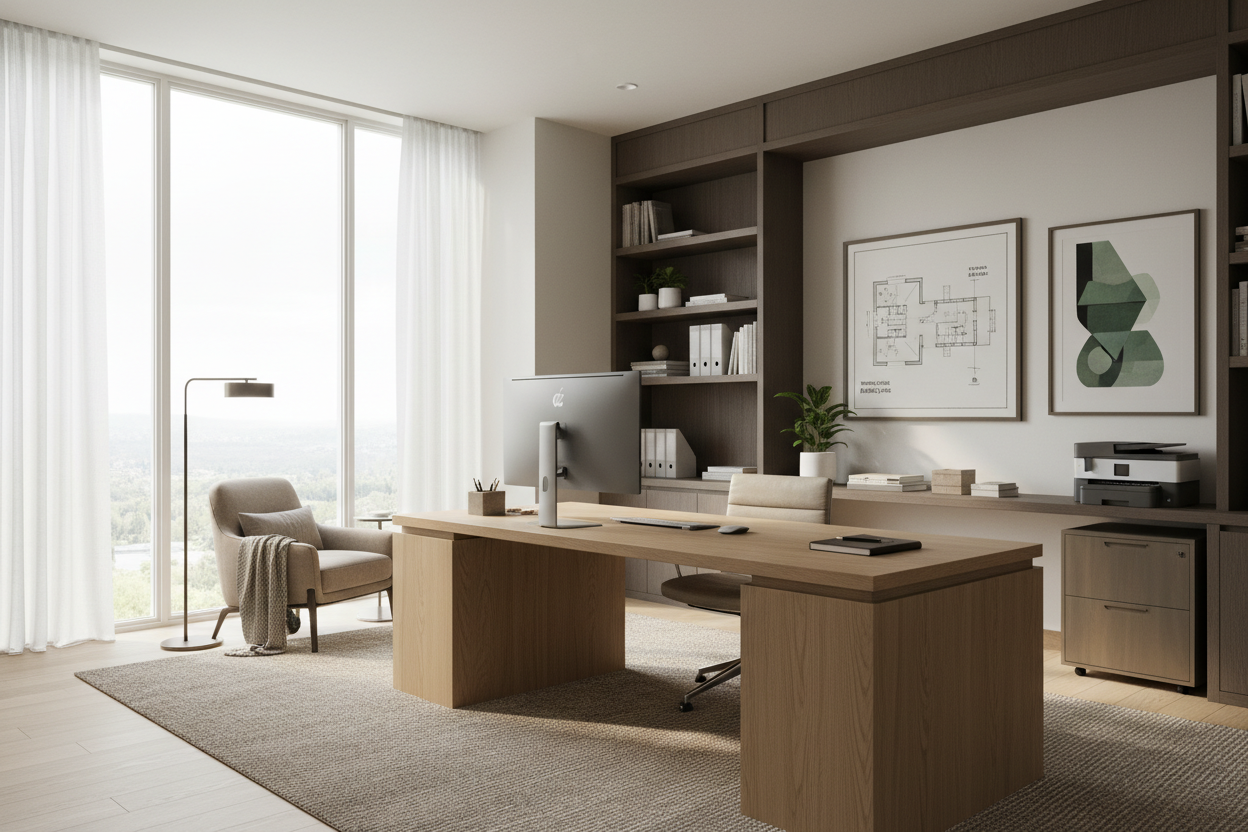
One of the most frequent conversations I have with clients isn't just about ergonomics or color palettes—it's about return on investment. When we allocate a budget for a high-end renovation or a piece of statement furniture, we often overlook the financial architecture of the room. Specifically, how your design choices impact your **deductions for working at home**. As a designer, I see the home office not just as a sanctuary for productivity, but as a potential tax asset. However, the line between a cozy study and a compliant workspace is thin, and crossing it can cost you significant tax benefits.
Quick Decision Guide: Is Your Design Deductible?
Before selecting veneers or lighting fixtures, you must ensure your space meets the fundamental criteria for a home office deduction working from home. If your layout doesn't satisfy these, no amount of receipt-keeping will help.
- Exclusivity is King: The designated area must be used only for business. A desk in the corner of a nursery or a dining table used for laptops generally does not qualify.
- Principal Place of Business: This must be the primary location where you conduct trade or meet clients.
- Regular Use: Occasional emails from the sofa do not constitute a workspace. The area must be used regularly.
- Employee vs. Self-Employed: Generally, W-2 employees cannot claim remote work tax deductions 2024 on federal returns (though state laws vary), whereas freelancers and business owners can.
Zoning Your Space: The "Exclusive Use" Rule
From a spatial planning perspective, the IRS requirement for "exclusive use" is the most critical design constraint. Many homeowners ask, "if you work from home what can you write off regarding the room itself?" The answer lies in the floor plan.
To secure your work-from-home tax deductions, the space must be visually and functionally distinct. If we are designing a multipurpose room—say, a guest room that doubles as an office—we have a problem. Placing a sleeper sofa in your office footprint can disqualify the entire wfh tax deduction because the space is no longer "exclusive."
Design Tip: If you are tight on square footage, we can create a "room within a room." By using permanent dividers or clearly defined architectural breaks, we can measure the specific square footage of the work area. This allows you to claim working from home tax rebate benefits on that specific percentage of your home's footprint, separating it from personal living areas.
Furnishing for Function and Finance
When clients ask, "what can i write off if i work from home," the conversation naturally turns to furniture. High-quality office furniture is not just an aesthetic choice; it is a business asset.
Desks and Ergonomics
Investing in a solid walnut executive desk or a high-performance task chair (like a Herman Miller or Steelcase) often qualifies as a direct business expense. These are work from home expenses tax deductible because they are essential to your trade. When selecting these pieces, keep the receipts and ensure the style dictates function. A decorative chaise lounge might be harder to justify as a tax write off work from home expense than a drafting table.
Built-ins and Shelving
Permanent shelving units installed specifically for business storage can often be categorized under home working expenses. However, the classification (repair vs. improvement) matters. Custom joinery is a significant capital improvement.
Structural Improvements vs. Decor
There is a nuance between what can you write off when you work from home regarding maintenance versus renovation. In design terms, we look at "Direct" vs. "Indirect" expenses.
- Direct Expenses: If we paint the four walls of your home office, install new sconces strictly in that room, or replace the flooring in that specific zone, these are often 100% deductible. This is a massive work from home tax break opportunity for interior upgrades.
- Indirect Expenses: Can you write off utilities if you work from home? Yes, but on a pro-rated basis. This includes whole-house expenses like HVAC repairs, roof maintenance, and electricity. You can claim work from home expenses here based on the percentage of your home's square footage used for business.
Navigating the "Simplified Option" vs. Actual Expenses
When you prepare to claim working from home on your taxes, you have a choice. You can calculate the work from home rate using the simplified method ($5 per square foot, up to 300 sq ft), or track actual expenses.
From a design standpoint, if we have just completed a major renovation of your office, the "Actual Expenses" method usually yields a higher tax credit for working from home (or deduction value). The simplified method is easier, but it ignores the $5,000 you might have spent on custom cabinetry and dedicated lighting circuits.
My Personal Take on deductions for working at home
I learned the hard way that "aesthetic flow" doesn't always align with tax law. A few years ago, I redesigned my own home studio. I wanted it to feel open and airy, so I removed the door connecting it to the living room and added a comfortable reading nook with a plush velvet armchair and a side table for coffee.
When tax season arrived, my CPA looked at the photos I proudly displayed. He pointed to the velvet chair and the open archway. "That looks like a lounge," he said. "Is that strictly for business?" I had to admit that my kids often sat there to read while I worked. That one design choice—blurring the lines between "living" and "working"—threatened my ability to write off home office work from home expenses.
I ended up reinstalling a sliding barn door to physically demarcate the space. It taught me that while open-concept is beautiful, boundaries are profitable. Now, when I advise clients on how to claim work from home expenses through design, I insist on physical separation. It’s not just about focus; it’s about protecting your assets.
Conclusion
Creating a beautiful workspace and maximizing your tax benefits for working from home are not mutually exclusive goals. By planning your layout with the "exclusive use" rule in mind and categorizing your furniture and renovation costs accurately, you can build an office that inspires your work and appeases your accountant. Design with intention, and your home office will pay you back.
Frequently Asked Questions
Can I deduct the cost of decorating my home office?
Generally, decorative items like art or rugs are scrutinized more heavily than functional items. However, if they are necessary for a professional appearance (e.g., for client meetings or video backgrounds), they may be considered work from home write offs. Always consult a tax professional.
Does a laptop or computer count as a deduction?
Yes. If you buy a computer strictly for business use, it is a primary wfh tax write off. If it is used for both personal and business tasks, you must calculate the percentage of business use to claim work from home expenses accurately.
Can W-2 employees claim these deductions in 2024?
Under current federal law, the work from home tax deductions 2024 are largely unavailable to W-2 employees. These benefits are primarily for self-employed individuals and independent contractors. However, check your specific state regulations as some may offer a working from home tax rebate.


Dejar un comentario
Este sitio está protegido por hCaptcha y se aplican la Política de privacidad de hCaptcha y los Términos del servicio.