










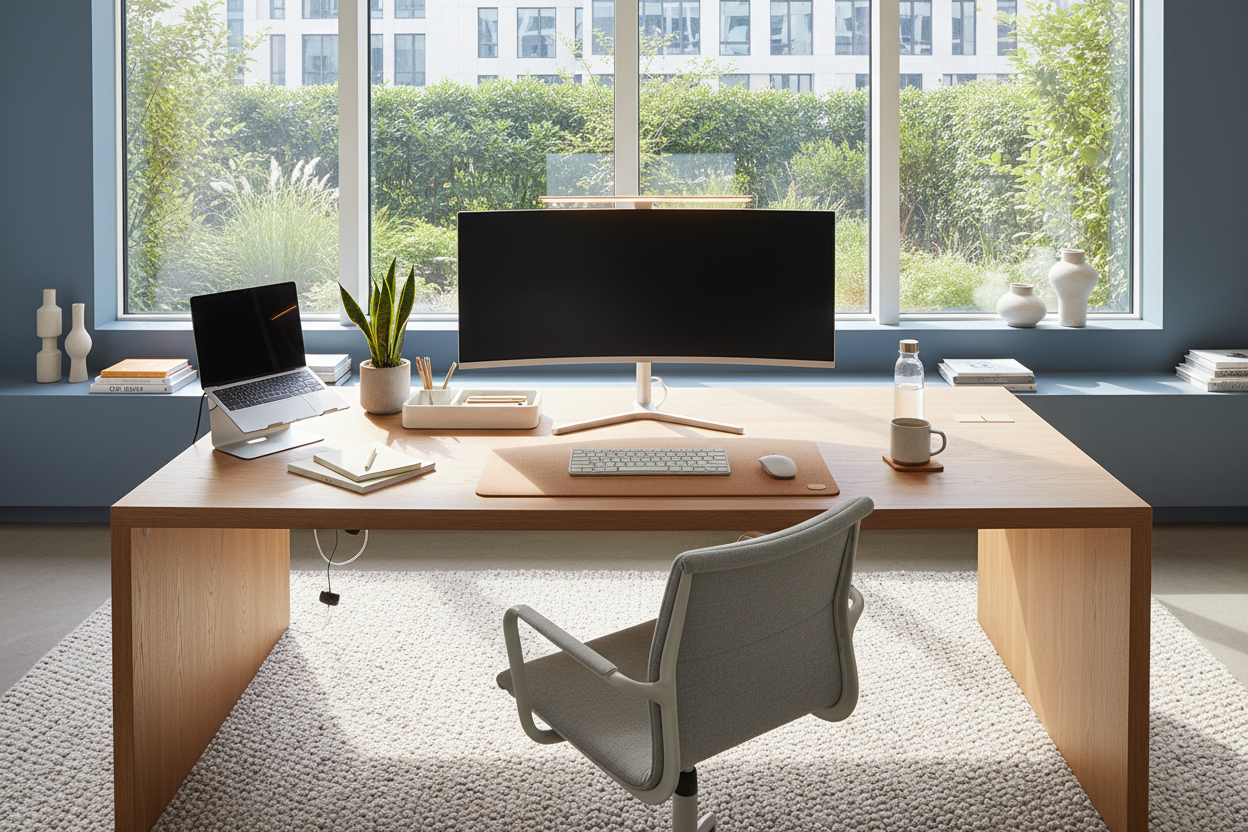
We spend roughly one-third of our lives seated behind a workstation, yet the average setup often feels sterile, cluttered, or purely utilitarian. As an interior designer, I frequently encounter clients who believe that a professional environment must sacrifice personality for efficiency. This is a false dichotomy. The most effective workspaces are those that blend rigorous ergonomics with curated aesthetics, creating an environment that invites focus rather than fatigue. In this guide, we will explore professional ideas for desk at work that transform your surface from a holding ground for papers into a sophisticated command center.
Quick Decision Guide: Key Elements of Desk Styling
- Zoning: Distinctly separate your desk into 'active' (keyboard, mouse) and 'passive' (reference materials, decor) zones to reduce cognitive load.
- Materiality: Incorporate natural textures like leather blotters or wood grain to soften the harshness of corporate laminates.
- Verticality: Utilize risers or shelving to lift monitors and decor, freeing up prime surface area.
- Lighting: Layer your lighting sources; overhead fluorescents should always be balanced with warm task lighting.
Establishing the Foundation: Surface and Layout
Before buying accessories, we must address the canvas itself. Whether you are working with a provided corporate cubicle or a custom piece, the layout dictates the flow of your day. The goal is to minimize reach and maximize flow.
The Triangle of Reach
In kitchen design, we talk about the 'work triangle.' The same applies here. Your keyboard, mouse, and primary reference area (like a notebook or second monitor) should form a tight triangle. Ideas for work desk arrangements often fail because they spread these tools too far apart, forcing the body to twist unnaturally. Keep your daily drivers within a forearm's length.
Curating Materials for Sensory Balance
Most office furniture is constructed from cold materials: metal, plastic, and laminate. To elevate the look, you must introduce warmth. This is where high-end residential design principles enter the commercial space.
Consider a leather or felt desk pad. Visually, it frames your workspace, creating a focal point that anchors the computer. Tactilely, it provides a softer surface for your wrists and improves the acoustics of the immediate area by dampening the sound of typing. If your desk is a flat white or grey, a walnut or oak monitor riser adds an organic element that instantly makes the space feel more bespoke.
Visual Weight and Decor
When implementing office desk ideas at work, avoid the temptation to over-fill the space. We want to manage 'visual weight.' A bulky printer, a stack of books, and a large lamp all on one side will make the desk feel lopsided and chaotic.
The Rule of Three
Style your accessories in odd numbers, typically groups of three. For example, a tall task lamp, a medium-sized plant (like a ZZ plant or Snake plant which tolerate low light), and a small decorative object (like a sculptural paperweight). This creates a vertical hierarchy that guides the eye comfortably across the desk rather than overwhelming it.
Lessons from My Own Projects
I learned a hard lesson early in my career regarding desk surfaces that I always share with clients. I once specified a stunning, high-gloss lacquered writing desk for a creative director's office. It looked architectural and pristine in the showroom.
However, two weeks after installation, the client called me. The high-gloss finish was a nightmare for two reasons: it reflected the overhead track lighting directly into his eyes, causing glare fatigue, and it amplified every single fingerprint and dust mote. We ended up having to cover 60% of that beautiful finish with a matte blotter just to make it usable. Now, when I curate desk setups, I prioritize matte or satin finishes and advise clients to test how their specific office lighting interacts with the desk surface before committing to the aesthetic. Function must sustain the form.
Conclusion
Transforming your workspace doesn't require a full renovation. By focusing on tactile materials, ergonomic zoning, and intentional lighting, you can curate a space that supports your workflow and reflects your taste. A well-designed desk is not just about decoration; it is about creating an environment where you can do your best work.
Frequently Asked Questions
How do I style a small desk without it looking cluttered?
Focus on vertical storage. Use a monitor riser with drawers underneath to hide sticky notes and pens. Keep the surface reserved strictly for your laptop and a single beverage; move personal decor to a wall shelf or use a clip-on desk organizer.
What is the best lighting for a desk with no natural light?
Avoid cool, blue-tinted LEDs which can feel clinical. Opt for an adjustable LED task lamp with a color temperature between 2700K and 3000K. This mimics the warmth of incandescent bulbs and reduces eye strain compared to harsh overhead fluorescents.
Can I use personal items in a corporate open-plan office?
Absolutely, but curate them strictly. Instead of five small trinkets, choose one statement piece, such as a framed architectural print or a high-quality ceramic planter. This looks intentional and professional rather than messy.

Dejar un comentario
Este sitio está protegido por hCaptcha y se aplican la Política de privacidad de hCaptcha y los Términos del servicio.