










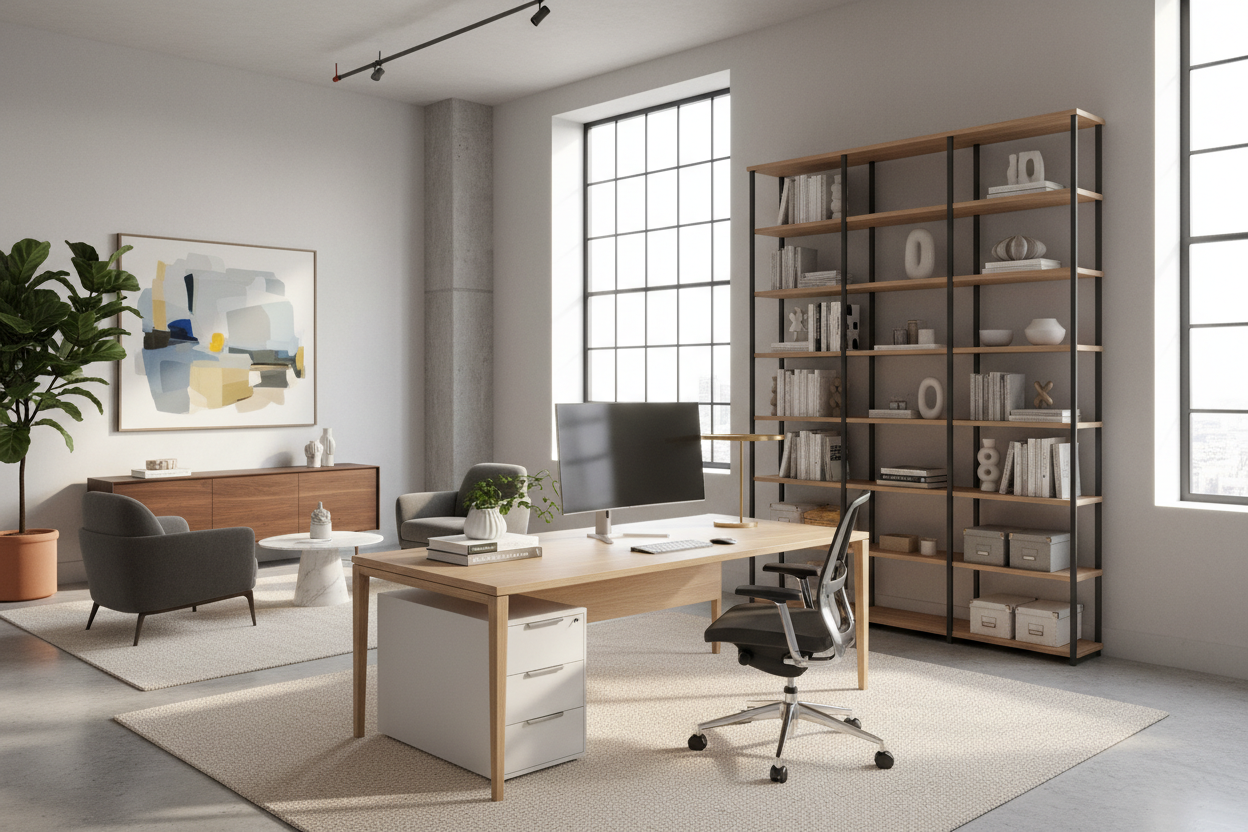
We have all experienced that specific kind of visual fatigue that comes from working in a dated environment. You walk in, and the honey-oak trim, the flickering fluorescent tubes, and the heavy, imposing furniture seem to drain the energy right out of the room. As a designer, I see clients hesitate to renovate because they fear a full demolition is required. It rarely is. Learning how to make an old office look modern is often an exercise in subtraction and strategic layering rather than structural overhaul.
Quick Decision Guide: Modernizing Essentials
- Lighting Temperature: Swap cool, clinical 5000K bulbs for warm, inviting 3000K LEDs to soften harsh shadows.
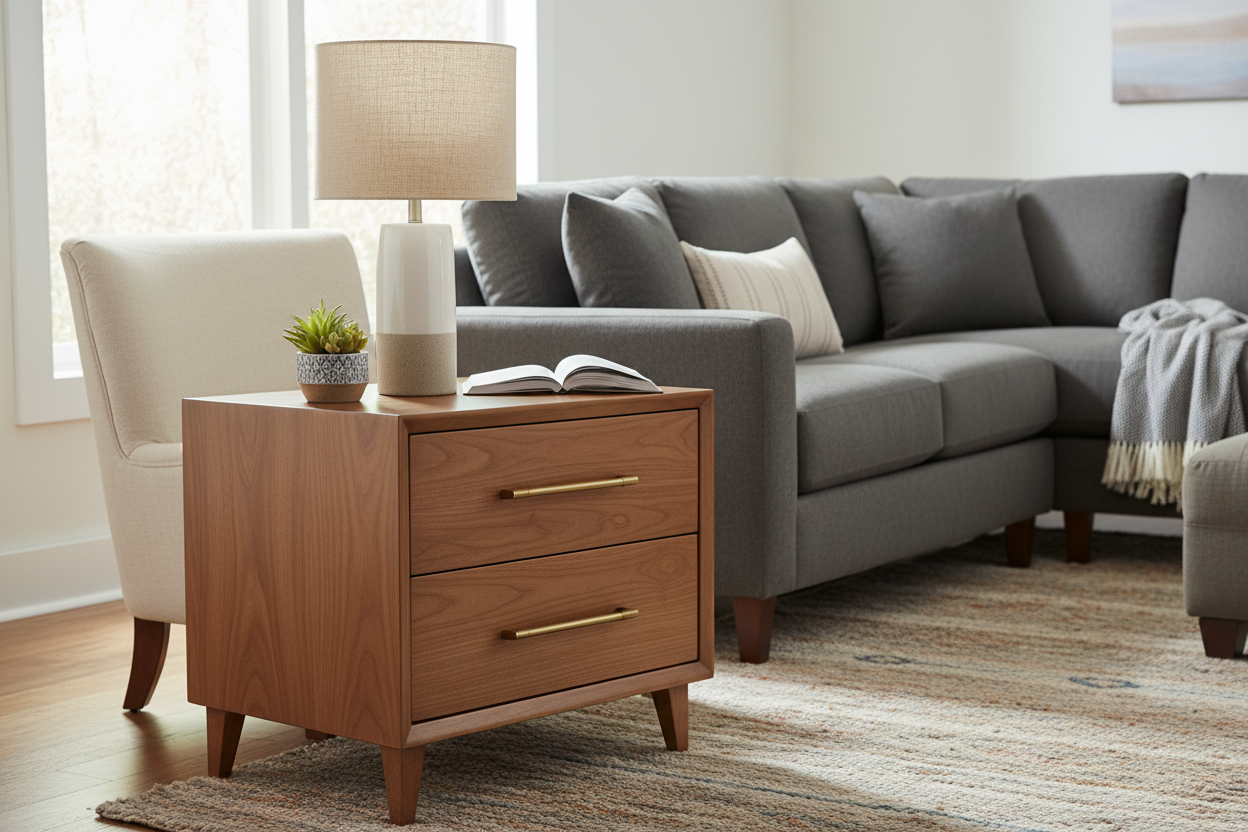
- Hardware Update: Replace dated brass or ceramic drawer pulls with matte black or brushed nickel handles.
- Cable Management: Visible wires instantly date a space; use grommets and sleeves to hide the clutter.
- Textural Contrast: Introduce matte surfaces and natural fibers to counteract shiny, synthetic finishes common in older furniture.
- Biophilic Elements: Add large-leaf plants to break up rigid architectural lines and improve air quality.
Correcting the Lighting Architecture
The single biggest offender in an aged office is lighting. Older spaces relied heavily on central overhead troffers that cast unflattering shadows. To modernize the aesthetic, you need to layer your illumination. Start by turning off the overheads. Introduce floor lamps with fabric shades for ambient light and a sleek, architectural desk lamp for task lighting. This creates pools of light that add depth and drama, instantly making the room feel curated rather than institutional.
Refining the Desk and Seating Profile
If you are wondering how to make your office desk look professional, look at the silhouette. Older desks are often blocky and visually heavy. If you cannot replace a heavy desk, modernize it by stripping the surface. Remove the blotter, the rolodex, and the plastic trays. Replace them with a singular focal point, such as a leather desk pad or a sculptural organizer.
Pairing a heavy, traditional desk with a high-tech, mesh-back ergonomic chair creates a transitional look that is very current. It signals that you respect quality (the desk) but prioritize health and innovation (the chair). This juxtaposition is key to how to make an office look nice without buying a whole new suite of furniture.
Wall Treatments and Color Theory
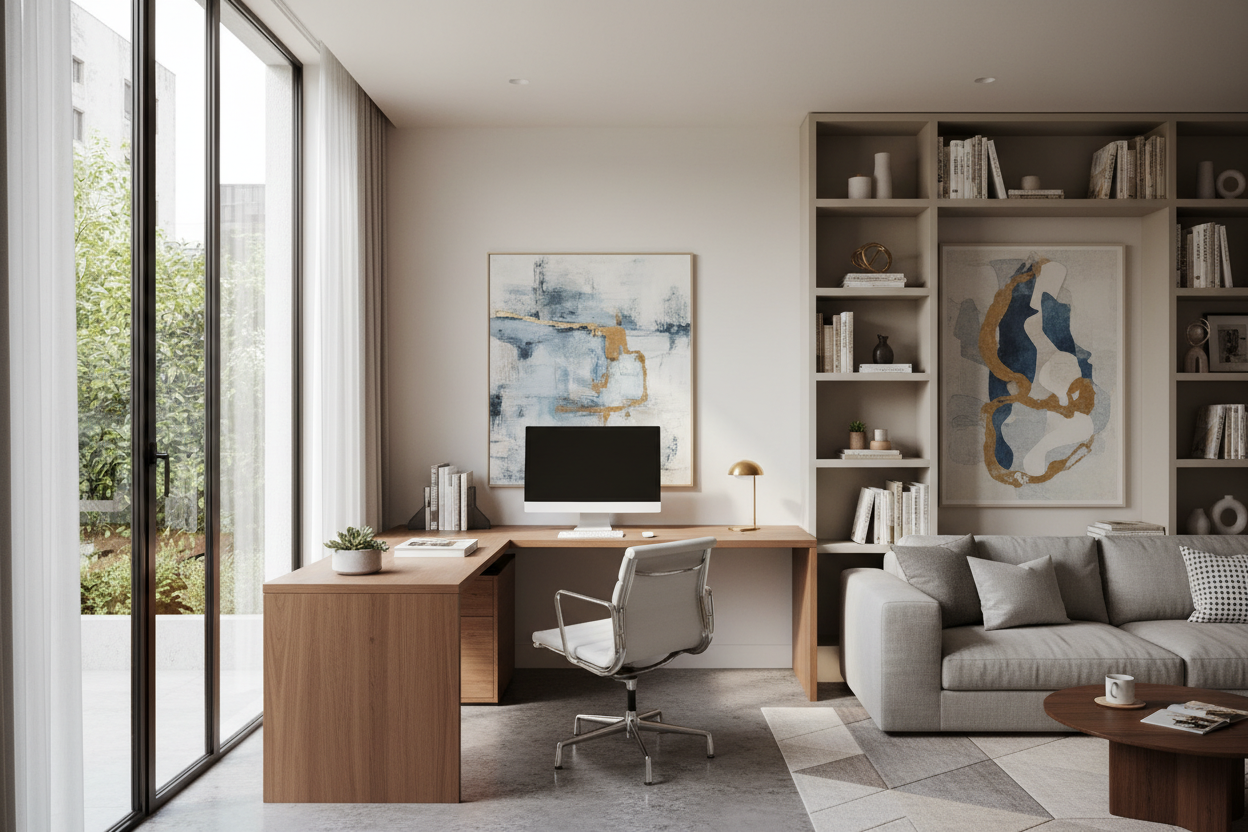
Beige and "builder's white" are the hallmarks of dated corporate design. You do not necessarily need to paint the whole room to fix this. A single accent wall in a deep charcoal, navy, or forest green can anchor the space and make older wood tones look rich rather than antiquated. If painting isn't an option, large-scale art is your best ally. A large, framed abstract piece can cover a multitude of sins and shift the focus away from dated wall textures.
The Art of Styling and Accessories
When clients ask how to make your office look professional, I point them toward accessories. In modern design, less is more, but texture is everything. Replace plastic wastebaskets with metal or wicker. Swap cheap blinds for linen drapery or cellular shades. These tactile shifts signal luxury and attention to detail. Furthermore, unifying your accessories—using all black metal or all walnut wood—creates a cohesive visual language that calms the chaotic energy of an older room.
My Personal Take on How to Make an Old Office Look Modern
I once worked on a project for a law firm located in a heritage building. They had these massive, immovable mahogany desks that felt suffocatingly heavy. The client wanted to scrap them, but the budget didn't allow for high-end replacements. My solution wasn't to fight the wood, but to cool it down.
I realized that the "old" feeling came from the clash between the red undertones of the mahogany and the yellow undertones of the wall paint. We painted the walls a cool, crisp "Dove Wing" grey and swapped the polished brass hardware on the desks for matte black bars. The transformation was shocking. The matte black absorbed the light that the glossy wood was reflecting, grounding the piece. It taught me a valuable lesson: sometimes you don't need new furniture; you just need to change the "jewelry" (hardware) and the backdrop to make a vintage piece feel intentional and bespoke.
Conclusion
Revitalizing a workspace doesn't require a bulldozer; it requires a curator's eye. By controlling the lighting, managing the cables, and updating the touch-points like hardware and seating, you can bridge the gap between the past and the present. Your office should be a reflection of your current ambition, not a relic of past trends. Start with the lighting, and the rest will follow.
Frequently Asked Questions
How can I modernize my office on a strict budget?
Focus on paint and hardware. A gallon of premium paint and new drawer pulls can cost under $100 but completely change the character of the room. Additionally, decluttering is free and instantly modernizes a space.
What is the fastest way to make a desk look professional?
Cable management is the priority. Use velcro ties and under-desk trays to hide all cords. Follow this by clearing the surface of everything except your computer, a notebook, and a lamp. Negative space reads as professional and organized.
Does carpet make an office look old?
Wall-to-wall low-pile carpet can look dated. If you cannot rip it out, layer a high-quality area rug on top—preferably one with a modern geometric pattern or a vintage-wash finish—to define the workspace and draw the eye away from the perimeter flooring.

Dejar un comentario
Este sitio está protegido por hCaptcha y se aplican la Política de privacidad de hCaptcha y los Términos del servicio.