










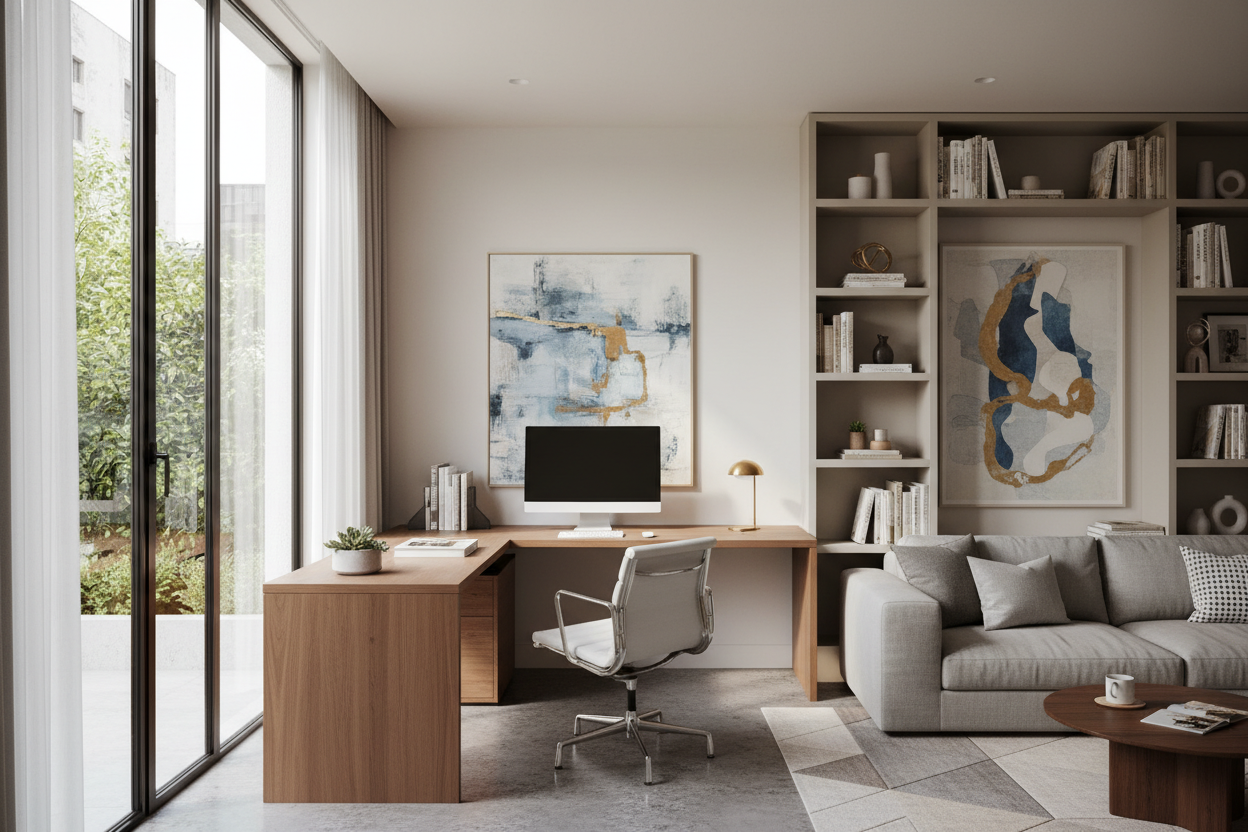
We've all seen the perfectly curated workspaces online, but the reality of setting up a dedicated room home office often involves tangled cords, mismatched monitors, and a desk shoved against a blank wall. When you transition from a temporary kitchen island setup to a permanent workroom, the stakes change. You need a space that supports eight hours of focus without feeling like a sterile corporate cubicle.
In my 15 years of designing residential interiors, I have learned that the best offices balance rigorous ergonomics with warm, residential aesthetics. By the end of this guide, you will know exactly how to lay out your space, select the right pieces, and avoid the costly mistakes that plague most home workspaces.
Quick Decision Guide
- Never face a blank wall if you can avoid it; position your desk to command the room.
- Invest 70% of your budget into an ergonomic chair and proper layered lighting.
- Use closed storage for hardware (printers, routers) to maintain a residential feel.
- Ensure your desk height is around 28 to 29 inches for proper typing posture.
Space Planning: The Foundation of a Great Home Work Space
The Command Position
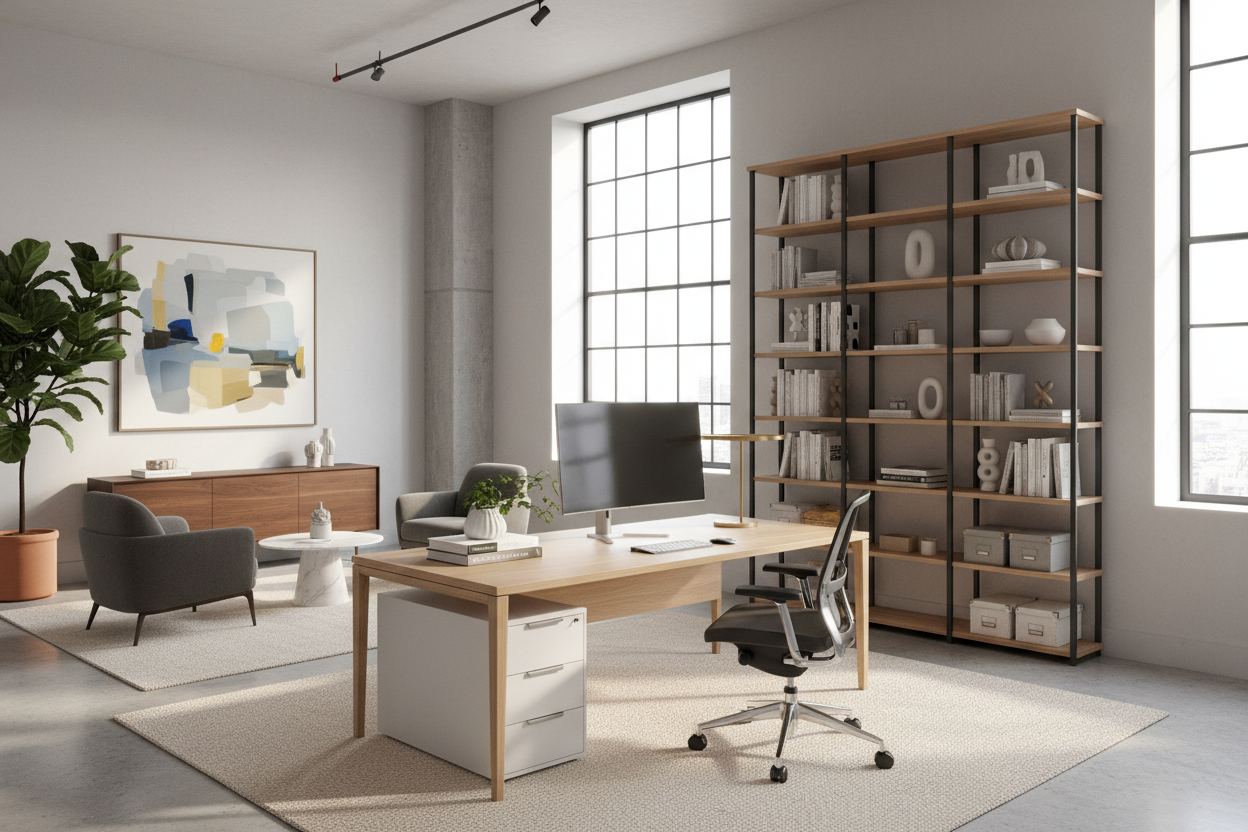
The biggest mistake I see in a typical work space at home is pushing the desk flush against the wall. Instead, pull the desk into the center of the room, facing the door. This 'command position' gives you a psychological sense of control and makes the room feel larger. It also provides a much better background for video calls than a close-up of your bedroom door or a messy closet.
Managing the Home Office Open Layout
If your setup is part of a larger area—like a home office open to a living room or den—visual boundaries are critical. Use an area rug to anchor the desk and chair, creating a distinct zone. A bookshelf or a slatted room divider can help separate your working space ideas from your relaxation areas, ensuring you can mentally clock out at five o'clock.
Comfort & Ergonomics: Beyond the Look
The Truth About Desk Heights
When brainstorming workspace ideas, people often obsess over the style of the desk. However, standard dining tables are 30 inches high, which is too tall for most people to type comfortably. A proper home work office requires a desk height of 28 to 29 inches, paired with a highly adjustable chair. If you fall in love with a vintage table, be prepared to add a keyboard tray or an ergonomic footrest to compensate for the height difference.
Style & Coordination: Building an Inspiring Workroom
Hiding the Hardware
A dedicated office workroom needs to handle printers, routers, and endless cables. To keep the room feeling residential rather than commercial, prioritize closed storage. A beautiful credenza can hide a bulky printer and a filing system perfectly while offering a surface for art or a table lamp. When looking at workroom ideas, remember that visual clutter translates directly to mental clutter.
Designer's Honest Take: Lessons from My Own Projects
Early in my career, I designed what I thought was the ultimate workspace for myself. I bought a stunning, authentic mid-century modern teak desk. It was a sculptural masterpiece with incredible visual weight. The downside? It had zero cable management, shallow drawers, and a knee clearance that bruised my thighs every time I crossed my legs.
I spent a year fighting a mess of extension cords before finally admitting defeat and swapping it for a modern, technically equipped desk. The lesson? Never sacrifice daily physical comfort for a catalog-perfect silhouette. If the piece doesn't support the actual work, it is just an expensive, frustrating sculpture.
Frequently Asked Questions
Where should a desk be placed in a home office?
Ideally, place your desk near a natural light source, but perpendicular to the window to avoid screen glare. Position yourself so you have a clear view of the door to make the room feel expansive and give you the best lighting for video calls.
How do I make my home office look professional on video calls?
Focus on the wall behind you. Avoid heavy clutter; instead, use a curated bookshelf, a piece of large-scale art, or a tidy credenza. Ensure you have a ring light or a dedicated desk lamp illuminating your face from the front to avoid harsh shadows.
What is the minimum room size for a home office?
You can create a highly functional workspace in a room as small as 7x7 feet. The key in tight quarters is utilizing vertical wall space for storage and choosing a desk with a lighter visual weight, like a glass top or a slim-legged metal design.


Dejar un comentario
Este sitio está protegido por hCaptcha y se aplican la Política de privacidad de hCaptcha y los Términos del servicio.