










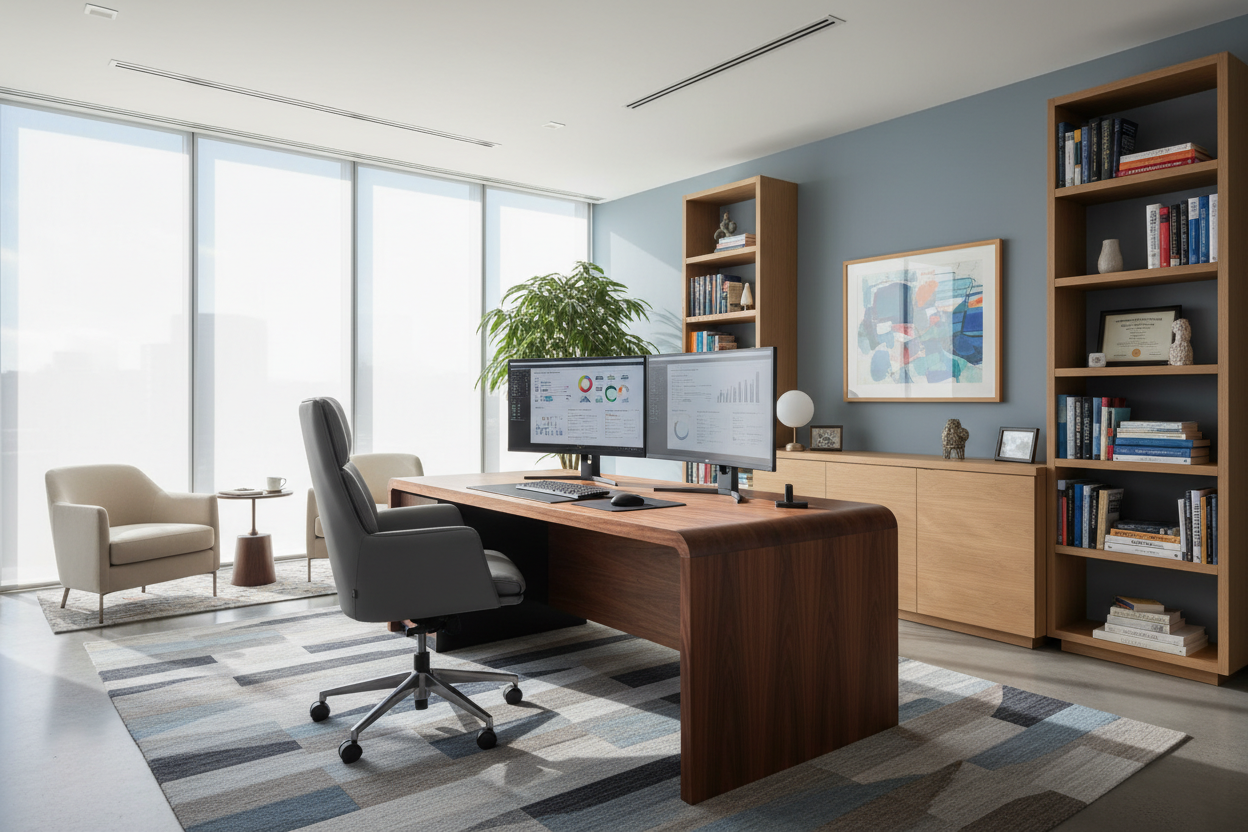
You have put in the years of study and climbed the corporate ladder, yet many professionals still find themselves taking high-stakes calls from a makeshift setup at the dining table. Leveraging your work from home business degree effectively requires more than just intellectual capital; it demands a physical environment that fosters productivity, commands respect during video conferences, and separates professional life from personal relaxation. As a designer, I see the home office not just as a room, but as a tool for your career trajectory.
Quick Decision Guide: The Executive Office Essentials
If you are rushing to furnish your space between meetings, prioritize these four foundational elements to ensure your office matches your professional caliber:
- The Anchor Piece: Choose a desk with a minimum depth of 30 inches to accommodate monitors and documents without feeling cluttered.
- Ergonomic Integrity: Invest in a chair with adjustable lumbar support and seat depth; aesthetic leather is great, but mechanism matters more for long hours.
- Lighting Temperature: Aim for 3000K-4000K LED bulbs to reduce eye strain and provide a flattering, professional appearance on camera.
- Acoustic Control: Incorporate soft textiles (rugs, drapes) to dampen echo and prevent the "empty room" sound during client calls.
Structuring the Layout for Authority
Spatial planning is the backbone of interior design. For those utilizing a work from home with business degree skill set, the position of your desk is paramount. We call this the "Command Position." Never face a wall if you can avoid it. instead, position your desk facing the door, with a solid wall behind you. This not only offers a psychological sense of security but establishes a professional backdrop for video calls.
Defining the Focal Point
Your desk is the protagonist of the room. For a business-centric aesthetic, move away from flimsy particle board. Look for solid wood construction—Walnut or White Oak are excellent choices that age beautifully. A floating desk in the center of the room creates a sense of airiness and luxury, whereas a wall-mounted unit often feels temporary and collegiate.
Material Selection: Balancing Comfort and Class
The tactile experience of your office dictates your mood. A cold, glass-top desk might look sleek in a catalog, but it is often impractical for daily use due to fingerprints and cold forearms.
Seating Textiles
When selecting an executive chair, consider the breathability of the material. Top-grain leather offers a classic, authoritative silhouette but can retain heat. High-quality performance velvet or commercial-grade mesh blends comfort with durability. Ensure the fabric has a high Martindale rub count (over 20,000) to withstand the friction of daily use.
Lighting and Ambiance
Poor lighting can undermine even the most expensive furniture. Avoid relying solely on a central overhead fixture, which casts unflattering shadows. Instead, layer your lighting. Use a dedicated task lamp with an articulating arm for document review, and ambient floor lamps to soften the corners of the room. If your office lacks natural light, consider a daylight-simulating bulb to maintain energy levels throughout the workday.
My Personal Take on work from home business degree Spaces
In my fifteen years of designing home offices, I have learned that the smallest details often cause the biggest frustrations. I once designed a stunning, moody office for a fintech consultant using a high-gloss lacquer desk. It looked incredible in photos.
However, within a week, the client called me. The issue wasn't the look—it was the optics. The high-gloss finish acted like a mirror, bouncing the light from his monitor right up under his chin during Zoom calls, giving him a ghostly appearance. We had to swap it for a matte-finished rift-sawn oak desk. Furthermore, I always tell clients to check the "creak factor." I bought a vintage Eames chair replica for myself once; it looked the part, but every time I shifted my weight, it let out a high-pitched squeak that my microphone picked up instantly. Always sit in the chair and move around vigorously before you buy; silence is a luxury feature.
Conclusion
Your workspace is a physical manifestation of your professional identity. By selecting materials that age well, prioritizing a layout that commands authority, and layering your lighting, you create an environment that supports your ambition. Stop treating your home office as an afterthought and start designing it as the headquarters of your career.
Frequently Asked Questions
What represents the best desk depth for a multi-monitor setup?
For dual monitors, aim for a desk depth of at least 30 to 32 inches. This ensures your screens are at an arm's length distance, preventing eye strain and leaving room for a keyboard and notepad.
How do I make a small office feel executive?
Focus on verticality. Use floor-to-ceiling shelving to draw the eye up, making the room feel taller. Choose furniture with exposed legs rather than solid bases to increase visible floor space, which makes the footprint feel larger.
Is a standing desk necessary for a home business office?
While not strictly necessary for design, it is vital for health. If the industrial look of a standing desk clashes with your decor, look for "hidden lift" desks where the mechanism is concealed within a traditional wood shell.

Dejar un comentario
Este sitio está protegido por hCaptcha y se aplican la Política de privacidad de hCaptcha y los Términos del servicio.