










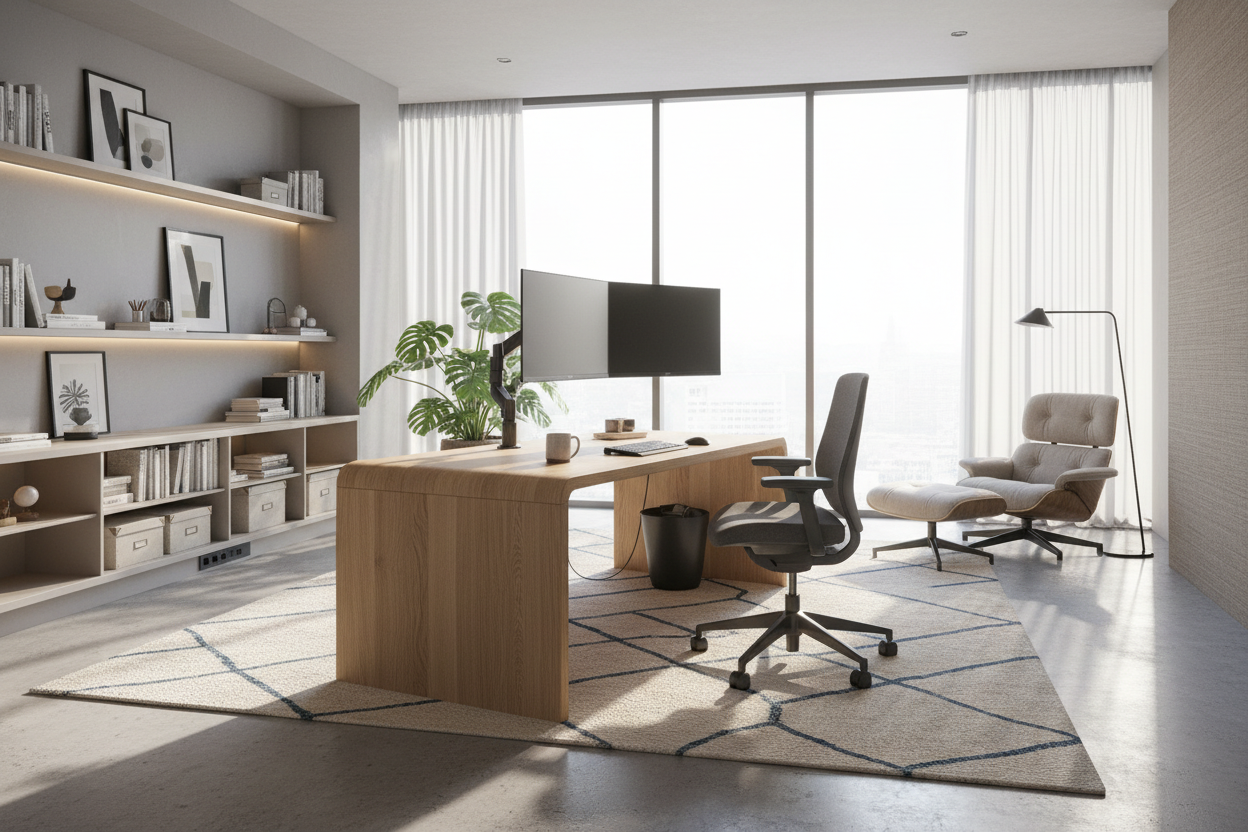
The era of makeshift setups at the dining room table is over. As we transition into permanent remote roles, the conversation has shifted from simply finding a workspace to curating an environment that fosters deep work and creative flow. Whether you are an accountant, a writer, or a graphic designer, securing a job can do at home is only the first step; designing a space that sustains your energy is the second.
Quick Decision Guide: The Essentials
Before investing in new pieces, consider these foundational elements to ensure your home office supports your workflow rather than hindering it.
- Ergonomics Over Aesthetics: Prioritize chairs with lumbar support and adjustable seat depth over trend-driven velvet buckets.
- Surface Area: Ensure your desk depth is at least 24–30 inches to accommodate monitors without straining your eyes.
- Lighting Layers: Combine ambient overhead light with focused task lighting to reduce glare and fatigue.
- Material Durability: Opt for high-pressure laminates or sealed solid wood if your work involves heavy equipment or frequent writing.
Zoning and Spatial Planning
One of the most frequent questions I receive is, "what work can i do at home without a dedicated room?" The answer lies in zoning. You do not need four walls to create a professional boundary; you need visual cues. If you are integrating a workspace into a living area, use an area rug to anchor the desk, creating a psychological "island" for work.
Positioning is equally critical. Never face a wall if you can avoid it. Placing your desk perpendicular to a window allows for natural light to wash across your work surface without creating the harsh silhouette backlight that ruins video calls. This layout benefits almost any job to do at home, as connection to the outdoors reduces cortisol levels.
Selecting the Right Desk: Material and Scale
When clients ask what can i do for a job at home to look more professional, I point them toward the desk material. The tactile experience of your surface matters. Glass desks offer a modern, airy aesthetic perfect for small spaces, but they are cold to the touch and fingerprint magnets.
For a warmer, more grounded feel, solid wood (walnut or white oak) is superior. However, be wary of cheap veneers. If your role involves heavy sketching or equipment use—common in many works to do at home—a soft pine desk will dent within weeks. Look for hardwoods with a matte, polyurethane finish that resists coffee rings and mouse scratches.
The Seating Equation: Comfort vs. Style
Regardless of what job you can do from home, the chair is your primary tool. In the showroom, I often see clients gravitate toward mid-century modern accent chairs. While beautiful, these lack the kinematic support required for an 8-hour shift.
Look for a "synchro-tilt" mechanism, which allows the backrest and seat to move in a ratio that keeps your feet flat on the floor while you recline. The upholstery should be breathable; mesh is functional, but a high-performance fabric (like Crypton) offers a softer, residential feel that blends better with your home decor than stark office black.
Lighting: The Invisible Design Element
Bad lighting causes fatigue faster than a bad chair. For home doing jobs that require focus, you need a Kelvin temperature between 3000K and 4000K. Anything warmer (yellow) induces sleepiness; anything cooler (blue) feels sterile. Layer your lighting: a warm floor lamp for ambiance and a crisp, adjustable LED task lamp for the desk surface. This ensures that whatever work can be done from home is done under optimal visual conditions.
My Personal Take on job can do at home Setups
I learned the hard way that "commercial grade" isn't just marketing jargon—it is a necessity. A few years ago, I designed a custom floating desk for my own home office using a beautiful, raw reclaimed teak. I wanted a rustic, organic look.
It was a disaster functionally. The wood texture was so uneven that I couldn't write on a piece of paper without a backing pad, and the raw finish absorbed a spilled espresso shot on day three, leaving a permanent stain. Furthermore, I hadn't accounted for cable management, so my sleek floating shelf became a nest of dangling wires. Now, I always insist on integrated cable channels and sealed finishes. It is the unglamorous details, like grommets and finish durability, that determine if a space is actually livable.
Conclusion
Transforming your home into a workspace is about balancing the residential soul of your house with the functional demands of your career. By investing in ergonomic seating, durable materials, and proper lighting, you elevate not just your room, but your professional output. Create a space that commands respect, and the work will follow.
Frequently Asked Questions
How do I fit a workspace into a small bedroom?
Utilize verticality. A ladder desk or a wall-mounted secretary desk draws the eye upward and preserves floor space. Ensure the chair can fully tuck under the desk when not in use to maintain flow.
Is a standing desk worth the investment?
Yes, but visual weight is a concern. Standing desks can look clunky. Look for models with concealed motors and legs that match your room's hardware (e.g., matte black or brushed brass) to keep the look sophisticated.
What is the best rug size for a home office?
The rug should be large enough that your chair remains on the rug even when you push back from the desk. Usually, a 5x8 or 6x9 rug is sufficient to anchor the desk and chair together.

Dejar un comentario
Este sitio está protegido por hCaptcha y se aplican la Política de privacidad de hCaptcha y los Términos del servicio.