










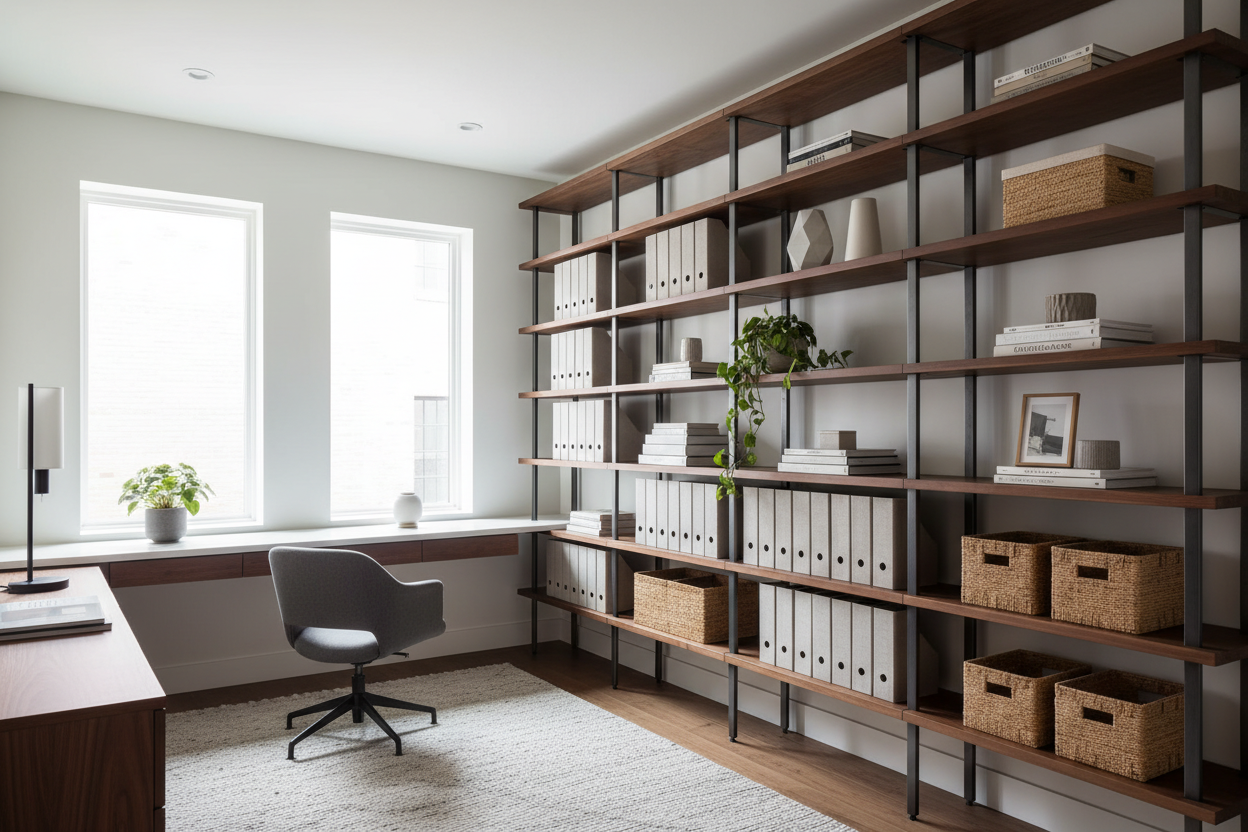
There is nothing that disrupts a productive workflow quite like visual clutter. When I walk into a client's workspace, the first thing I assess is their vertical potential. Often, the floor plan is exhausted, but the walls remain surprisingly bare. Office shelving is not merely a storage solution; it is an architectural element that defines the volume and character of a room. Whether you are curating a backdrop for video calls or organizing a heavy reference library, the right shelving system bridges the gap between high-end aesthetics and rigid functionality.
Key Features to Look For
- Load-Bearing Capacity: Essential for heavy binders or equipment; look for reinforced brackets or solid wood construction.
- Material Integrity: Solid hardwoods and powder-coated steel offer longevity compared to particle board, which tends to bow over time.
- Adjustability: Modular systems allow you to alter shelf heights as your storage needs evolve.
- Depth Ratios: Standard 12-inch depth works for books, while 15-18 inches is required for printers and archival boxes.
- Visual Weight: Consider open-back units for an airy feel or closed-back cabinetry for a grounded, traditional look.
Selecting Materials: Texture and Durability
The material you choose dictates the entire mood of the workspace. For a warm, executive feel, I often recommend walnut or white oak shelving for office environments. Natural wood grain adds texture and softens the acoustics of a room. However, you must be wary of veneers if you plan to slide heavy items frequently, as edges can chip.
Conversely, if you lean toward an industrial or brutalist aesthetic, metal office racking systems are exceptional. Once relegated to warehouses, high-end manufacturers are now producing refined steel racking with matte black or brushed brass finishes. These provide incredible structural integrity and a clean, sharp silhouette that contrasts beautifully with soft furnishings like rugs or drapery.
Space Planning and Visual Balance
Placement is just as critical as the product itself. A common error is installing shelves that are too shallow for the wall, making them look like an afterthought. When integrating a shelving office layout, I apply the "two-thirds" rule: the shelving unit should occupy roughly two-thirds of the wall width to feel intentional and grounded.
The Art of Styling
Functionality does not require sacrificing beauty. To avoid the "cluttered library" look, utilize negative space. Leave approximately 20% of the shelf empty. Alternate between vertical stacks of books and horizontal piles topped with a sculptural object. This creates a visual rhythm that allows the eye to rest, making the room feel larger and more composed.
Lessons from My Own Projects
I learned the hard way about "theoretical weight limits" versus reality early in my career. I once specified a beautiful, floating lacquer shelf system for a lawyer's home office. The manufacturer claimed it could hold 50 pounds per linear foot. We installed it, it looked pristine, and I left feeling great.
Three months later, I got a call. The shelves hadn't broken, but they had developed a subtle, permanent "smile"—a visible sag in the center. The client had filled them edge-to-edge with dense legal journals. The lesson? Particle board cores, even high-end ones, have a memory. Now, whenever a client mentions books, I insist on solid wood or reinforced steel stiffeners hidden within the shelf. I also learned to check the wall studs myself; you would be surprised how many "heavy-duty" anchors pull right out of drywall when humidity shifts.
Conclusion
Investing in quality shelving elevates your workspace from a temporary station to a professional sanctuary. By prioritizing structural integrity and thoughtful placement, you create a space that supports both your workflow and your design sensibilities. Look at your walls today—there is an opportunity waiting there.
Frequently Asked Questions
How deep should office shelves be for a printer?
Most standard home office printers require a shelf depth of at least 15 to 18 inches. Standard book depth (10-12 inches) will leave the equipment hanging over the edge, which is both unstable and visually jarring.
Can I use industrial racking in a home office?
Absolutely. Industrial office racking is a top trend for modern and loft-style spaces. To keep it from looking like a garage, choose units with high-quality powder coating and style them with plants and warm lighting to soften the metal edges.
What is the best height for wall-mounted shelves above a desk?
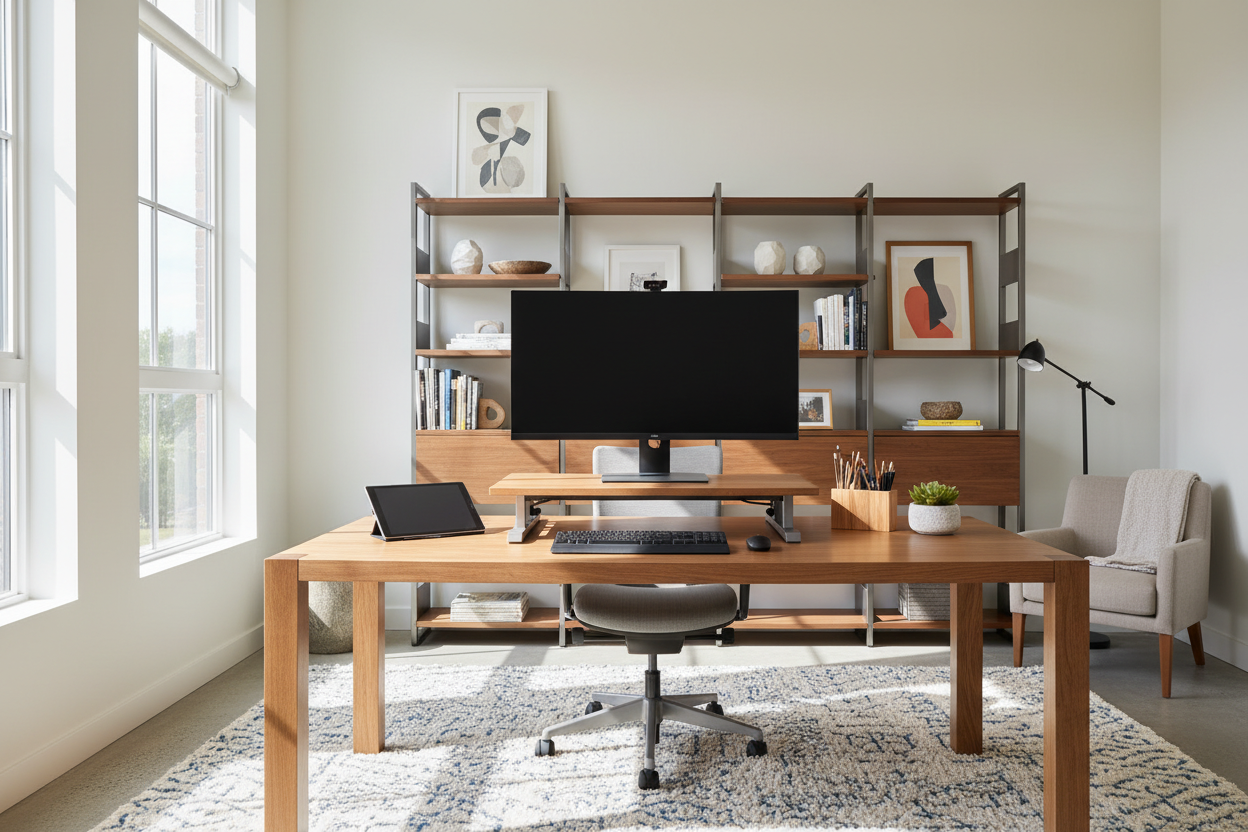
Generally, the bottom shelf should sit 18 to 24 inches above the desktop surface. This provides ample clearance for your monitor and laptop while keeping binders and essentials within arm's reach.

Dejar un comentario
Este sitio está protegido por hCaptcha y se aplican la Política de privacidad de hCaptcha y los Términos del servicio.