










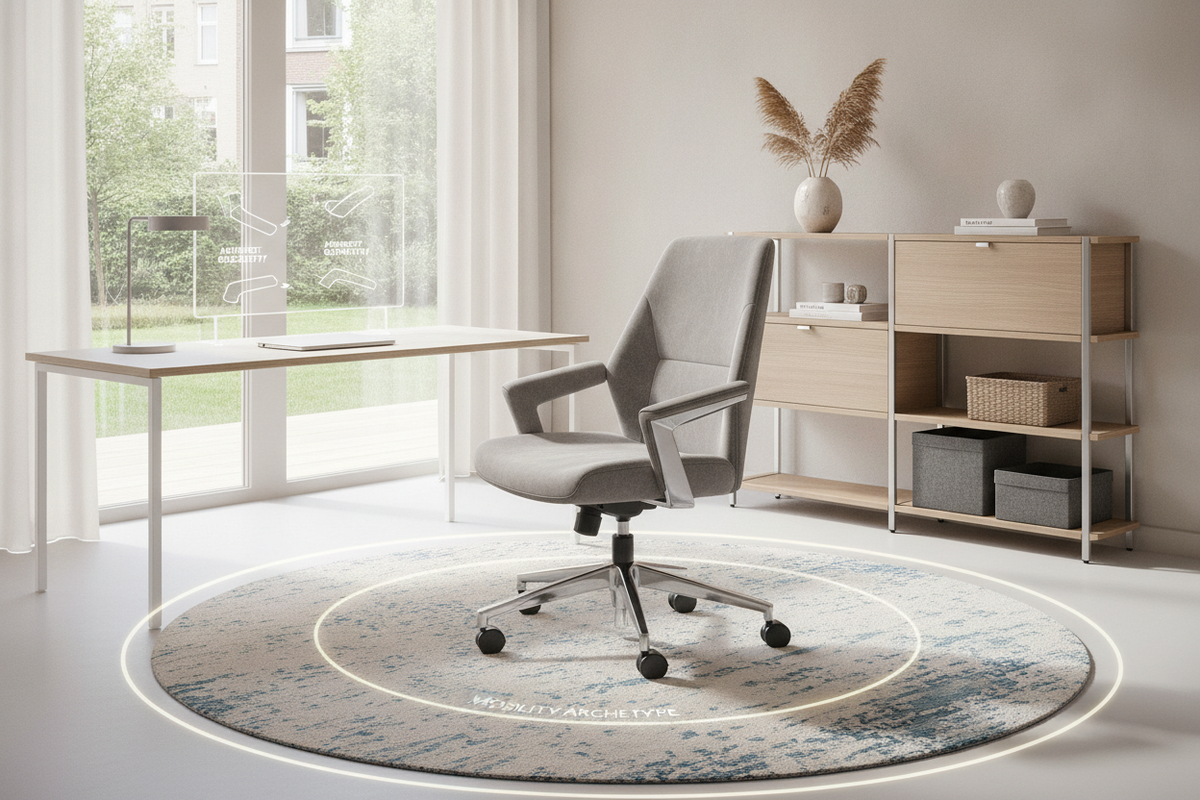
Understanding the Desk Chair with Wheels and Arms: Mobility Meets Support
A well-proportioned desk chair with wheels and arms anchors daily productivity by uniting responsive dynamic movement with structured upper-body support. In both open-concept workspaces and compact home studies, an office chair with arms and wheels allows you to transition seamlessly between typing, referencing physical documents, reaching for side storage, and leaning back during focused planning sessions. By integrating caster bases with ergonomic armrests, modern task seating promotes subtle shifts in posture while keeping core work tools easily accessible.
Balancing functional mobility and upper-body resting support requires an understanding of how distinct mechanical components interact. A chair on wheels with arms is not merely a single seat; it is a mechanical system composed of a five-star base, a hydraulic lift cylinder, a tilting mechanism, an upholstered shell, and armrest supports. Selecting the right setup involves assessing your room layout, flooring type, desk clearances, and individual workflow habits.
Mobility and Base Archetypes: Matching Casters to Flooring Surfaces
The foundation of any desk chair wheels arms configuration is its base and wheel assembly. The base distributes user weight across multiple contact points to ensure balance during rapid pivots and linear tracking.
- Five-Star Engineered Nylon Bases: Lightweight, corrosion-resistant, and resilient against everyday scuffs, nylon bases offer reliable stability for modern residential workstations.
- Polished Aluminum and Steel Bases: Offering an elevated, modern aesthetic and exceptional frame rigidity, metallic bases provide a weighted low center of gravity that complements executive furnishings.
- Dual-Wheel Hard Nylon Casters: Standard on many task chairs, hard dual-wheel casters glide smoothly across low-pile commercial rugs and protective floor mats by minimizing rolling friction.
- Soft Polyurethane and Rollerblade-Style Casters: Featuring resilient outer rings, soft-tread casters protect hardwood, engineered laminate, and ceramic tile surfaces from scratching while maintaining quiet mobility across open rooms.
Armrest Geometries and Adjustment Typologies
Armrests stabilize the shoulders and upper torso by providing a dedicated resting plane for the forearms during reading and collaborative discussions. When selecting an office chair with arms and wheels, consider how armrest structure influences daily interaction with your desk surface.
- Stationary Loop and T-Armrests: Clean and structurally rigid, fixed armrests provide steady support and minimalist visual lines for multi-user conference spaces and dedicated study nooks.
- Flip-Up Armrests: Designed with pivot hinges at the rear seat junction, flip-up arms rotate backward to convert the seat into a compact armless profile, making them ideal for tucking beneath shallow desks or accommodating musical instruments.
- Height-Adjustable and Multi-Directional Arms: Multi-directional configurations allow you to adjust height, width, and horizontal angle. Aligning the arm pad level with the desk surface enables smooth transitions when moving between keyboard trays and tabletop surfaces.
Spatial Clearances and Workstation Geometry
Proper spatial planning ensures that your desk chair wheels arms assembly operates smoothly without colliding with surrounding furniture or baseboards. For a comprehensive walkthrough on balancing proportions across your study, consult our office desk chair guide.
Before choosing a seat, measure the vertical clearance between the floor and the lowest edge of your desktop or under-desk drawer unit. Ensure that armrest peaks slide comfortably beneath the desk surface when the chair is elevated to your preferred working height. If you work from a compact corner configuration, such as a corner office desk with integrated storage, maintain a clear turning diameter around the main leg opening to prevent casters from catching on side panels or modesty walls.
Upholstery Materials and Structural Frame Builds
The choice of upholstery and core framing defines both the visual identity and long-term durability of your seating. Different workplace settings and ambient room temperatures call for distinct material properties:
- Breathable Suspension Mesh: Open-weave mesh backrests encourage continuous airflow, helping regulate temperature during long work sessions while contouring flexibly to upper-body movement.
- High-Density Molded Foam: Dense foam cushions wrapped in tailored woven fabrics retain structural shape over time, offering firm, supportive seating that resists sagging.
- Durable Faux Leather and PU: Smooth synthetic leathers deliver a sleek, contemporary aesthetic that is simple to wipe clean, making them practical for active multi-purpose work environments.
- Top-Grain Leather: Premium executive upholstery develops a natural patina over time, delivering refined texture, rich tactile quality, and high resilience in formal office suites.
Integrating Mobile Armchair Seating with Office Desks and Storage Cabinets
A mobile task chair functions best when thoughtfully coordinated with the surrounding architectural storage and primary work surface. In modular and multi-zone layouts, selecting furniture that provides dedicated knee wells and perimeter clearances prevents cluttered circulation paths.
Pairing a flexible mobile seat with a comprehensive setup like a 4-drawer multi-door office storage cabinet with desk establishes designated zones for active tasks and archival storage, allowing you to glide smoothly from your keyboard to filing compartments. For larger executive office layouts or client-facing spaces featuring an L-shaped executive desk counter, ensure that the chair’s five-star base has unobstructed clearance to turn and roll between primary work tiers and transaction counters.
Assembly, Caster Upkeep, and Long-Term Maintenance
Proper assembly and routine maintenance preserve the smooth glide and structural integrity of an office chair with arms and wheels over years of daily use.
- Cylinder and Base Installation: Ensure the central pneumatic cylinder is seated firmly and plumb within the five-star base hub before attaching the seat plate to prevent off-axis tilting.
- Caster Axle Cleaning: Periodically invert the base to remove dust, lint, and carpet fibers from wheel axles. Clean caster stems keep wheels rotating freely and prevent surface drag.
- Hardware Retightening: Check and tighten under-seat mechanism bolts and armrest mounting screws on a regular schedule to prevent frame wobble and joint creaking.
- Upholstery Care: Vacuum fabric and mesh surfaces with a soft brush attachment, and condition leatherette surfaces periodically with material-safe cleaners to maintain surface suppleness.
Workstation Seating Selection Decision Blueprint
Selecting the optimal desk chair with wheels and arms involves aligning mechanical features with spatial dimensions and workflow demands. For inspiration on designing an elevated workstation aesthetic, explore our luxury office styling guide.
- Flooring Suitability: Match hard casters with low-pile carpets and soft-tread wheels with hard floors to ensure smooth, controlled rolling.
- Armrest Clearance: Confirm that the armrests clear the underside of your desk apron to allow deep tuck-in when the workspace is not in use.
- Base Diameter and Room Scale: Verify that the full base footprint fits comfortably within your desk knee well without contacting side pedestals.
- Material Selection: Choose between breathable mesh for thermal ventilation, supportive molded foam for everyday durability, or sleek leather for tailored executive styling.



Dejar un comentario
Este sitio está protegido por hCaptcha y se aplican la Política de privacidad de hCaptcha y los Términos del servicio.