










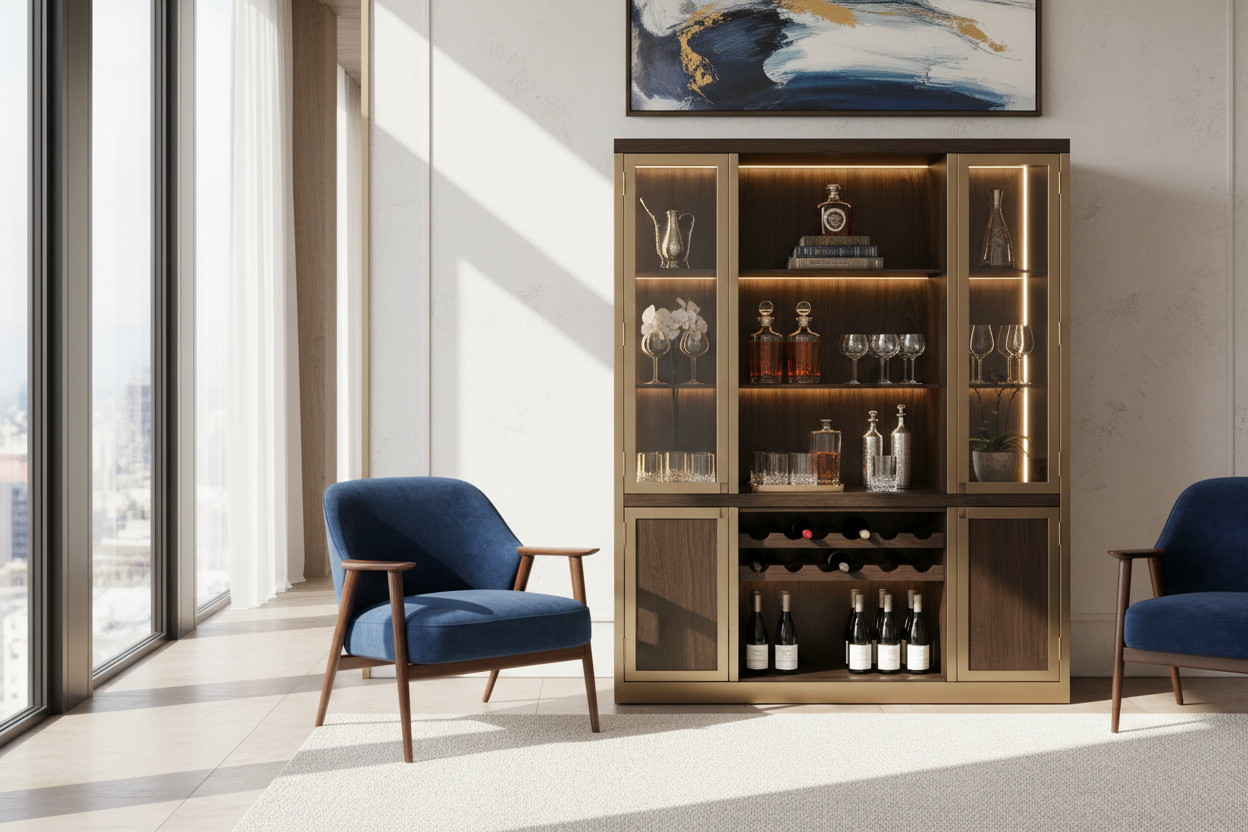
Entertaining at home often reveals a frustrating design dilemma: you want your beautiful glassware and premium spirits accessible, but leaving them clustered on a kitchen counter just looks messy. The solution usually points to a display bar cabinet. It offers the storage of a traditional credenza with the visual appeal of a curated showcase. By the end of this guide, you will know exactly how to choose, scale, and style a cabinet that looks intentional rather than cluttered.
Quick Decision Guide
- Prioritize depth: Ensure your cabinet is at least 15 to 18 inches deep to accommodate standard liquor bottles and decanters.
- Check shelf weight capacities: Glass shelves should be tempered and rated for at least 25 pounds to prevent bowing under heavy glass and liquid.
- Consider lighting: Built-in LED strips or puck lights highlight your glassware and add ambient evening lighting to the room.
- Mix open and closed storage: Choose designs that allow you to hide half-empty mixers behind solid doors while displaying crystal behind glass.
Sizing and Placement Strategies
Finding the Right Visual Weight
A common mistake I see in North American homes is buying a cabinet that gets dwarfed by a large open-concept room. If you are placing your cabinet along a primary dining room wall, it needs enough visual weight to anchor the space. Look for tall, arched silhouettes or wide, low-profile credenzas depending on your ceiling height. Always maintain a minimum of 36 inches of clearance in front of the cabinet so doors can swing open fully without hitting dining chairs or sofas.
Curating the Perfect Aesthetic
Fluted Glass vs. Clear Glass
When integrating a display cabinet with bar functionality into your home, the type of glass dictates the vibe. Clear glass requires rigorous styling—every bottle and coupe glass must be meticulously arranged because there is no place to hide. If you prefer a more forgiving approach, fluted or ribbed glass is an excellent alternative. It catches the light beautifully and obscures the labels of your everyday mixers, leaving only the appealing shapes and colors visible.
Why Construction Matters for Heavy Bottles
Wood Veneer vs. Solid Metal Construction
Liquor bottles are incredibly heavy. A fully stocked bar can easily add over a hundred pounds of dead weight to a piece of furniture. While engineered wood with a high-quality walnut or oak veneer looks beautiful and resists warping in humid climates, the joinery must be solid. Inspect the shelf pins. Flimsy plastic pins will snap. Look for solid metal brackets or wooden cleats to support the interior shelves. If you lean toward an industrial or modern aesthetic, a powder-coated steel frame offers unmatched durability and a much higher weight tolerance.
Lessons from My Own Projects
A few years ago, I sourced a stunning, minimalist arched cabinet for a client's mid-century suburban home. The matte black finish and delicate glass doors looked amazing in the showroom. However, I learned the hard way that delicate aesthetics often clash with practical physics. After my client fully loaded the upper glass shelves with high-end tequilas and heavy crystal decanters, the shelves developed a terrifying, visible bow.
We had to empty the cabinet immediately and have custom, thicker tempered glass cut to replace the factory shelves. The honest downside to many beautiful retail cabinets is that they are designed for displaying lightweight vases and books, not heavy liquids. Always verify the weight limit before falling in love with a silhouette.
Frequently Asked Questions
How deep should a bar cabinet be?
Aim for a depth of 15 to 18 inches. This provides enough room to store standard bottles front-to-back and allows space to mix a drink on the interior shelf if the design permits.
How do I style a display cabinet with bar features?
Treat it like a bookshelf. Do not just line up bottles like a liquor store. Group items by height, use decorative trays to corral smaller bar tools, and introduce negative space by adding a stack of design books or a small trailing plant.
Can I put a bar cabinet in the living room?
Absolutely. In smaller apartments or open-concept spaces, placing it in the living room creates a great secondary focal point. Just ensure the wood tones or metal finishes coordinate with your existing media console and coffee table.


Dejar un comentario
Este sitio está protegido por hCaptcha y se aplican la Política de privacidad de hCaptcha y los Términos del servicio.