










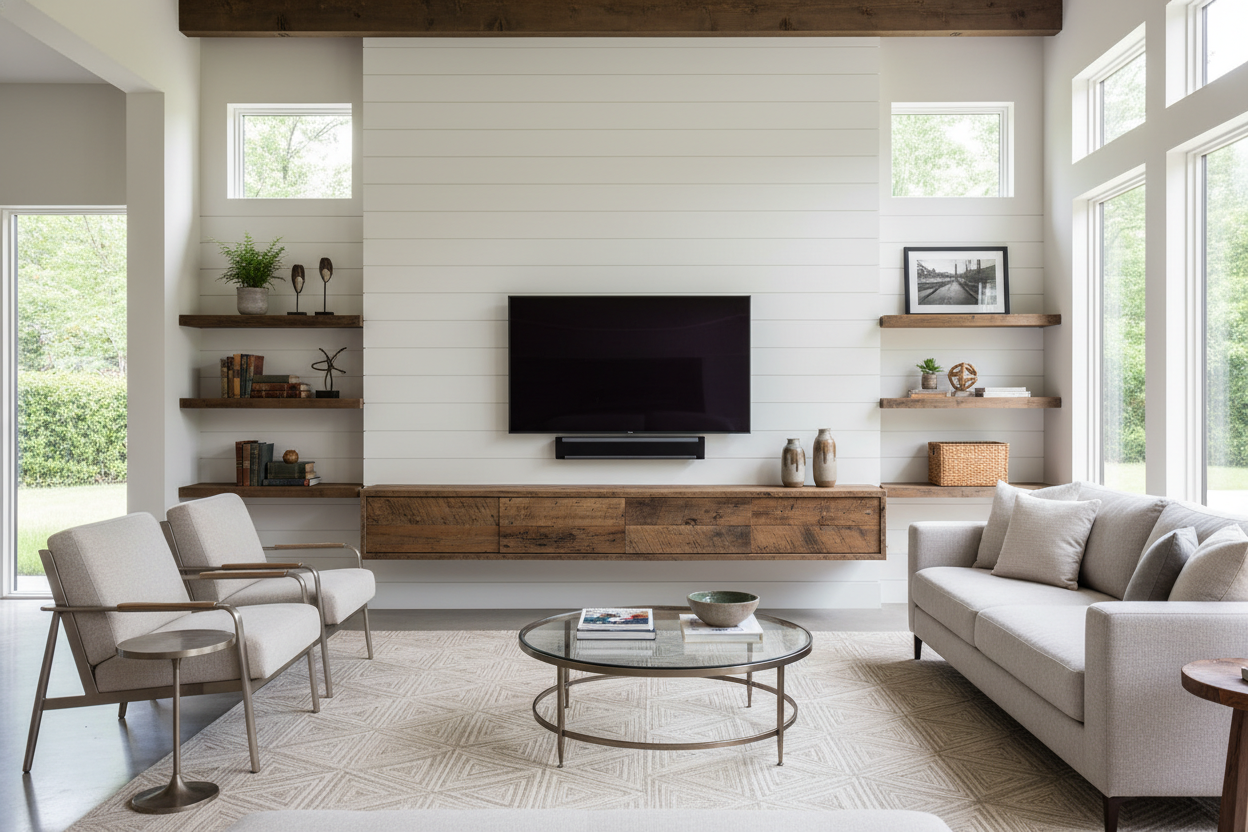
I remember sitting on my living room floor at 11 PM, surrounded by crumpled instruction manuals and those annoying little Styrofoam peanuts that stick to everything. I was staring at my new 65-inch OLED. It looked incredible on the wall, but underneath sat a glossy, white-lacquer media console that made my home feel like a sterile hospital wing or a high-end electronics store. I needed texture. I needed something that didn't scream 'mass-produced in a factory,' which is how I eventually found the perfect rustic floating tv stand.
Quick Takeaways
- Floating units reclaim floor space, making small living rooms feel significantly larger.
- Real wood grain provides the necessary visual 'warmth' to balance out cold, black electronics.
- Avoid 'photo-paper' veneers; if the wood pattern repeats every few inches, it's fake and looks cheap.
- Mounting to studs is non-negotiable—drywall anchors will eventually fail under the weight of solid timber.
The 'Electronics Store' Vibe (And How to Kill It)
Modern living rooms have a major problem: they are becoming increasingly cold. Between the giant black rectangle of the TV, the plastic soundbar, and the glass-fronted cabinets, there is nothing for the eye to rest on that feels organic. It’s all hard edges and reflective surfaces. Bringing in a floating tv stand rustic in its finish is the easiest way to break that tension.
The magic happens in the contrast. When you pair a high-tech screen with a piece of wood that has visible knots and a raw edge, the room suddenly feels lived-in. It stops being a showroom and starts being a home. I've found that the more 'perfect' your tech is, the more 'imperfect' your furniture should be to balance it out.
Why a Farmhouse Floating TV Stand is the Ultimate Compromise
If you live with a partner, you know the struggle. One person wants the 'clean' look of a modern gallery, and the other wants the cozy, weighted feel of a mountain cabin. A farmhouse floating tv stand is the bridge between those two worlds. It offers the sleek, wall-mounted silhouette of a minimalist design while retaining the soul of traditional materials.
By ditching bulky floor-based TV stands, you open up the visual floor area. This is a massive win for small apartments. You get the warmth of the farmhouse aesthetic without the heavy, clunky footprint that usually comes with it. It’s airy, yet grounded.
Spotting Real Character vs. Fake Distressed Finishes
Here is my biggest pet peeve: furniture that pretends to be old. If you're shopping for a floating tv stand rustic style, look closely at the grain. Many budget brands use particle board wrapped in a printed vinyl sticker. Up close, it looks like a blurry photo of wood. It's heartless.
I always advocate for solid wood—pine, mango, or reclaimed oak. You want to feel the ridges of the grain when you run your hand across it. I’ve seen many a wood and metal TV stand that looks more like a cheap factory prop because the 'distressing' was clearly done by a machine in a pattern. Real character comes from the tree, not a printer.
How We Styled Our Reclaimed Wood Floating TV Shelf
Once I finally mounted my reclaimed wood floating tv shelf, the styling became the fun part. A single shelf can look a bit lonely under a massive TV, so I decided to layer the look. I added two smaller rustic floating tv shelves to the side at staggered heights to create a more dynamic wall arrangement.
To keep it from looking too 'country,' I mixed in some matte black ceramics and a few trailing Pothos plants. The greenery against the aged timber is a classic look for a reason. If you have other modern rustic wood furniture in your open-concept space, try to keep the wood undertones consistent. You don't need a perfect match, but a grey-wash rustic floating tv shelf will clash hard against a warm, honey-toned oak cabinet.
The Weight Math for a Rustic Floating Entertainment Center
Let's get real about gravity. A solid wood rustic floating entertainment center is heavy. Add a soundbar, a gaming console, and a few coffee table books, and you're looking at 60 to 80 pounds hanging off your wall. I made the mistake of trusting 'heavy-duty' drywall anchors once. I woke up at 3 AM to the sound of my gear crashing onto the floor.
You must find the studs. Use a real stud finder, not the 'knock on the wall' method. If your studs aren't perfectly centered where you want the stand, mount a wooden cleat to the studs first, then mount the stand to the cleat. It’s an extra step, but it’s the only way to sleep soundly knowing your living room isn't going to collapse overnight.
FAQ
How high should I mount my floating TV stand?
Generally, aim for 10 to 12 inches below the bottom of your TV. This gives you enough room for decor and a soundbar without making the wall look disconnected.
Can I hide wires inside a rustic floating stand?
Most high-quality units have a pre-drilled hole in the top and bottom. Use a recessed cable management kit behind the wall to run wires from the TV into the stand for a truly 'floating' look.
Is reclaimed wood hard to clean?
Not really, but don't use harsh chemicals. A dry microfiber cloth is usually enough. For deep cleaning, a slightly damp cloth with a bit of wood soap works, but always dry it immediately to prevent warping.

Dejar un comentario
Este sitio está protegido por hCaptcha y se aplican la Política de privacidad de hCaptcha y los Términos del servicio.