










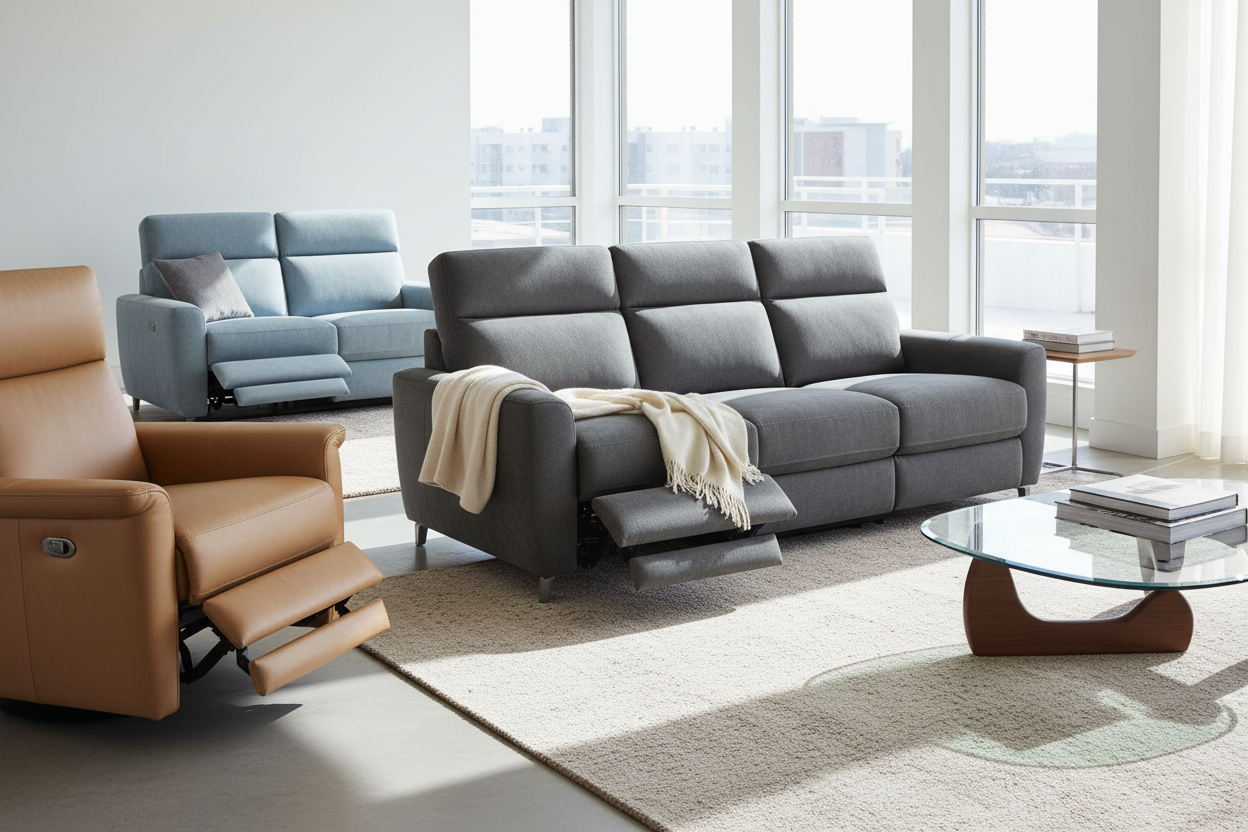
There is a pervasive myth in interior design that you must choose between high-end aesthetics and genuine comfort. Nowhere is this battle fought more fiercely than when selecting a motion piece. You start your search for a recliner sofa nearby hoping to find a sanctuary for your back, but often end up staring at bulky, overstuffed silhouettes that threaten to consume your entire living room. It doesn't have to be this way. With the right eye for construction and scale, you can source a piece locally that offers ergonomic support without sacrificing the visual integrity of your home.
Quick Decision Guide: What to Inspect in the Showroom
- Frame Construction: Ask for kiln-dried hardwood frames, not plywood or particleboard, to prevent warping over time.
- Mechanism Warranty: Ensure the metal motion mechanism has at least a 3-5 year warranty (Leggett & Platt is the industry gold standard).
- Wall Clearance: Check if it is a "wall-hugger" design requiring only 3-5 inches of clearance, or if it needs significant room to recline.
- Cushion Density: Look for high-resiliency (HR) foam wrapped in down or Dacron to prevent the seat from "puddling" after use.
- Upholstery Flow: Ensure the fabric or leather pattern matches seamlessly from the backrest to the footrest when extended.
Analyzing the Silhouette and Visual Weight
When you locate a reclining couch nearby, your first assessment should be visual weight. Traditional motion furniture tends to be heavy and grounded, often lacking legs. For a more sophisticated, modern look, seek out "high-leg" recliners. These conceal the mechanism underneath the seat, allowing the sofa to sit on exposed wooden or metal legs. This creates negative space underneath the furniture, making your room feel airier and larger—a crucial tactic for urban apartments or smaller dens.
Material Integrity: Beyond the Swatch
Leather vs. Performance Fabrics
If you are eyeing a leather option, caution is required. Many local showrooms feature "leather match" products, where real leather is used on contact areas (seat, back, arms) and vinyl is matched on the sides and back. While cost-effective, these materials age differently. The leather will patina, while the vinyl may crack or peel. For longevity, insist on 100% top-grain or full-grain leather.
Alternatively, if you have pets or children, ask the showroom about Crypton or high-performance velvets. These fabrics offer the soft hand of luxury textiles but provide industrial-grade stain resistance, ensuring your investment survives real-life usage.
Ergonomics and The "Sit Test"
Finding a recliner couch nearby allows for the most critical step: the sit test. However, a five-second sit is insufficient. You need to spend at least 5 to 10 minutes in the chair to gauge true support. Pay attention to the lumbar region; there should be no gap between your lower back and the cushion when fully reclined. Furthermore, check the footrest length. A common ergonomic failure in budget recliners is a footrest that hits the calves rather than supporting the heels, which cuts off circulation and leads to discomfort during movie marathons.
Lessons from My Own Projects: The "Hidden" Switch Issue
I want to share a specific detail from a project I worked on in a high-rise downtown. My clients were adamant about buying a recliner sofa nearby so they could test it first. We found a stunning Italian leather piece that looked perfect. However, once we got it installed, we realized a fatal flaw we missed in the noisy showroom: the location and sound of the power switch.
The buttons were located on the inside of the seat cushion rather than the outside arm. Every time the client shifted their weight or tucked their leg under, they accidentally triggered the motor. It drove them crazy. Additionally, the motor hum was surprisingly loud in their quiet, rug-less living room. Now, when I take clients shopping, I always make them wiggle around in the seat to check for accidental trigger points, and I ask the showroom to turn off the ambient music so we can hear the mechanism operate. It’s these unpolished, practical details that define your long-term satisfaction.
Curating Your Comfort
The perfect motion furniture exists, but it requires looking past the first row of puffy, oversized options on the sales floor. By focusing on frame integrity, mechanism brands, and refined silhouettes, you can secure a piece that elevates your home’s design language while providing the relaxation you crave.
Frequently Asked Questions
How much space do I need behind a reclining sofa?
Standard recliners typically require 8 to 12 inches of clearance from the wall. However, if you are space-constrained, specifically ask for "zero-wall" or "wall-hugger" models, which slide the seat forward as they recline and require as little as 3 inches of space.
Can I fit a recliner sofa through a standard door?
Most quality reclining sofas are modular or have removable backs. When looking for a recliner couch nearby, ask the sales associate if the "backs come off." If they do, these sofas can easily fit through standard 30-32 inch doorways.
What is the lifespan of a power recliner motor?
A high-quality motor (like those from Okin or Leggett & Platt) should last 10 to 20 years with regular use. Always ask if the motor and the frame have separate warranty coverages, as the electrical components usually have shorter coverage periods than the steel mechanisms.

Dejar un comentario
Este sitio está protegido por hCaptcha y se aplican la Política de privacidad de hCaptcha y los Términos del servicio.