










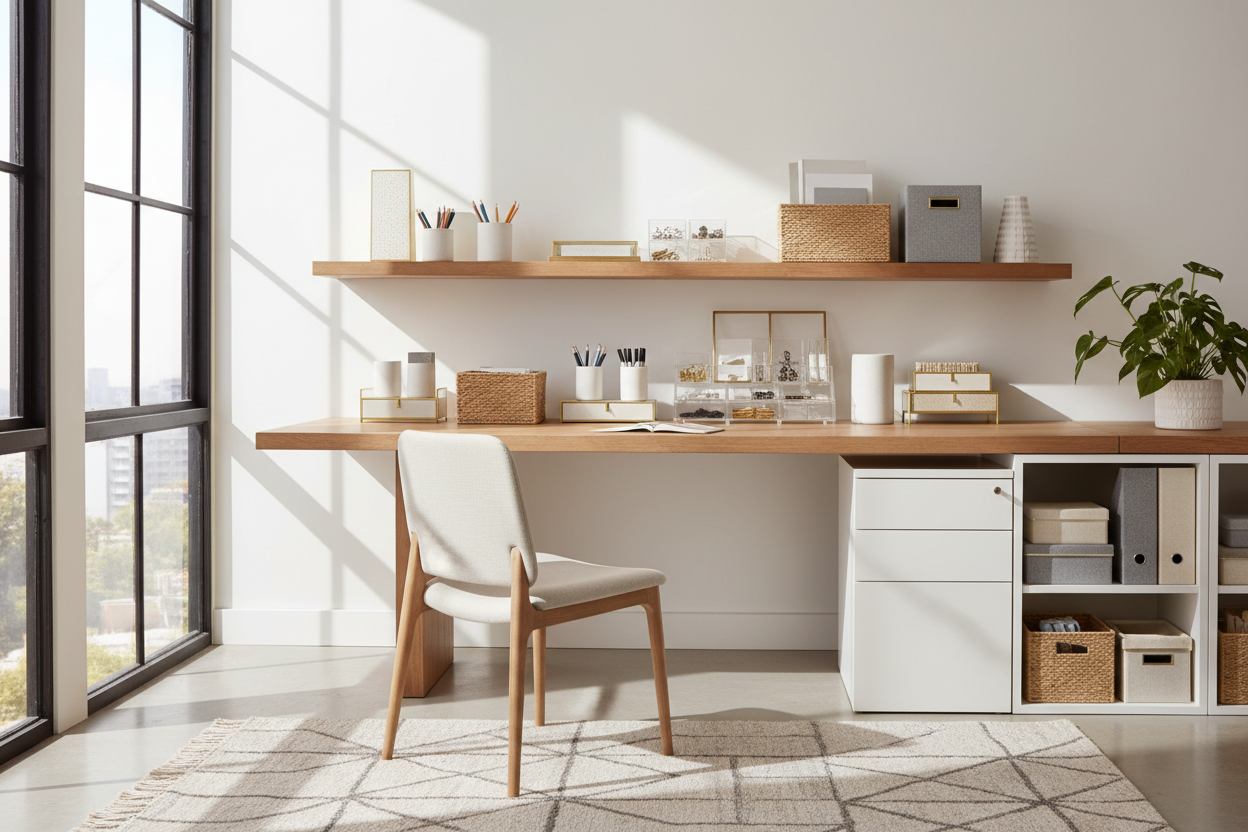
There is a distinct tension in interior design between the need for immediate access to tools and the desire for a serene, uncluttered visual landscape. We have all experienced the 'junk drawer' phenomenon migrating to the desktop surface. When you are selecting storage bins for office supplies, you are not merely buying containers; you are curating the micro-architecture of your daily workflow. The wrong choice creates visual noise, while the right selection can ground a room and streamline your cognitive process.
Key Features to Look For
- Material Integrity: Opt for materials that complement your desk surface (e.g., leather for glass desks, acrylic for wood) rather than cheap plastics that degrade visually.
- Modular Scalability: Ensure the bins have standardized dimensions that allow for stacking or side-by-side nesting without gaps.
- Tactile Experience: Consider the sound and feel; felt absorbs sound, while metal can be clammy or noisy.
- Visual Weight: opaque bins hide clutter but add visual heaviness; clear bins require meticulous internal organization.
Defining the Material Palette
In high-end office design, texture is paramount. Standard plastic storage bins for office use often cheapen the look of a solid walnut or oak desk. Instead, I encourage clients to look at materials that age well.
Leather and Felt
Vegetable-tanned leather bins bring warmth and sophistication, developing a patina over time that adds character to a study. Similarly, high-density industrial felt is excellent for open-plan offices; it dampens the sound of dropping pens or keys, contributing to a quieter acoustic environment.
Acrylic and Metal
For a modern, minimalist aesthetic, heavy-gauge acrylic (lucite) offers a 'barely there' silhouette. It maintains the open feel of a small desk. However, use wire mesh with caution; while industrial, it can look dated if not paired with the right lighting and wood tones.
The Ergonomics of Organization
Placement is just as critical as the product itself. We use the concept of 'reach zones' when planning a layout.
Primary vs. Secondary Reach
Your most frequently used items—pens, staplers, charging cables—should reside in low-profile bins within arm's reach. These bins should generally be open-top for zero-friction access. Secondary items, like printer paper or archival clips, belong in lidded bins placed on shelving units or credenzas. This separation ensures your immediate workspace remains breathable.
Visual Balance and Color Theory
Do not underestimate the power of color coordination. If your office features a busy wallpaper or rug, choose solid, neutral bins to provide a place for the eye to rest. Conversely, if your space is monochromatic, a set of structural bins in a bold accent color like navy or oxblood can serve as a deliberate focal point, turning utility into decor.
Lessons from My Own Projects
I learned the hard way about the importance of 'interior texture' regarding storage bins. A few years ago, I styled a home office for a client using beautiful, hand-woven hyacinth baskets. They looked stunning against the white lacquer shelving. However, two weeks later, the client called me in frustration.
Every time she threw a paperclip or a small USB drive into the basket, it would get caught in the weave. She had to practically dismantle the basket to fish out small items. Furthermore, the rough texture was snagging her knit sweaters when she reached past them. It was a functional failure despite the aesthetic success. Since then, I strictly recommend smooth-lined interiors—rigid canvas, lined leather, or polished wood—for any bin intended to hold small, loose office supplies. The interior surface matters just as much as the exterior.
Conclusion
Organizing your workspace is an exercise in intentionality. By selecting storage solutions that honor both form and function, you elevate a mundane necessity into a design statement. Invest in quality materials that feel good to the touch and look beautiful on your shelf, and you will find that maintaining order becomes a pleasure rather than a chore.
Frequently Asked Questions
Should I choose clear or opaque bins for a home office?
This depends on your organizational personality. If you can keep the contents tidy, clear acrylic is elegant and airy. If you tend to throw things in haphazardly, opaque materials like canvas or wood are better for concealing the visual chaos.
How do I prevent bins from sliding around in drawers?
I recommend using museum wax or small silicone bumper feet on the bottom corners of your bins. This keeps them firmly in place when you open and close the drawer, maintaining that satisfying grid layout.
What is the best way to label stylish bins without ruining the look?
Avoid adhesive paper labels that leave residue. Instead, use clip-on metal label holders or tie-on leather tags. These add a layer of detail and can be easily changed as your storage needs evolve.

Dejar un comentario
Este sitio está protegido por hCaptcha y se aplican la Política de privacidad de hCaptcha y los Términos del servicio.