










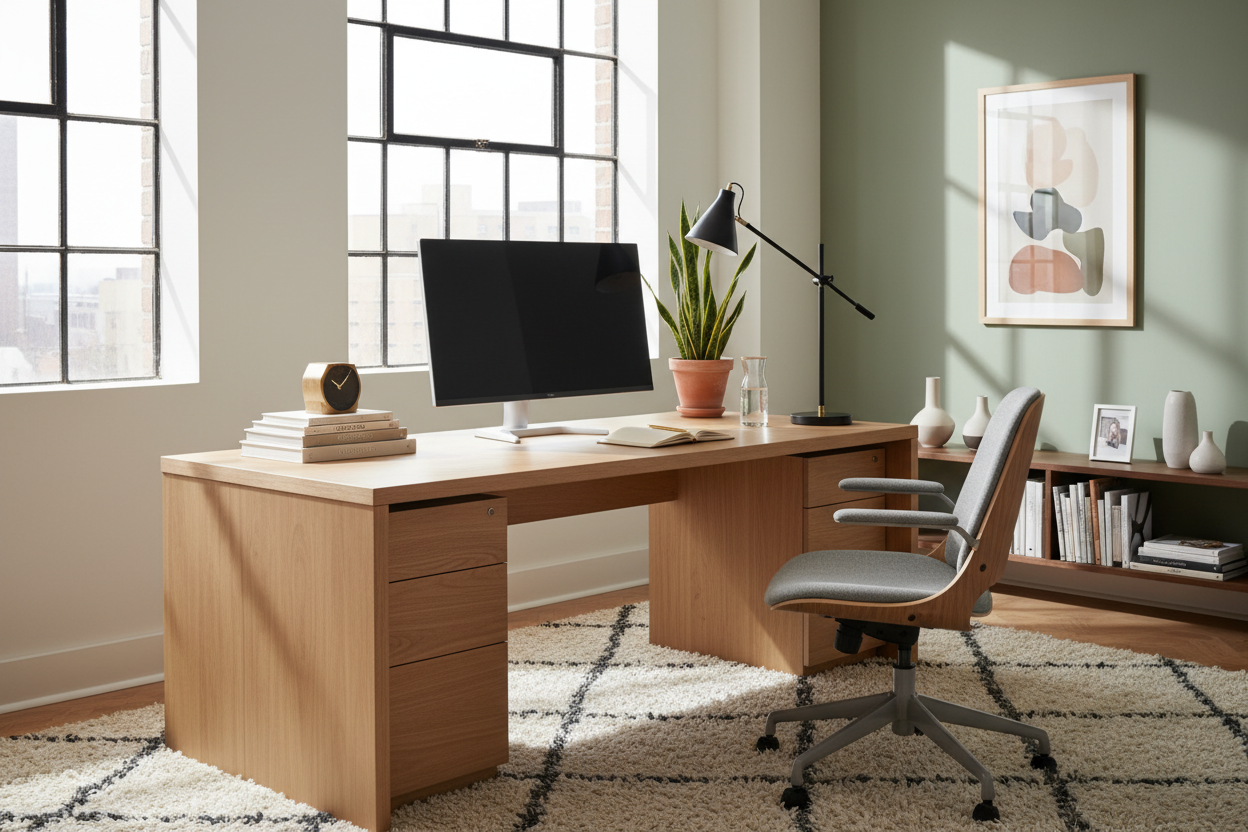
The environment where you spend the majority of your day dictates more than just your mood; it directly influences your cognitive load and creative output. Staring at sterile beige walls or battling the harsh glare of fluorescent overheads is a design dilemma that stifles productivity. As an interior designer, I often tell clients that you do not need a complete renovation to shift the energy of a room. Strategic changes in texture, lighting, and organization can completely redefine your professional experience. This guide explores the sophisticated art of decorating office space at work to create an environment that commands respect and fosters focus.
Key Features to Look For
Before buying decor or furniture, consider these fundamental elements to ensure your workspace is functional, not just decorative:
- Ergonomics First: Prioritize chairs with lumbar support and monitor risers to maintain eye-level alignment.
- Lighting Temperature: Look for desk lamps with adjustable Kelvin settings (2700K-3000K is best for reduced eye strain).
- Acoustic Control: Incorporate textiles like felt panels or rugs to dampen echo in open-plan offices.
- Biophilic Design: Select low-light plants (like Snake Plants or Zamioculcas) to improve air quality and reduce stress.
- Vertical Storage: Utilize wall organizers or shelving units to keep the primary work surface clear.
Mastering the Layout and Flow
When approaching the layout, think in zones. Your primary zone is the immediate reach around your chair—this should be reserved for daily essentials. Pushing clutter to the periphery allows for 'negative space' on the desk, which visually quiets the mind. If you are decorating work office space in a smaller cubicle, verticality is your best friend. Use magnetic organizers or monitor arms to lift hardware off the desk surface, creating an illusion of expansive square footage.
Lighting: The Invisible Architecture
Lighting is often the most overlooked aspect of office design, yet it holds the most weight. Corporate overhead lighting is typically cool and flat. To counter this, introduce a task lamp with a warm, architectural silhouette. I recommend materials like brushed brass or matte black metal to add a touch of sophistication. The goal is to create pools of light that focus attention on your tasks, rather than washing out the entire area. This layering of light creates depth and reduces the clinical feel of standard office environments.
Choosing Materials: Tactile vs. Visual
In a commercial setting, durability meets aesthetics. When selecting accessories or furniture, consider the tactile experience. A solid walnut desk organizer offers a warmth and weight that cheap plastic cannot replicate. Similarly, swapping a standard mousepad for a full-grain leather desk mat adds a layer of luxury and improves the acoustics of typing. Natural materials like wood, leather, and wool ground the space, providing a sensory balance to the cold technology that dominates the modern desktop.
My Personal Take on decorating office space at work
I want to share a specific lesson from a project I did for a tech executive last year. We focused heavily on a stunning, high-gloss lacquered desk that looked incredible in the showroom. It was the centerpiece of the room. However, two weeks after installation, I got a call. The issue wasn't the look—it was the reflection. The overhead track lighting bounced off the glossy surface right into his eyes, causing migraines by 2:00 PM every day.
We had to cover that beautiful finish with a large, matte felt desk pad. It taught me a vital lesson I now pass on to you: when decorating office space at work, always check the glare factor. Matte and satin finishes are infinitely more forgiving and practical for heavy daily use than high-gloss surfaces, which also tend to highlight every single fingerprint and dust mote.
Conclusion
Curating your workspace is an investment in your career capital. By selecting high-quality materials, prioritizing ergonomic lighting, and maintaining visual balance, you create a space that supports high-level thinking. Start with one impactful change—perhaps a proper task lamp or a quality desk mat—and build your sanctuary from there.
Frequently Asked Questions
How do I decorate a small cubicle without making it feel cluttered?
Focus on cohesion. Choose a strict color palette (e.g., monochrome or earth tones) and limit personal photos to one high-quality frame rather than a collage. Use hidden storage for papers so visual noise is kept to a minimum.
What are the best low-maintenance plants for an office with no windows?
The ZZ plant (Zamioculcas zamiifolia) and Snake Plant (Sansevieria) are virtually indestructible. They thrive in fluorescent light and require infrequent watering, making them perfect for corporate environments.
Is it worth investing in my own office chair if the company provides one?
Absolutely. If the provided chair lacks proper lumbar support or adjustability, bringing in your own ergonomic chair is a health investment. Look for breathable mesh backs and adjustable armrests to prevent long-term strain.


Dejar un comentario
Este sitio está protegido por hCaptcha y se aplican la Política de privacidad de hCaptcha y los Términos del servicio.