










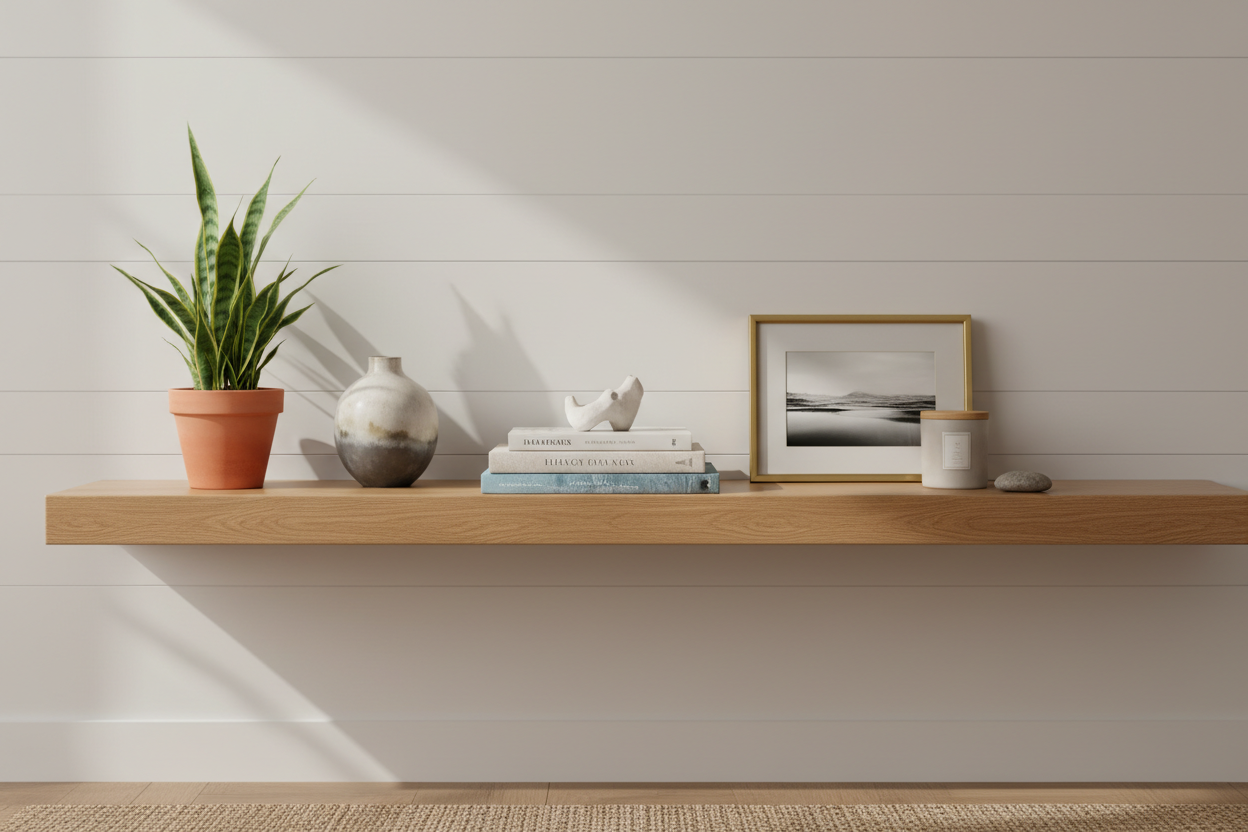
The hallway is often treated as a mere thoroughfare—a utilitarian passage to get from point A to point B. However, as an interior designer, I view it as the handshake of the home. It sets the tonal expectation for the rest of the property. The challenge lies in balancing function with aesthetics in a space that is typically narrow and devoid of natural light. If your entryway feels cluttered or stark, mastering hall shelf decorating ideas is the most effective way to introduce personality without sacrificing square footage.
Core Styling Principles
Before purchasing new accessories, consider these fundamental rules to ensure your shelf arrangement looks curated rather than chaotic. These are the pillars of professional styling:
- The Rule of Three: Grouping items in odd numbers creates visual tension and interest that even numbers often lack.
- Verticality is Key: In narrow hallways, build up, not out. Use tall vases or lean artwork to draw the eye upward and heighten the ceiling.
- Negative Space: Leave breathing room between objects. A crowded shelf makes a narrow hall feel claustrophobic.
- Texture Variance: Mix materials—combine organic wood, cool marble, and reflective glass to create depth.
Establishing the Visual Anchor
Successful styling begins with the shelf itself. Whether you are working with a floating oak beam or a slim console table, the material dictates the décor. For a floating shelf, I often recommend solid walnut or white oak. The natural grain provides warmth that softens the echo often found in tiled hallways. If you are using a metal console, soften the industrial edge with organic hallway shelf decor ideas like woven baskets or trailing pothos plants.
Creating the 'Visual Triangle'
When arranging objects, visualize a triangle. Place your tallest item (perhaps a architectural lamp or a tall ceramic vessel) at one end. Place a medium-height object (like a stacked duo of coffee table books) in the middle, and a low object (a catch-all tray) at the other end. This leads the eye gently across the vignette rather than forcing it to jump erratically.
Function Meets Form: The 'Drop Zone'
A hall shelf must be practical. However, practicality does not have to look messy. Avoid open bowls that invite clutter. Instead, opt for lidded boxes made of leather or shagreen to hide keys and mail. This maintains the sleek silhouette of the design while serving a necessary function. If space permits, placing an ottoman underneath a floating shelf adds a layer of softness and provides a practical seating option for removing shoes.
Lighting and Reflection
Hallways are notoriously dark. Integrating mirrors into your shelf styling is a non-negotiable for me in smaller homes. Leaning a frameless round mirror on the shelf or mounting one directly above it bounces light and doubles the perceived depth of the corridor. Pair this with a small, rechargeable table lamp (no unsightly cords) to add a pool of warm ambient light in the evenings.
My Personal Take on Hall Shelf Decorating Ideas
I learned a hard lesson early in my career regarding hallway ergonomics. I once specified a stunning, deep mahogany floating shelf for a client’s narrow Victorian terrace hallway. It looked incredible in the rendering. However, in practice, it was a disaster. It protruded just two inches too far into the walkway.
Every time the client walked past with groceries or a laundry basket, they had to angle their body to avoid hip-checking the sharp corner. We eventually had to replace it with a custom piece with rounded edges and a shallower depth. The lesson? Flow dictates design. Now, when I style shelves, I tape the depth on the floor first and walk past it carrying a coat. If I hesitate even slightly, the shelf is too deep or the décor is too precarious. Always prioritize the 'glide' of the walkthrough over the size of the décor object.
Conclusion
Styling a hall shelf is an exercise in restraint and balance. By mixing textures, respecting the scale of your hallway, and ensuring functional items are beautifully concealed, you turn a transient space into a design moment. Don't be afraid to rotate your display seasonally; your home is a living entity, and your entryway should reflect that evolution.
Frequently Asked Questions
How high should a floating shelf be in a hallway?
Standard placement is usually between 60 to 65 inches from the floor, which is roughly eye level for standing adults. However, if you are placing a bench underneath, you may want to raise it slightly to avoid head clearance issues while sitting.
How do I stop my shelf from looking cluttered?
Stick to a strict color palette of 2-3 hues that complement your wall color. Use trays to corral smaller items so they read as one 'unit' rather than five scattered pieces. If an item doesn't serve a function or bring you joy, remove it.
Can I put heavy items on a floating hall shelf?
This depends entirely on the hardware. Floating shelves installed into studs with heavy-duty brackets can hold significant weight (often 50+ lbs). However, if you are using drywall anchors, stick to lightweight décor like photo frames and small dried floral arrangements to prevent sagging or wall damage.



Dejar un comentario
Este sitio está protegido por hCaptcha y se aplican la Política de privacidad de hCaptcha y los Términos del servicio.