










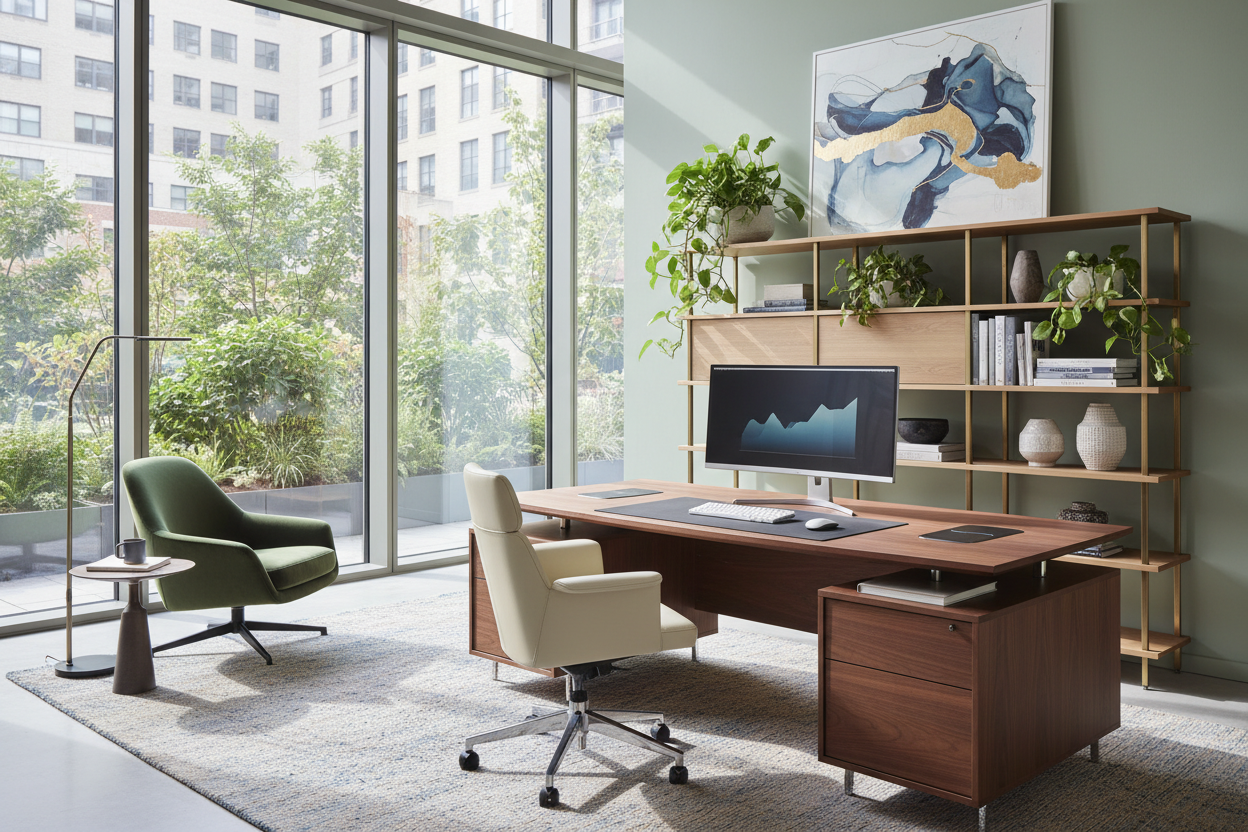
For many of my clients, the biggest design challenge isn't choosing a sofa—it's integrating a functional workspace without destroying the residential aesthetic. We have moved past the era of makeshift setups at the kitchen island. Today, the goal is to curate options for working from home that respect the visual integrity of your living space while offering commercial-grade performance. Whether you are converting a spare bedroom or carving out a niche in a master suite, the furniture you select dictates both your productivity and the room's atmosphere.
Quick Decision Guide: Curating Your Workspace
- Ergonomics vs. Aesthetics: Prioritize chairs with lumbar support that use fabric or leather rather than industrial mesh to soften the look.
- Surface Material: Solid wood (walnut or oak) offers durability and tactile warmth; glass creates visual lightness but requires constant cleaning.
- Desk Depth: Ensure a minimum depth of 24-30 inches if you use external monitors to maintain proper focal distance.
- Acoustics: Incorporate rugs or upholstered panels to dampen sound, ensuring that is working remotely effective for you during calls.
Defining the Zone: Layout and Placement
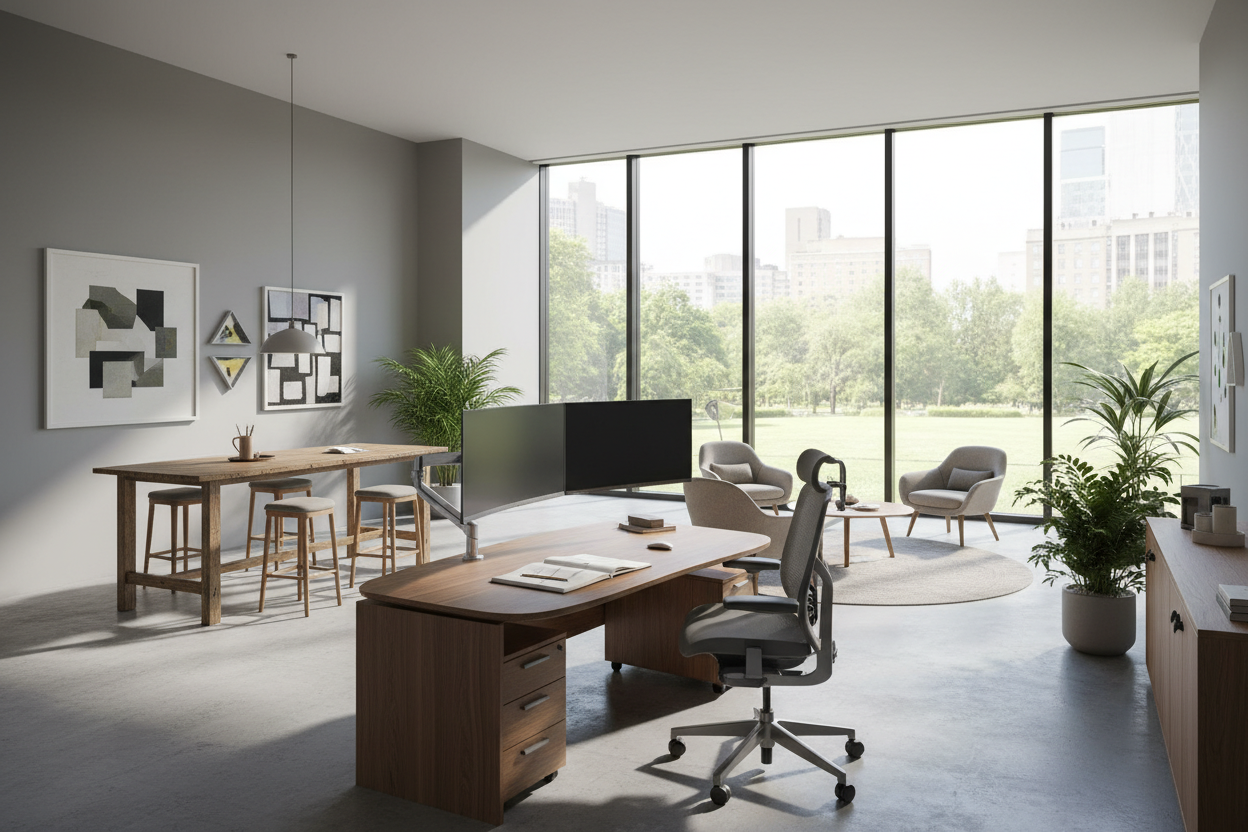
The work from home movement has fundamentally shifted how we approach floor plans. The first step is not buying furniture, but assessing the "visual weight" of the potential workspace. If your desk faces a wall, you risk feeling enclosed. If it floats in the room, you must consider cable management.
I often advise clients to position the desk perpendicular to a window. This maximizes natural light without the glare associated with direct sunlight. This layout also creates a distinct psychological boundary, helping you transition from home to work mode without physically leaving the house.
Materiality and Texture: Choosing the Desk
When selecting a desk, think beyond utility. You are looking for a piece that anchors the room. Cheap veneers often peel at the edges after a year of heavy use. Instead, look for kiln-dried hardwoods or high-pressure laminates with a matte finish.
The Silhouette
For smaller spaces, a writing desk with a parsons-style silhouette (slender legs, open bottom) maintains an airy feel. For dedicated offices, a double-pedestal desk provides necessary storage to hide clutter. Remember, when you are working for work tasks that require deep focus, visual clutter is the enemy.
The Seating Dilemma: Comfort Meets Style
The chair is where the design often clashes with reality. While a cane-back chair looks stunning in a portfolio, it is rarely suitable for an eight-hour day. The key is finding a "crossover" chair. Look for designs that feature a synchronous tilt mechanism and seat height adjustment but are upholstered in bouclé, velvet, or top-grain leather. This bridges the gap between working to work efficiently and maintaining a sophisticated home vignette.
My Personal Take on options for working from home
Lessons from My Own Projects: The "Console Table" Trap
I need to share a mistake I made early in my career when designing a home office for a client in a high-rise apartment. We were obsessed with preserving the view, so I specified a sleek, shallow console table as a desk. It looked architectural and beautiful in the photos.
However, two weeks later, the client called me. The desk was only 18 inches deep. Once she placed her laptop and a coffee mug down, there was literally no room for her forearms to rest. Her wrists were hitting the sharp edge of the stone top, causing strain. I learned the hard way that "sleek" cannot compromise geometry. Now, I never specify a primary work surface less than 24 inches deep, no matter how tight the space is. The tactile experience—how the edge feels against your wrist and how the material warms under your hand—is just as important as the silhouette.
Conclusion
Curating the right environment requires balancing the technical needs of a corporate office with the soul of a home. By investing in quality materials, proper depth, and ergonomic seating that doesn't scream "cubicle," you create a space that invites creativity rather than fatigue. Your home office should be a place you want to be, even on the weekends.
Frequently Asked Questions
How do I hide cords in a floating desk layout?
If your desk floats in the center of the room, look for options with integrated modesty panels or hollow legs that channel wires to a floor outlet. Alternatively, use a high-quality rug and run flat cords underneath it to reach the nearest wall outlet safely.
Is a standing desk worth ruining the aesthetic?
It doesn't have to ruin the aesthetic. Many high-end manufacturers now produce motorized standing desks with solid wood tops and concealed motors. You no longer have to choose between your health and your interior design style.
How much space do I really need for a chair?
Plan for at least 42 inches of clearance behind your desk. You need roughly 24 inches to sit and an additional 18 inches to push back and stand up comfortably without hitting a bookshelf or wall.

Dejar un comentario
Este sitio está protegido por hCaptcha y se aplican la Política de privacidad de hCaptcha y los Términos del servicio.