










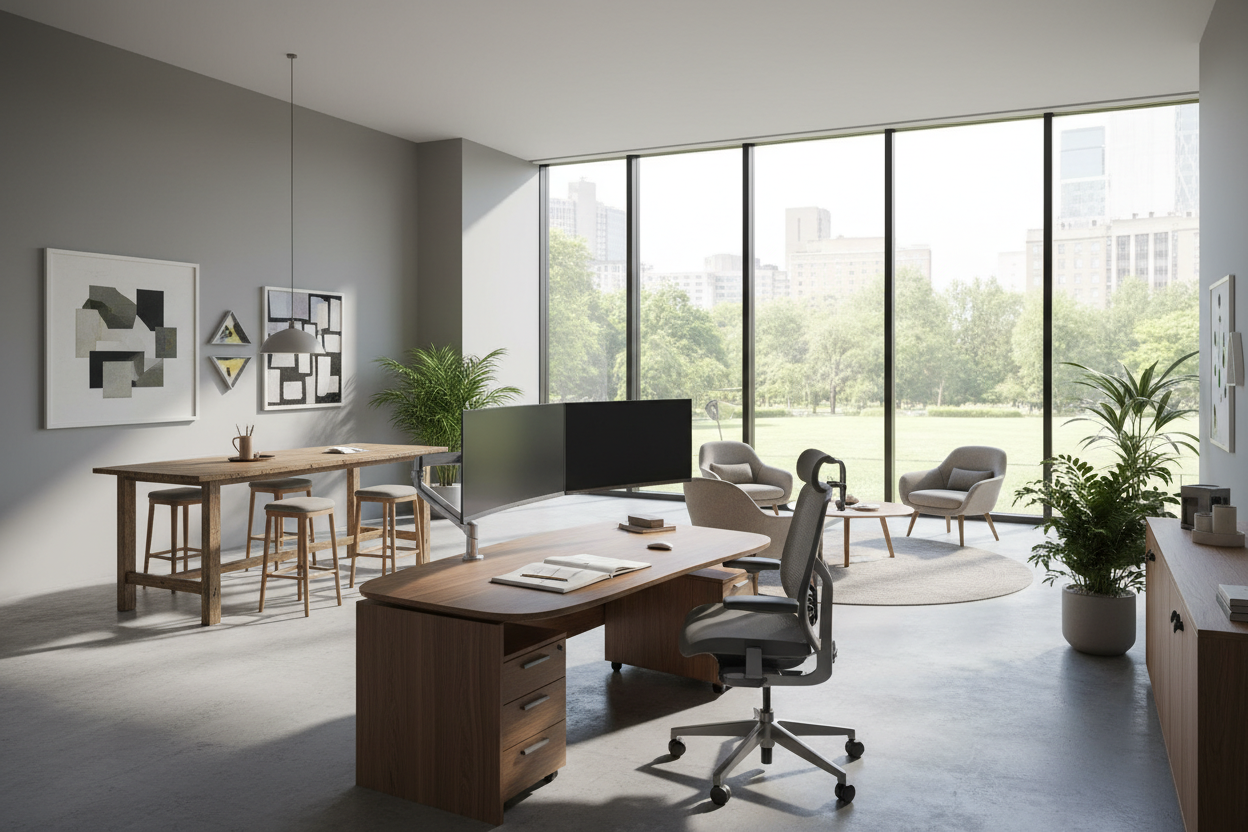
Most professionals treat their workspace as an afterthought, often resulting in a chaotic mix of mismatched aesthetics and poor ergonomics. As a designer, I see this constantly: a stunning home ruined by a clunky, utilitarian desk setup. The secret to a cohesive look isn't just spending more; it is understanding how the office furniture interacts with your existing architecture and daily workflow. Before you commit to a purchase, you need to stop thinking about individual pieces and start thinking about the composition of the room.
Quick Decision Guide: What Matters Most
- Scale and Proportion: Ensure the desk footprint allows for at least 36 inches of clearance for chair movement.
- Material Integrity: Prioritize commercial-grade laminates or solid hardwoods over paper-thin veneers that peel within months.
- Ergonomic Mechanisms: Look for office chair equipment that offers synchro-tilt and lumbar adjustment, not just height control.
- Visual Weight: In smaller rooms, opt for legs and open bases; in large executive suites, full-pedestal desks ground the space.
Curating Materials for Longevity and Style
When selecting pieces, the tactile experience is just as vital as the visual one. In high-end design, we look for materials that develop a patina rather than degrade. If you are browsing penningtons furniture or similar high-caliber collections, pay attention to the finish. A high-pressure laminate (HPL) can mimic wood grain beautifully while resisting the coffee rings and heat marks that plague natural timber.
Balancing Form and Function
The silhouette of your furniture dictates the room's energy. A heavy, dark mahogany desk creates a traditional, authoritative atmosphere, while a glass and chrome setup suggests transparency and modernity. However, be wary of glass tops if you use optical mice or require heavy cable management; they often expose the unsightly clutter of wires that wooden modesty panels hide effectively.
The Truth About Seating Mechanics
Your chair is the engine of your productivity. Many clients visit the office furniture store and sit in a chair for thirty seconds, declaring it "perfect." This is a mistake. Real comfort is determined after four hours of static posture. You must scrutinize the office chair equipment underneath the seat pan. Does it have a multi-lock mechanism? are the casters soft-PU coated for hardwood floors, or hard nylon for carpet? These technical details prevent floor damage and physiological strain.
My Personal Take on the office furniture
I want to share a specific lesson from a project I managed last year. I specified a stunning, architectural desk for a client—it looked like a piece of sculpture. However, I ignored the "shake test." When the client started typing vigorously, the cantilever design caused the monitor to wobble slightly. It wasn't visible from the doorway, but it was maddening to use.
Another detail I always check now is the "under-desk clearance" regarding armrests. I once bought a luxurious executive chair that couldn't tuck under the desk because the armrests were fixed and set one inch too high. It forced the chair to sit in the middle of the room, ruining the traffic flow. Now, I always measure the floor-to-apron height of the desk and compare it against the chair's armrest height. It’s these unpolished, practical realities that define whether a workspace is actually livable.
Conclusion
Transforming your workspace requires looking past the price tag and focusing on engineering and design principles. By selecting the right materials and ensuring your mechanical components are sound, you create an environment that supports your ambition rather than hindering it. Curate your space with intention.
Frequently Asked Questions
How do I mix office furniture with residential decor?
Focus on "resimercial" design—office furniture with residential textures. Look for task chairs upholstered in linen or velvet rather than standard mesh, and choose desks with wood tones that match your home's flooring.
Is it worth buying a desk from a specialized office retailer?
Generally, yes. Retailers like Penningtons furniture or specialized office dealers sell products tested for 8+ hours of daily use (ANSI/BIFMA standards), whereas standard home decor stores often sell items rated for occasional use only.
What is the ideal desk depth for a multi-monitor setup?
Aim for a depth of at least 30 inches. This allows you to place monitors at arm's length to reduce eye strain while leaving enough surface area for documents and a keyboard.

Dejar un comentario
Este sitio está protegido por hCaptcha y se aplican la Política de privacidad de hCaptcha y los Términos del servicio.