










Staring at a blank wall or battling a clutter-filled desk kills creativity faster than a Monday morning meeting. Whether you are carving out a professional nook at home or revamping a corporate suite, effective design for offices is about more than just a sturdy desk; it is the architectural backbone of your productivity. As a designer, I see clients constantly sacrifice function for a Pinterest-perfect look, only to realize their back aches and their focus is fractured within a week. This guide bridges the gap between high-end aesthetics and ergonomic reality.
Quick Decision Guide: Key Features to Look For
If you are rushing to purchase furniture or finalize a layout, prioritize these four pillars to ensure your investment lasts:
- Ergonomics Over Aesthetics: Look for chairs with adjustable lumbar support and seat depth, not just a trendy silhouette.
- Lighting Layers: Ensure a mix of ambient (overhead) and task lighting (desk lamps) to reduce eye strain.
- Material Durability: For high-touch surfaces, opt for high-pressure laminates or sealed hardwoods over porous veneers that stain easily.
- Acoustic Control: Incorporate soft textures like rugs or upholstered panels to dampen echo and improve focus.
Mastering the Layout and Flow
The best of office design always begins with the floor plan. Before buying a single piece of furniture, you must analyze the traffic flow. In interior design, we often refer to the 'command position.' Your desk should face the door, but not be directly in line with it. This creates a sense of security and authority.
Zoning for Function
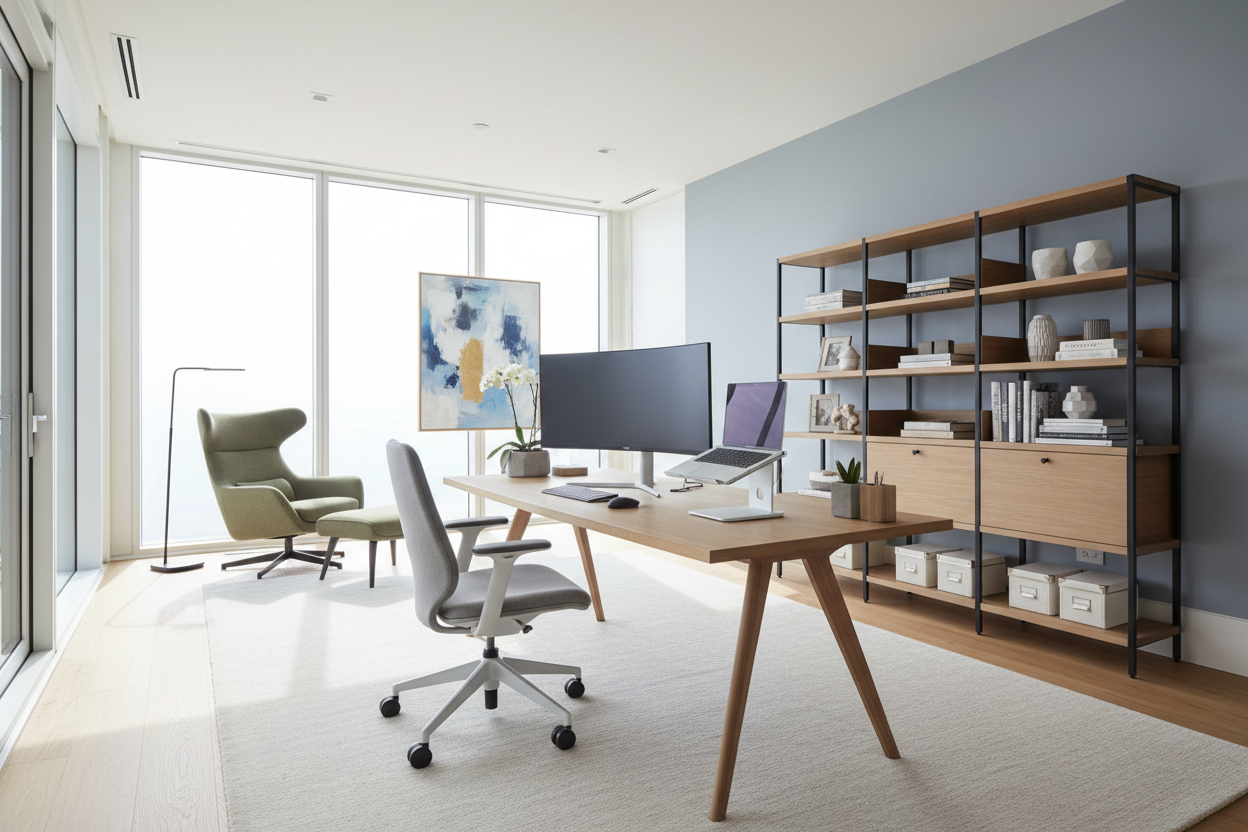
Even in a small room, zoning is critical. You need a dedicated 'deep work' zone (your primary desk setup) and a separate 'reference' or 'break' zone. In a sample office design interior, this might look like a primary L-shaped desk for computer work, paired with a small lounge chair in the corner for reading documents. This physical separation cues your brain to switch modes between intense focus and creative contemplation.
Selecting Materials: The Tactile Experience
When curating a new design office, the tactile experience is often overlooked. We aren't just looking at the furniture; we are touching it for eight hours a day.
Solid Wood vs. Veneer vs. Laminate
For executive desks, solid walnut or oak offers a gravity and warmth that is unmatched, but it requires humidity control to prevent warping. If you want the coolest office design without the maintenance, high-end architectural veneers are a superb middle ground—they offer the grain pattern of real wood but are stabilized on an engineered core. Avoid cheap thermofoil finishes; they tend to peel at the edges after a year of friction from your wrists.
Visual Balance and Lighting
Lighting is the silent mood setter. The office design best practices dictate a color temperature of 3500K to 4000K (cool white) for alertness. However, relying solely on overhead downlights creates harsh shadows.
Layer your lighting by adding a task lamp with an articulating arm. This allows you to direct light exactly where you are reviewing papers, reducing glare on your monitor. Visually, anchor the room with a focal point—this could be a statement shelving unit or a piece of large-scale art behind the desk—to draw the eye away from the clutter of wires and tech.
Lessons from My Own Projects: The "Glass Desk" Regret
I feel compelled to share a specific failure from my early years to save you the headache. I once designed a sleek, ultra-modern office for a client who insisted on a massive, tempered glass desk. It looked incredible in photos—floating, airy, and sophisticated.
However, three weeks later, the client called me. The issue wasn't the look; it was the usability. Optical mice don't track well on glass without a pad (ruining the clean look), and more annoyingly, the glass was cold to the touch. In the winter, resting forearms on a freezing glass surface for hours became uncomfortable. Furthermore, every single fingerprint and coffee ring was visible, turning the client into a full-time cleaner. Now, I always steer clients toward leather-inlaid desk surfaces or matte-finished wood. They feel warmer, hide dust better, and age with dignity.
Conclusion
Curating the perfect workspace is an exercise in restraint and foresight. By prioritizing ergonomic integrity and selecting materials that age gracefully, you create a space that supports your ambition rather than hindering it. Don't just design for the photo; design for the work you do every day.
Frequently Asked Questions
How much space do I need behind my desk for a chair?
You should allow at least 30 to 36 inches (approx. 76-90 cm) of clearance behind your desk. This allows you to slide the chair back comfortably and stand up without hitting a wall or bookshelf.
What is the ideal desk height for ergonomics?
The standard desk height is 29 to 30 inches. However, if you are shorter than 5'8", this may be too high, causing shoulder strain. An adjustable sit-stand desk or a footrest is often necessary to achieve a 90-degree elbow angle.
Is an L-shaped desk better than a straight desk?
An L-shaped desk is generally superior for multitasking. It allows you to separate computer work from analog paperwork, keeping your primary workspace clutter-free. It maximizes corner space efficiently.


Dejar un comentario
Este sitio está protegido por hCaptcha y se aplican la Política de privacidad de hCaptcha y los Términos del servicio.