










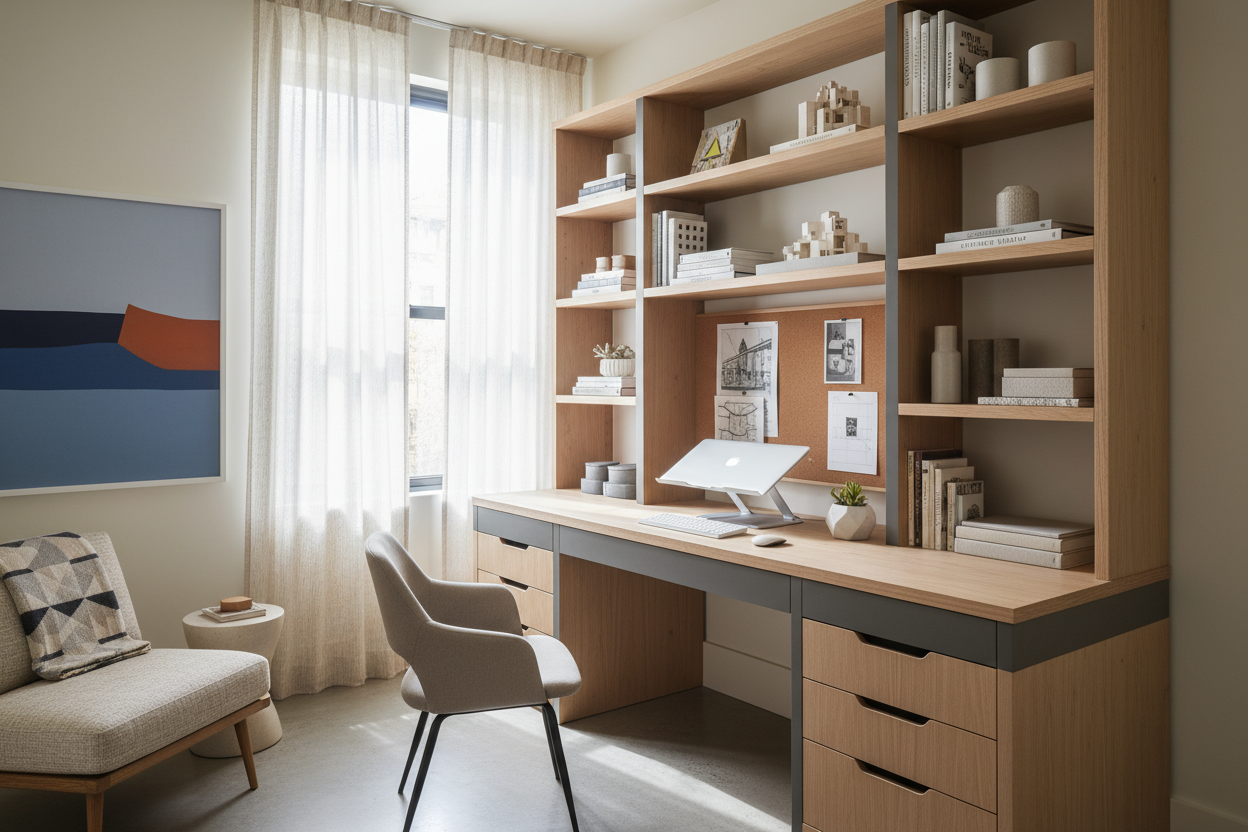
There is a specific kind of frustration that comes from a workspace where the surface area is consumed by clutter rather than creativity. As an interior designer, I see this constantly: homeowners try to force a standalone desk into a tight corner, leaving no room for vertical storage. The solution is rarely a bigger room; it is smarter furniture. A well-designed desk and shelf unit does not just save floor space—it anchors the room, drawing the eye upward and creating a cohesive functional zone that feels intentional, not accidental.
Quick Decision Guide: Key Features to Look For
- Material Integrity: Distinguish between solid wood (heavier, durable) and particle board with veneer (lighter, affordable, but prone to sagging).
- Vertical Clearance: Ensure the distance between the desktop and the first shelf accommodates your monitor or laptop height.
- Weight Capacity: Check the load limit for individual shelves, especially if you plan to store heavy reference books or equipment.
- Anchoring Requirements: Determine if the unit is freestanding or requires wall-mounting for stability (crucial for ladder styles).
- Cable Management: Look for pre-drilled grommets or hidden channels behind the shelving uprights.
Analyzing the Layout: Vertical vs. Horizontal Flow
When integrating a desk unit with shelves into a floor plan, we have to talk about visual weight. In a compact urban apartment, a shelf desk unit that relies on open, ladder-style shelving allows light to pass through, keeping the room feeling airy. However, if you are furnishing a dedicated study, a substantial wall-mounted system offers a more permanent, architectural feel.
For narrow rooms, I often recommend a shelf unit with desk integration that builds upwards rather than outwards. This maximizes the vertical volume of the room—often the most underutilized real estate in a home—while keeping the traffic flow unobstructed.
Material Matters: Durability Meets Design
The longevity of your furniture dictates the return on your investment. A shelving and desk unit constructed from powder-coated steel and reclaimed wood offers an industrial resilience that withstands heavy daily use. In contrast, high-gloss lacquer finishes provide a modern aesthetic but are unforgiving regarding fingerprints and micro-scratches.
Solid Wood vs. Veneer
If you are looking at a shelf with desk unit for a child’s room or a temporary rental, high-quality engineered wood is sufficient. However, for a primary workstation, solid wood or high-grade plywood with a thick veneer is superior. I have seen too many particle board shelves bow under the weight of textbooks after just a year of use.
Ergonomics and Visual Balance
Design is useless if it hurts your back. One common oversight with a shelves with desk unit combination is the depth of the work surface. Standard desks are 24 to 30 inches deep. Many integrated shelf units shallow this out to 18 or 20 inches to save space. This is fine for laptop work, but if you use an external monitor, you might find yourself sitting too close to the screen.
Visually, treat the shelves as a curated gallery, not a dumping ground. Use the upper shelves for decorative items or less frequently used books to draw the eye up, and keep the immediate workspace clear for active tasks.
My Personal Take on the Desk and Shelf Unit
I want to share a lesson I learned the hard way during a project for a graphic designer in a Brooklyn brownstone. We selected a stunning, leaning ladder-style desk. It looked incredible in the photos—walnut finish, minimal lines. But we ignored the physics of aggressive typing.
The client called me two weeks later. Every time he erased a sketch vigorously or typed quickly, the entire unit vibrated. The monitor would shake just enough to be annoying. We ended up having to retroactively secure the unit to the wall with heavy-duty toggle bolts and added felt pads between the frame and the wall to dampen the vibration.
The takeaway? If you are a heavy typer or do manual work on the surface, a freestanding, heavy-bottomed unit is often better than a leaning style, unless you are willing to bolt it down securely. Also, check the finish texture—that walnut veneer looked great, but it had a slight grain texture that made writing on a single sheet of paper bumpy without a desk pad. These are the tactile details you only notice once you start living with the piece.
Conclusion
Investing in the right desk and shelf unit is about reclaiming your space and your sanity. By balancing material quality with ergonomic depth, you create a workspace that invites you to sit down and focus. Don't just fill a corner; curate a command center that works as hard as you do.
Frequently Asked Questions
How much weight can a typical shelf desk unit hold?
This varies wildly by construction. A metal-framed unit can often hold 50-100 lbs per shelf, while floating wall-mounted units may be limited to 20-30 lbs depending on the wall anchors. Always check the manufacturer's spec sheet for the "static load capacity."
Can I fit a dual monitor setup on a shelf unit with desk?
It depends on the width between the uprights. Most integrated units have a workspace width of 30-40 inches, which is tight for dual monitors. Measure the total width of your screens side-by-side and compare it to the internal width of the desk section, not the total unit width.
Is it better to buy a modular system or a single piece?
For renters, modular is superior. A single, solid piece can be a nightmare to navigate through narrow hallways or stairwells. Modular systems allow you to disassemble the shelving from the desk, making moving day significantly easier.



Dejar un comentario
Este sitio está protegido por hCaptcha y se aplican la Política de privacidad de hCaptcha y los Términos del servicio.