










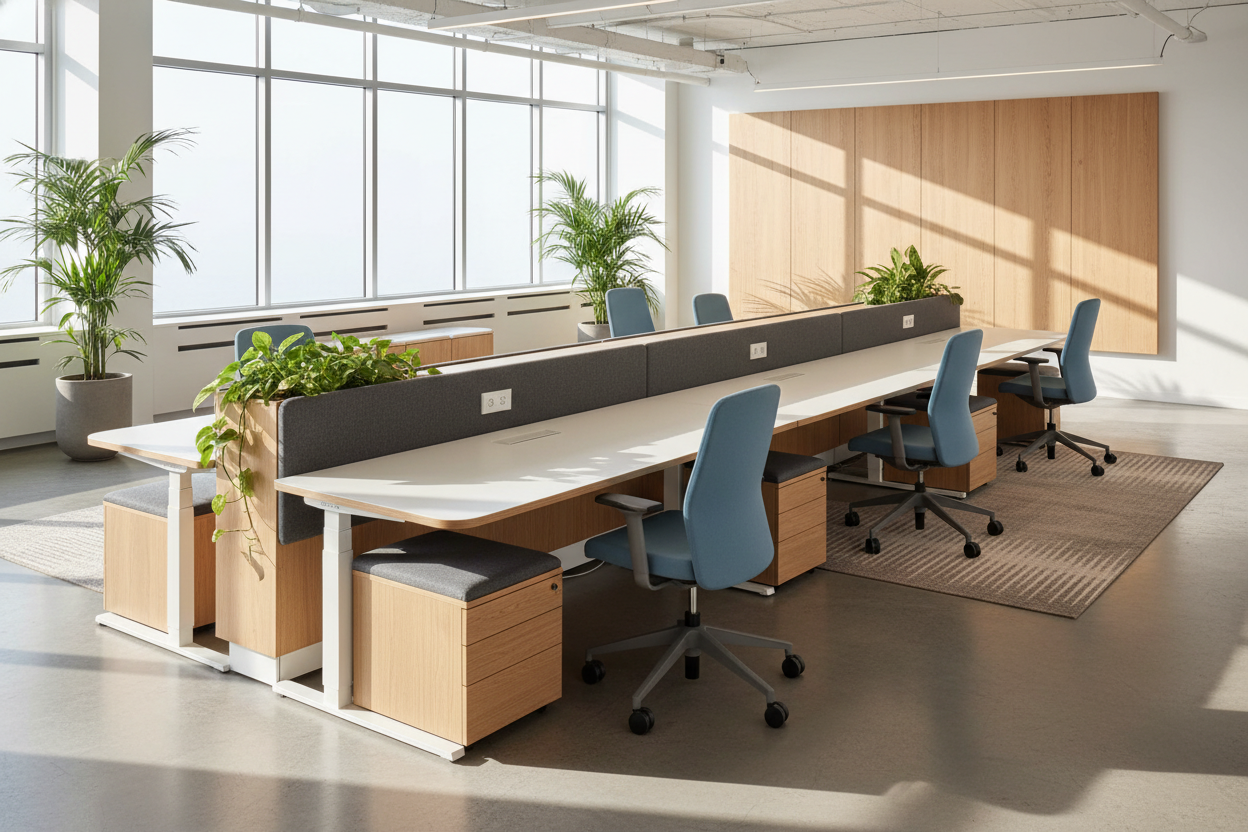
Many workspaces suffer from a common affliction: static rigidity. We often focus so heavily on the primary desk and ergonomic task chair that the surrounding environment feels sterile and purely utilitarian. This is where a well-placed bench in office design transforms a room from a cold production facility into a layered, welcoming sanctuary. Whether you are outfitting a high-traffic corporate lobby or refining a boutique home office, the introduction of linear seating softens architectural lines and invites flexible use.
Key Features to Look For
- Ergonomics & Depth: For seating, aim for a depth of 18-20 inches. Anything deeper requires lumbar pillows for support.
- Upholstery Durability: Look for commercial-grade fabrics (measured in double rubs) if the bench is for a reception area or high-traffic zone.
- Integrated Functionality: Prioritize an office bench seating with storage or built-in power outlets for collaborative zones.
- Structural Integrity: Ensure the frame is kiln-dried hardwood or reinforced metal to prevent wobbling over time.
Defining the Purpose: Lobby vs. Workspace
The first step in selection is distinguishing between transient seating and working seating. A reception area bench or a bench for office lobby sets the tone for a visitor's experience. Here, we prioritize high-impact aesthetics—think tufted leather or architectural wooden slats. These pieces are sculptural; comfort is secondary to the visual statement.
Conversely, when integrating bench seating office space for employees, comfort becomes paramount. We are seeing a surge in banquette seating office layouts, which mimic the hospitality vibe of a café. This arrangement encourages spontaneous collaboration and breaks down the hierarchy of a traditional conference table.
The Desk Dilemma: Can You Work from a Bench?
I am frequently asked if a desk bench seat is a viable alternative to a standard chair. The answer requires nuance. A backless bench seat for desk creates a clean visual line, allowing the seating to tuck away completely. It is an excellent space-saver for a small office bench setup.
However, for full-time work, a standard bench lacks the lumbar support necessary for an 8-hour day. If you are committed to this aesthetic, look specifically for a desk bench seat with back or a bench office chair designed with ergonomic foam density. For a home office bench that is used occasionally for emails or by a guest, a standard upholstered bench is perfectly acceptable.
Maximizing Utility with Storage
In compact footprints, furniture must multitask. An office storage bench is one of the most underutilized assets in design. Placed under a window or along a back wall, a storage bench for office use can hide filing archives, printer paper, or unsightly cables. Even a bench for under desk use—often a smaller, upholstered footstool style—can double as hidden storage for personal items, keeping the desktop pristine.
Materiality and Visual Weight
Choosing the right material dictates the "visual weight" of the piece. A heavy, velvet-upholstered office furniture bench anchors a room and absorbs sound, making it ideal for echo-prone spaces. In contrast, a modern office bench with slender metal legs and a floating seat maintains an airy quality, essential for smaller executive suites where you want to avoid a cluttered look.
Lessons from My Own Projects
I learned the hard way about the importance of "fabric memory" on a project in downtown Chicago. I specified a stunning, soft linen bench chair for desk use for a client who wanted a residential feel in her private office. It looked incredible on installation day.
Three months later, she called me back. The linen had pooled and stretched from daily sitting, creating a messy, unkempt look that ruined the sleek vibe we aimed for. I replaced it with a high-performance tight-weave wool blend that offered the same tactile warmth but snapped back into shape immediately after she stood up. Now, when I recommend a bench seat for desk applications, I always check the fabric's elasticity and recovery rating first. It’s a small detail that saves you from replacing furniture within a year.
Conclusion
Integrating a bench into your office is about more than just extra seating; it is about disrupting the expected flow of a workspace to create rhythm and versatility. Whether you opt for a functional office bench with back for tasks or a sleek reception area bench to impress clients, focus on the marriage of silhouette and durability.
Frequently Asked Questions
1. Is a backless bench healthy for a full work day?
Generally, no. A backless desk bench chair engages your core, which is good for short bursts (20-30 minutes), but for prolonged work, it leads to slouching and fatigue. If you love the look, use it for short administrative tasks or meetings, not deep work.
2. What is the standard height for an office bench?
To function properly as seating, an office bench seat should be between 18 and 20 inches high. This aligns with standard desk heights (29-30 inches). If it is lower, it functions more like a lounge piece or coffee table seating.
3. How do I style a bench in a small home office?
In tight spaces, functionality is key. Choose an office bench seating with storage (lift-top or drawers) to hold files. Place it along a wall opposite your desk to create a "breakout zone" for reading, separating your relaxation space from your screen space.

Dejar un comentario
Este sitio está protegido por hCaptcha y se aplican la Política de privacidad de hCaptcha y los Términos del servicio.