










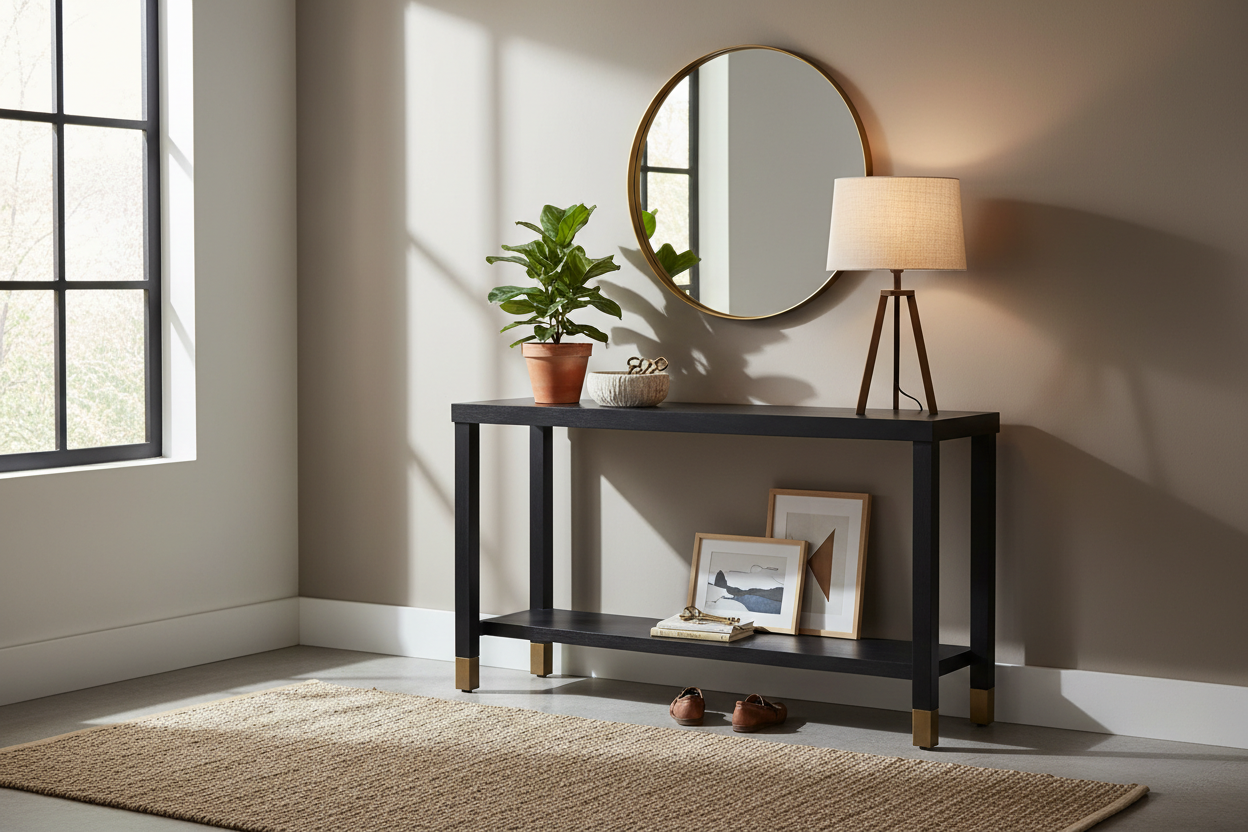
Your entryway is the handshake of your home. It creates that immediate feeling of welcome and sets the expectation for the rest of the interior. Choosing the right furniture for this space is less about filling a void and more about balancing utility with aesthetics. The ideal piece anchors the space without overcrowding it, serving as both a functional drop zone for keys and a stage for your favorite decor. When hunting for accent foyer tables, prioritize scale and clearance first; a table that impedes traffic flow will always feel wrong, regardless of how beautiful the finish might be.
The Reality of Hallway Dimensions
Many homeowners make the mistake of falling in love with a piece of furniture in a showroom without respecting the strict limitations of their hallway. I learned this lesson the hard way early in my design career. I once tried to force a gorgeous, heavy antique oak chest into a client's narrow Victorian hallway. On paper, the measurements technically worked. In reality, the piece had so much visual weight that it made the entry feel like a claustrophobic tunnel. We ended up swapping it for a slender, open-frame metal console with a glass top. The difference was immediate. The hallway felt twice as wide, and the light from the door could actually travel down the corridor.
To avoid that crowded feeling, ensure you have at least 36 inches of clearance for walking past the table. If your foyer is a high-traffic zone where people are taking off coats and shoes, you might want even more buffer space. Standard console tables usually stand about 30 to 36 inches high. This height is comfortable for dropping off mail without bending over and aligns visually with the back of most sofas, which helps if your entryway opens directly into a living area.
Selecting Materials for Visual Balance
The material you choose dictates the mood. If your home leans towards modern farmhouse or traditional styles, solid wood offers warmth and grounding. However, in tighter spaces, solid wood can sometimes feel blocky. This is where mixed materials shine. A table featuring a thin metal frame topped with marble or reclaimed wood provides the requisite surface area without closing off the wall behind it. This "negative space" is crucial in smaller homes.
Acrylic and glass are the ultimate problem solvers for dark or cramped foyers. Because they are transparent, they take up zero visual space. You get the surface functionality you need without the visual clutter. On the flip side, if you have a grand, two-story foyer, a delicate glass table might get lost. Large, cavernous spaces demand decorative tables for foyer areas that have mass—think chunky pedestals, dark woods, or stone bases that command attention and ground the soaring ceilings.
Functionality: Drawers, Shelves, or Open Space?
Be honest with yourself about your clutter habits. If you are the type of person who tosses mail, sunglasses, and spare change onto the nearest surface the moment you walk in, an open-top table will look messy within twenty-four hours. For the "drop-and-go" personality, look for tables with shallow drawers. These hide the daily debris while keeping the tabletop clear for deliberate styling.
Tables with a lower shelf offer double the styling potential but require more curation. A lower shelf is the perfect home for large woven baskets. These baskets are design workhorses; they add texture to the vignette while concealing unsightly necessities like umbrellas, dog leashes, or winter scarves. If you prefer a minimalist look, a simple parsons-style table with no lower shelf allows you to tuck a pair of ottomans underneath. This provides emergency seating for guests or a place to sit while putting on shoes, adding a layer of softness to the hard edges of the table.
The Art of Styling the Vignette
Once the furniture is in place, the real fun begins. Styling accent foyer tables requires a blend of height, light, and personality. Start with an anchor piece on the wall. A large mirror is the classic choice for a reason: it reflects light, expands the space, and gives you a spot for a final appearance check before leaving the house. If you prefer art, ensure the frame width is roughly two-thirds the width of the table to maintain proper proportions.
Lighting the Way
Overhead lighting in hallways can be harsh. Adding a table lamp creates a welcoming glow that softens the transition from outside to inside. If your console is long, a pair of matching lamps creates symmetry and formality. For smaller tables, a single lamp on one side balanced by a grouping of objects on the other creates a relaxed, organic feel. If surface space is at a premium, consider installing wall sconces flanking the mirror instead of using table lamps.
The Rule of Three
Arranging decor in odd numbers prevents the setup from looking too stiff. A common formula involves a tall item (like a lamp or a vase with branches), a substantial item (like a stack of coffee table books), and a small, sculptural item (like a decorative bowl or object). This creates a visual triangle that keeps the eye moving. Don't forget the practical element: a small tray or ceramic bowl is essential for catching keys. It defines a specific zone for loose items so they don't migrate across the entire surface.
Seasonal Rotations
Your foyer table is the easiest place in the house to update for the seasons because it is a contained surface. You don't need to redecorate the whole room; just swapping out the accessories on the table changes the vibe. In autumn, a vase of dried wheat and a heavy brass bowl feels appropriate. In spring, switch to fresh tulips and a lighter, ceramic tray. Because decorative tables for foyer spaces are transient zones—places we pass through rather than dwell in—you can afford to take more stylistic risks here than in a living room where you spend hours everyday.
Ultimately, the goal is cohesion. The table should feel like a preview of the home's story. Whether you choose a sleek mid-century modern console or a weathered rustic trestle table, ensure it serves your lifestyle. When form meets function, the entryway becomes more than just a hallway; it becomes a destination.
Frequently Asked Questions
How tall should a mirror be above an entryway table?
A good rule of thumb is to hang the mirror so the bottom frame sits 6 to 8 inches above the tabletop. This connects the mirror to the furniture visually, creating a cohesive unit rather than two floating objects. Vertically, the mirror should generally not be wider than the table itself.
Can I use a dresser instead of a console table in the foyer?
Absolutely, provided you have the depth for it. A chest of drawers or a small dresser is an excellent choice for households that need maximum storage for hats, gloves, and mail. Just ensure the piece isn't so deep that it blocks the natural walking path or door swing.
What if my entryway is too small for a table?
If floor space is non-existent, look for a floating shelf or a wall-mounted console. These provide the surface area you need for keys and mail without taking up any footprint on the floor. Pairing a floating shelf with a wall mirror creates the illusion of a full foyer setup without the bulk.

Dejar un comentario
Este sitio está protegido por hCaptcha y se aplican la Política de privacidad de hCaptcha y los Términos del servicio.