










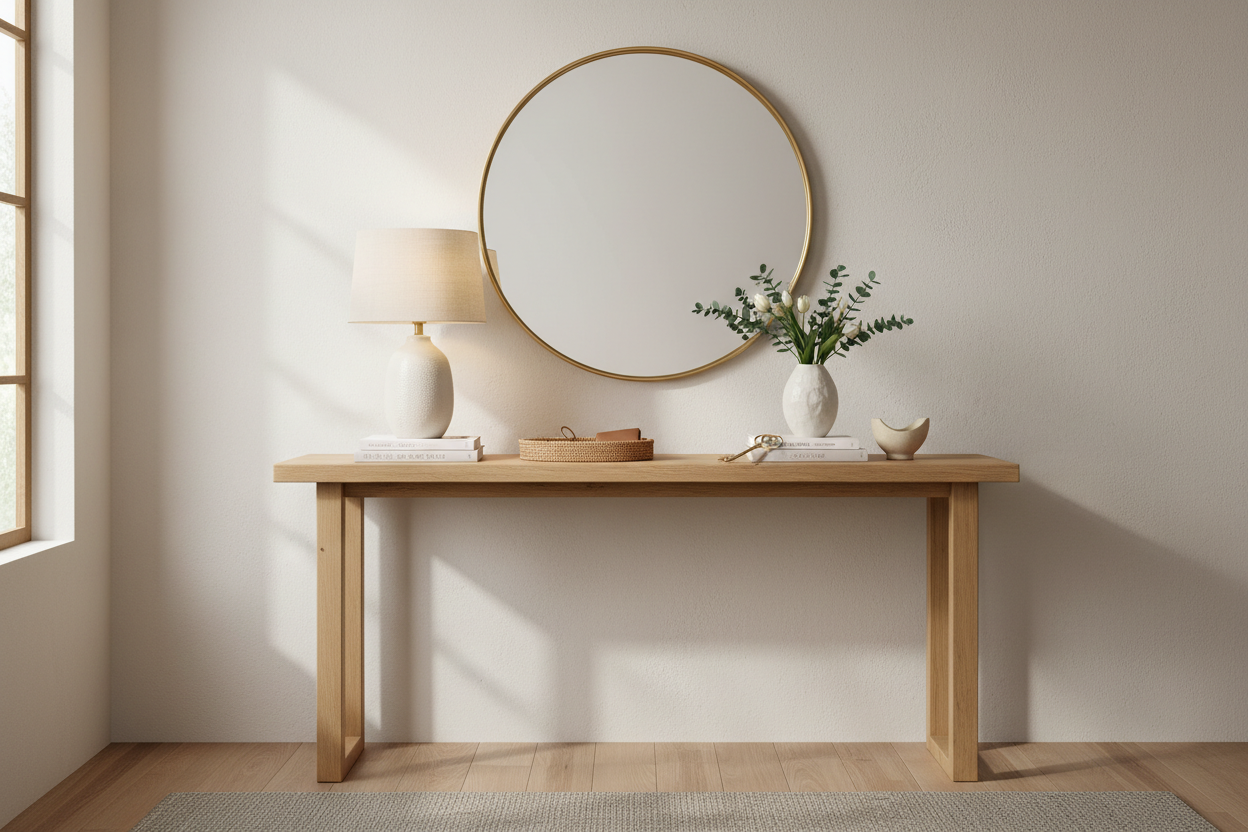
Your front door is the handshake of your home. It sets the expectation for everything that follows. But beyond aesthetics, the space immediately inside your door serves a critical function: it is the landing strip for your daily life. An accent table for entryway use isn't just a place to put a vase of flowers; it is the strategic solution to the chaos of keys, mail, and clutter that tends to migrate through the front door. The right piece anchors the space, providing a focal point that says "welcome" while secretly doing the heavy lifting of organization.
Why I Stopped Ignoring My Hallway
For years, I treated my foyer as a pass-through rather than a room. It was a blank corridor where I would kick off my shoes and toss my keys onto a nearby chair—or worse, lose them in a coat pocket. The turning point came on a rainy Tuesday when I spent twenty minutes hunting for my car keys, only to find them sitting on the floor behind a potted plant. That afternoon, I measured the narrow strip of wall next to the door and went hunting for a solution.
I found a slim, vintage demilune table that barely intruded into the walking path. Adding that surface changed the entire rhythm of my morning. Suddenly, there was a designated spot for the mail, a tray for the keys, and a lamp to light the hallway in the evening. It wasn't just furniture; it was a sanity saver. That experience taught me that even the smallest footprint can accommodate a functional surface if you choose the right shape and scale.
Measuring for Flow and Function
Before you fall in love with a piece of furniture, you have to respect the architecture of your house. The biggest mistake people make is buying a table that is too deep. In a hallway, traffic flow is paramount. You generally need a minimum of 36 inches of clearance for a comfortable walkway. If your entry is tight, look for a console that is 10 to 12 inches deep. If you have a grand, open foyer, a shallow table will look lost, and you might prefer a round center table to command the space.
Height is equally important. Standard console height ranges from 30 to 36 inches. This aligns visually with the back of a sofa or the average waist height, making it easy to drop items without stooping. If you plan to hang a mirror or artwork above the piece, the table height dictates where those wall elements should sit to maintain a cohesive look.
Choosing the Right Shape
The shape of your furniture defines the energy of the entrance. Rectangular console tables are the most common because they sit flush against the wall and maximize surface area. They offer clean lines and often come with drawers, which are invaluable for hiding unsightly clutter like dog leashes or sunglasses.
However, if your door opens directly into a living space without a defined hallway, you might look at side tables for entryway placement. A small, round side table tucked next to the door can act as a catch-all without blocking the visual flow into the living room. For homes with a staircase near the door, a demilune (half-moon) table is often the best choice. The curved edges prevent hip-bumping accidents in high-traffic zones and soften the angular lines of the stairs.
Material Matters in High-Traffic Zones
Your entryway sees more action than almost any other part of the house. Wet umbrellas, heavy grocery bags, and metallic keys can wreak havoc on delicate finishes. While a glass top creates an airy, open feel that is excellent for small spaces, it requires constant cleaning to remove fingerprints. Solid wood is forgiving and adds warmth, but you may want a distressed finish that hides scratches. Metal tables, particularly those with stone or marble tops, offer the best durability. They can withstand the impact of heavy items and are impervious to water rings from a damp mail stack.
The Art of Styling
Once you have the furniture in place, the styling brings it to life. The goal is to balance utility with beauty. A naked table looks unfinished, but a cluttered one looks messy. I rely on a simple formula: light, height, and a landing zone.
Lighting is non-negotiable. An entry lamp provides a welcoming glow that overhead lights simply cannot replicate. If you don't have an outlet nearby, consider a high-quality battery-operated lamp or sconces flanking the table. This soft light creates immediate warmth when you walk in at night.
To add height and drama, lean or hang a mirror above the table. This serves a dual purpose: it allows for a last-minute appearance check before leaving, and it bounces light around, making a cramped foyer feel larger. If a mirror isn't your style, a large piece of art works just as well.
Finally, you need the "landing zone." This is where the function comes in. A decorative bowl, a woven tray, or a small box is essential. This container catches the keys and loose change, keeping the actual surface of the accent table entryway setup clean. Without a specific container, the table will inevitably become a junk pile.
Storage Solutions for Small Spaces
If your home lacks a coat closet, your table needs to work harder. Look for options with a lower shelf. This space is perfect for placing woven baskets to hold shoes, scarves, or hats. It keeps the floor clear and hides the visual noise of daily accessories. If the table has drawers, use drawer dividers. It is incredibly easy for a junk drawer to form in the entryway, filled with batteries, receipts, and gum wrappers. assigning a specific purpose to each drawer keeps the chaos at bay.
For those utilizing side tables for entryway organization rather than full consoles, vertical space becomes your best friend. Install hooks on the wall above the table for coats and bags, leaving the small table surface free for just a lamp and a key dish. This creates a functional mudroom vibe without requiring the square footage of a dedicated room.
Final Thoughts on Welcoming Spaces
Designing your entrance is about creating a transition point that feels good to come home to. It doesn't require a grand budget or a massive amount of space. It requires looking at how you actually use your home—where you drop your keys, where you check your hair, where you need a light—and placing a piece of furniture there that meets those needs. Whether it is a sleek modern console or a pair of small side tables, the right choice will make your daily departure and arrival smoother, more organized, and infinitely more stylish.
Frequently Asked Questions
How much space should be between the entryway table and the wall?
Most entryway tables, specifically consoles and demilunes, are designed to sit flush against the wall. If you are placing a round center table in a large foyer, aim for at least 30 to 36 inches of walking space all around the table to ensure traffic flow isn't impeded.
Can I use a desk as an entryway table?
Absolutely. A writing desk often makes a fantastic accent table for entryway spaces because they are usually the correct height and depth. Just ensure the leg clearance area doesn't look empty; filling the space underneath with a structured basket or an ottoman can make it look intentional rather than like a misplaced office viewing.
What should I hang above my entryway table?
A mirror is the most popular choice because it reflects light and opens up the space. However, a large piece of statement art or a gallery wall of smaller frames works equally well. The key is scale; the wall decor should be roughly two-thirds the width of the table to maintain visual balance.

Dejar un comentario
Este sitio está protegido por hCaptcha y se aplican la Política de privacidad de hCaptcha y los Términos del servicio.