










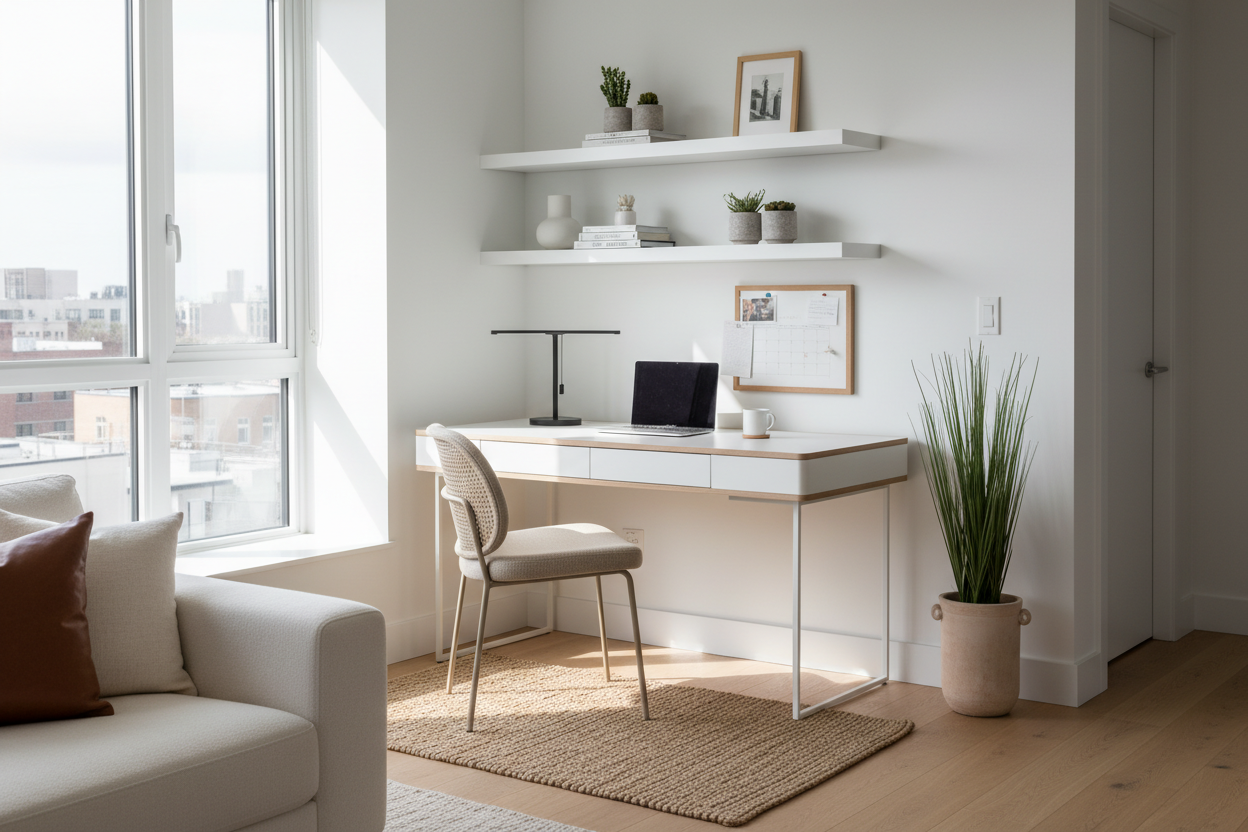
We have all faced the dilemma: attempting to be productive while perched on a sofa edge or crowding the dining table with monitors. When square footage is at a premium, finding the right balance between functionality and aesthetics becomes a precise art form. You do not need a sprawling library to establish a productive workflow; you simply need intentional design. This guide explores curated work from home desk ideas for small spaces that respect your footprint without compromising on style or ergonomics.
Key Features to Look For
- Visual Weight: Opt for open frames, glass tops, or floating wall units to keep the room feeling airy.
- Scale & Proportion: Ensure the desk depth is at least 20 inches to accommodate a laptop and wrist support comfortably.
- Material Integrity: Hardwoods (oak, walnut) offer longevity, while high-pressure laminates provide scratch resistance for heavy daily use.
- Multi-functionality: Look for secretary desks that close up to hide clutter or console tables that double as workspaces.
Mastering Space Planning and Layout
The first rule of integrating a workspace into a compact living area is to identify underutilized zones. We often overlook the potential of alcoves, bay windows, or even the space behind a floating sofa. To effectively create home office in small space layouts, consider the "cloaking" technique. This involves painting the desk the same color as the wall behind it. This monochromatic approach allows the furniture to recede visually, preventing the room from feeling cluttered.
Another sophisticated approach is the "floating" concept. Wall-mounted desks free up floor space, maintaining the visual flow of the flooring material (whether hardwood or rug) underneath. This trick cheats the eye into perceiving the room as larger than it actually is.
Material Selection: Durability Meets Aesthetics
As a designer, I always advise clients to look beyond the silhouette and examine the finish. For work from home small space ideas, the material dictates the vibe. A glass or acrylic desk is essentially invisible, making it perfect for ultra-tight corners, though it demands constant cleaning to remain pristine.
Conversely, a rich walnut or white oak veneer adds warmth and texture. If you are selecting wood, ensure it is sealed with a matte polyurethane. This finish is forgiving against coffee rings and mouse scratches compared to high-gloss lacquers. When evaluating home office solutions for small spaces, avoid particle board with paper veneers; the edges will peel within a year of daily arm friction.
Ergonomics in a Compact Footprint
A common mistake is prioritizing width over depth. A desk that is 48 inches wide but only 15 inches deep is practically useless for a full-time setup. You need enough depth to push your monitor back to arm's length to prevent eye strain. If your small work from home space cannot accommodate a deep desk, consider a keyboard tray or a monitor arm wall mount to reclaim surface area.
The Chair Dilemma
The desk is only half the equation. In tight quarters, a bulky executive chair is a visual obstruction. Opt for a mid-century modern task chair with a low profile, or a swivel chair upholstered in boucle or velvet that creates a bridge between office utility and living room comfort. Ensure the armrests can tuck fully under the desk surface when not in use.
My Personal Take on work from home desk ideas for small spaces
I learned a hard lesson about stability during a project for a client in a studio apartment—and subsequently, in my own guest room. I specified a trendy, leaning "ladder style" desk because it looked architectural and saved space. It was beautiful until I actually tried to type on it.
The issue wasn't the look; it was the vibration. Every keystroke sent a micro-tremor through the frame, causing the monitor to wobble slightly. It was nauseating after an hour. I realized that for lightweight, small-scale desks, wall-anchoring isn't just a safety tip for earthquakes; it is essential for rigidity. Now, whenever I recommend a lightweight console or ladder desk, I insist on heavy-duty toggle bolts to secure the top to the studs. It turns a flimsy piece of furniture into a solid workstation.
Conclusion
Transforming a tight corner into a functional workspace requires a blend of strategic placement and furniture that works double-duty. By focusing on visual lightness and structural integrity, you can curate a space that invites productivity rather than clutter. Treat your desk not as a utility, but as a piece of joinery that enhances the room's overall narrative.
Frequently Asked Questions
What is the minimum depth for a functional small desk?
For a laptop-only setup, 18 inches is the absolute minimum. However, if you use an external monitor, aim for 20 to 24 inches to maintain proper focal distance and wrist support.
How can I hide cables in a desk with open legs?
Use adhesive cable clips along the back of the legs to route wires down to the floor. Alternatively, use a cable sleeve that matches your wall color to bundle cords together into a single, less visible line.
Is a standing desk viable for small apartments?
Yes, specifically single-column pneumatic standing desks. They have a smaller footprint than dual-motor versions and often come on casters, allowing you to roll the workspace into a closet when guests arrive.


Dejar un comentario
Este sitio está protegido por hCaptcha y se aplican la Política de privacidad de hCaptcha y los Términos del servicio.