










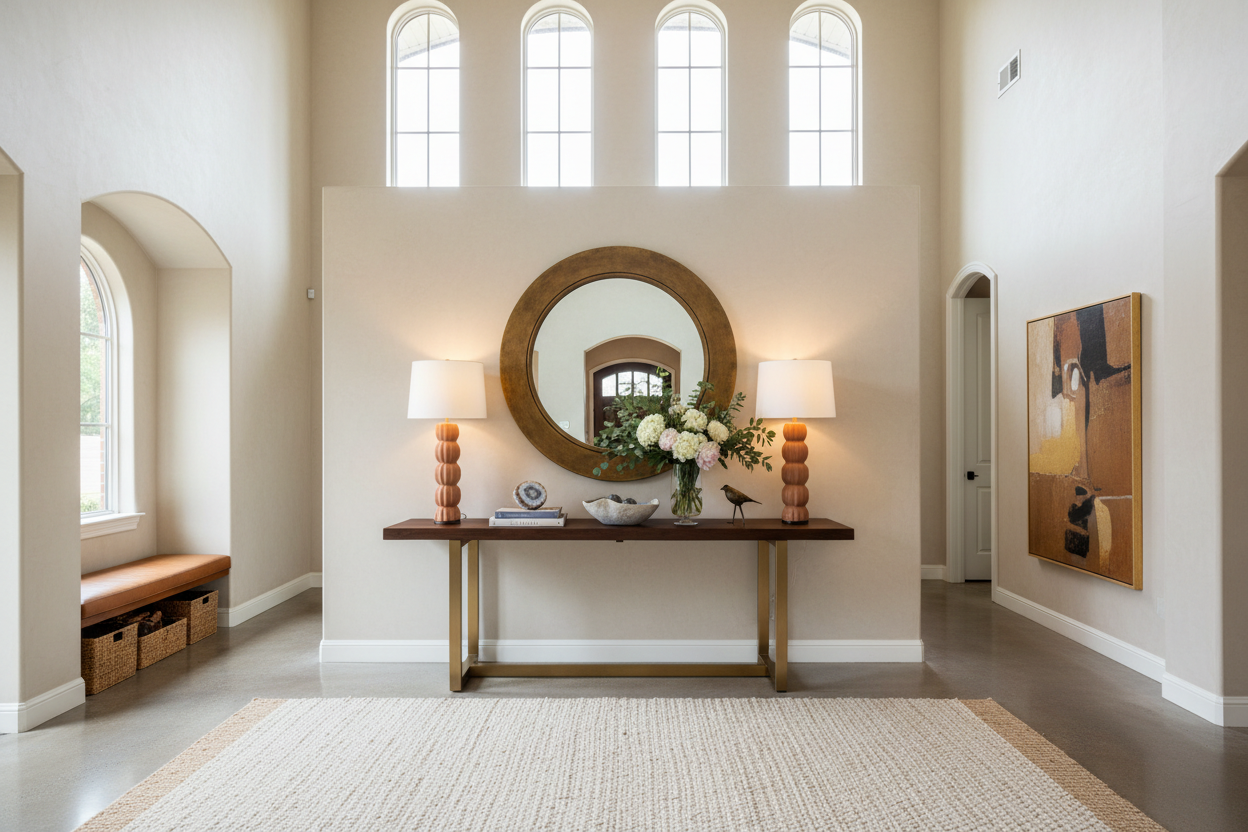
The entryway is the handshake of your home. It sets the tone for everything that follows, yet it is often the most difficult space to furnish correctly, especially when you are working with significant square footage. If you have a spacious foyer, a standard-sized console often looks lost, floating aimlessly against a wall or in the center of the room. The solution is finding a large entryway table that commands attention and anchors the space. Getting this right is about balancing scale, functionality, and aesthetics to ensure the piece feels like it belongs architecturally rather than looking like an afterthought.
Selecting the right furniture for a grand entrance requires looking beyond standard dimensions. A substantial area demands a piece with visual weight—something that doesn't just fill a gap but serves a purpose. Whether you need a surface for decorative lamps or a drop zone for daily clutter, the furniture you choose must stand up to the volume of the room. A big entryway table isn't just about width; it is about depth, height, and the materials used to construct it.
A Lesson in Scale: Why Size Matters
I recall a specific project a few years ago involving a sprawling distinctive colonial revival home. The homeowners had a beautiful, double-height foyer that was breathtaking, but they had placed a delicate, spindly antique stand against the main wall. It looked like a toy. No matter how much decor we piled on top of it, the scale was wrong. The moment we swapped that piece for a heavy, solid wood large foyer table, the entire room clicked into place. The furniture finally spoke the same language as the architecture.
This experience highlighted a crucial rule in interior design: negative space is only beautiful if it is intentional. In a large hall, too much empty space around furniture makes the room feel unfinished. You generally want your table to occupy enough visual space that it feels grounded. If you are placing a console against a wall, aim for a piece that covers at least two-thirds of the wall's length, or if that isn't feasible, use flanking chairs or tall plants to extend the visual footprint of the arrangement.
Choosing Between Round and Rectangular
The shape of your room dictates the shape of your furniture. If you have a wide, open square space, a round center table is often the most luxurious choice. These large foyer tables serve as a pivot point for traffic flow, forcing movement around the perimeter of the room. This layout mimics the grandeur of hotel lobbies and estate homes. A round table centered under a chandelier creates a powerful vertical axis that draws the eye up.
Conversely, if your space is defined by long walls or is more of a wide corridor, a large entryway console table is the superior option. A rectangular console hugs the perimeter, leaving the walkway clear while providing a substantial surface for styling. For particularly long corridors, you might even consider a large hall table that runs six or seven feet in length. These elongated pieces are rare but impactful, preventing the "bowling alley" effect that long hallways often suffer from.
Functionality and Storage Solutions
Aesthetics are vital, but entryways are high-traffic zones. They are the drop zone for keys, mail, dog leashes, and school bags. If you have a busy household, a simple slab of marble on metal legs might look chic, but it will quickly become cluttered. This is where a large entryway table with storage becomes essential. Look for designs that incorporate deep drawers or a bottom shelf.
Drawers are the secret weapon for maintaining a minimalist look. They hide the daily mess that inevitably accumulates near the front door. If you fall in love with a large console table for entryway use that lacks drawers, utilize the space underneath. A console with an open bottom shelf offers the perfect spot for oversized woven baskets. These baskets add texture and warmth while providing a designated hiding spot for shoes or seasonal accessories like scarves and umbrellas.
Balancing Visual Weight and Materials
The material of your table contributes as much to the sense of scale as the physical measurements do. A glass-top table with thin metal legs will appear much smaller than a solid oak sideboard, even if their dimensions are identical. In a cavernous foyer, you usually want materials that feel substantial. Solid woods, stone tops, and thick metal frames help a large hall table hold its own against high ceilings and wide doorways.
However, if your entryway floor is intricate—perhaps a patterned tile or dark hardwood—and you want to show it off, a more open design works well. In this scenario, ensure the frame of the table is thick enough to be noticed. A chunky lucite or heavy iron base can provide the necessary grandeur without blocking the view of the flooring.
Styling Your Grand Entrance
Once you have secured the furniture, styling is the next hurdle. A common mistake is buying a massive table and then populating it with tiny decor items. Small trinkets will disappear on a large surface. You need to scale up your accessories to match the furniture.
Start with lighting. A pair of substantial table lamps is a classic choice for a large console table for entryway styling. They add height and cast a welcoming glow. Between the lamps, you can place a large piece of art or a statement mirror. The mirror should be roughly two-thirds the width of the table to maintain balance. For a center table, a massive floral arrangement or a sculptural object usually works best as a centerpiece. The goal is to create layers of height.
Don't forget the space beneath the table. If you aren't using baskets for storage, consider placing a pair of ottomans or garden stools under a console. This adds color and texture, and it provides extra seating that can be pulled out when you have guests. It makes the large entryway table feel like a complete vignette rather than a lonely piece of furniture.
Final Thoughts on Placement
Before making a purchase, measure your clearance. A big entryway table needs breathing room. You should have at least 36 to 48 inches of clearance between the edge of the table and any wall or door swing. If the table impedes the natural flow of traffic, it will feel like an obstacle rather than a feature, regardless of how beautiful it is. Tape out the dimensions on the floor with painter's tape and walk around it for a few days. This practical test will tell you if the footprint works for your lifestyle.
Frequently Asked Questions
How tall should a large entryway table be?
Standard console tables typically range from 30 to 36 inches in height. For a large foyer with high ceilings, aim for the higher end of that spectrum (34-36 inches) or even slightly taller. A table that is too low can look underwhelming in a room with significant vertical space.
Can I use a dresser instead of a console table?
Absolutely. A dresser is essentially a large entryway table with storage maximized. This is a fantastic option if you need to hide a significant amount of clutter. Just ensure the depth of the dresser doesn't block the walkway, as dressers are often deeper than standard consoles.
What should I put on a round foyer table?
Since a round table can be viewed from all angles, the decor needs to look good from every side. A large central floral arrangement, a sculptural bowl, or a stack of coffee table books arranged in a circle works well. Avoid picture frames or items with a distinct "back" side.


Dejar un comentario
Este sitio está protegido por hCaptcha y se aplican la Política de privacidad de hCaptcha y los Términos del servicio.