










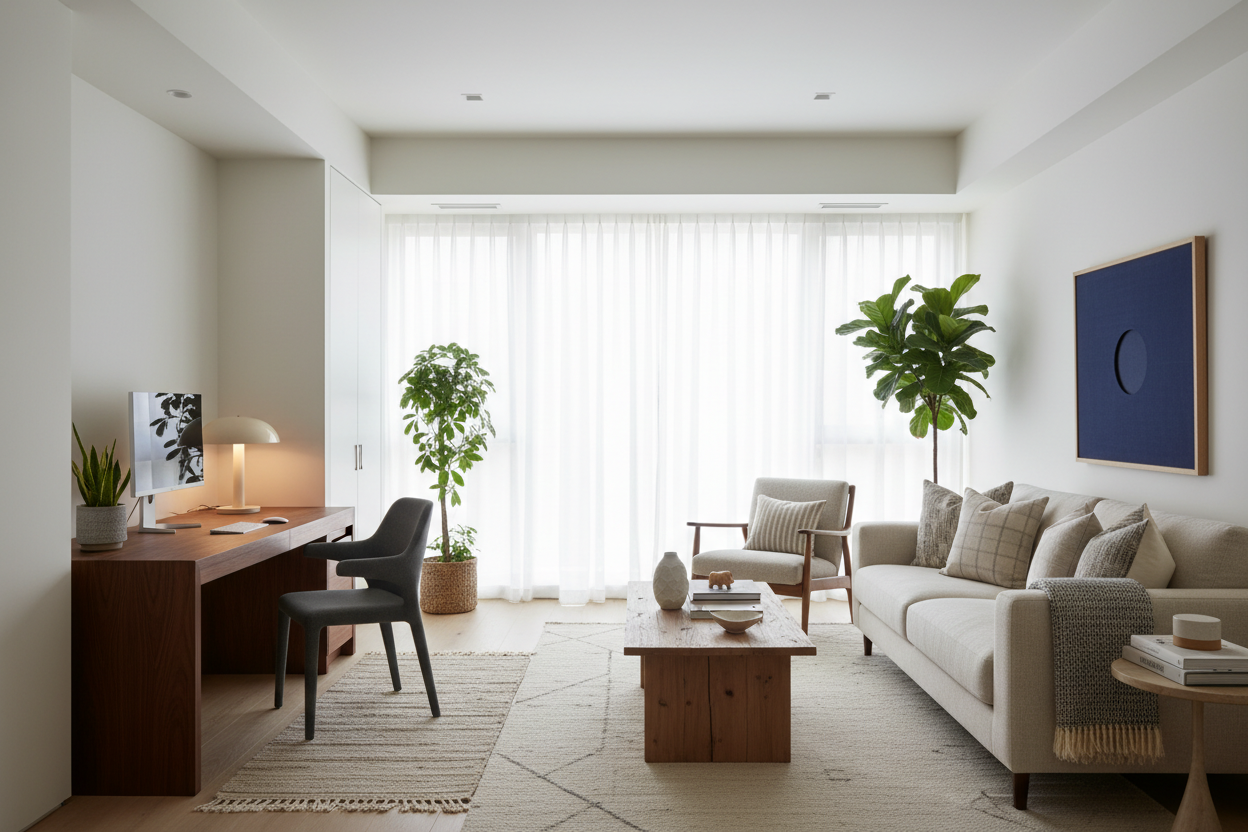
We have all been there: you log off for the day, but the glowing monitors, the tangle of black cords, and the bulky ergonomic chair are still staring at you from the corner of your living room. The room that is supposed to be your sanctuary suddenly feels like a stressful reminder of your inbox.
When your home and workplace occupy the exact same square footage, the boundaries easily blur. Creating a true workplace home environment requires more than just shoving a desk against an empty wall. You need a space planning strategy that respects the comfort of your residential space while providing the structure of an office. By the end of this guide, you will know exactly how to select and position dual-purpose furniture so your living area feels like a home again after 5 PM.
Quick Decision Guide
- Match the wood tones: Your desk should share the same finish or undertone as your coffee table or media console to create a cohesive silhouette and visual flow.
- Hide the clutter: Prioritize desks with built-in closed storage or add a stylish credenza to stash laptops and paperwork completely out of sight.
- Mind the visual weight: If your sofa is heavy and skirted, pair it with a leggy, minimalist desk to balance the room's proportions and maintain negative space.
- Invest in lighting: Swap harsh, cool-toned desk lamps for warm, architectural task lighting that doubles as ambient room decor in the evening.
Carving Out Zones in Open-Concept Layouts
The biggest challenge in North American suburban homes and urban apartments is the open-concept floor plan. Without physical walls, your workspace can easily bleed into your relaxation areas.
The Power of Visual Boundaries
You do not need drywall to create a room. Use a large area rug to anchor the workspace independently from the living room seating arrangement. If your sofa floats in the middle of the room, consider placing a finished-back desk directly behind it like a console table. This creates a distinct functional zone while keeping traffic paths clear. Always leave at least 36 inches of clearance between the edge of the desk and any other furniture so you can push your chair back comfortably.
Ditching the Corporate Cubicle Look
Nothing ruins a thoughtfully curated living room faster than a black melamine desk and a plastic mesh chair. To integrate these spaces, your office furniture needs to speak the same design language as your residential pieces.
Material Selection Matters
Opt for warm, natural materials. A solid walnut or white oak desk feels like a piece of residential cabinetry rather than a corporate leftover. If you need file storage, skip the metal filing cabinets. Instead, look for a woven rattan trunk or a mid-century modern credenza that holds hanging files but looks like a dining sideboard. Texture layering is crucial here—a leather desk pad or a ceramic table lamp softens the hard edges of technology.
Designer's Honest Take
I learned the hard way that aesthetics cannot override ergonomics. A few years ago, I specified a gorgeous, vintage Pierre Jeanneret cane chair for my own home office setup. It looked absolutely stunning in photos and perfectly matched my transitional decor. The reality?
After two weeks of sitting on rigid woven cane without proper lumbar support, my lower back was in agony. I eventually had to swap it for a fully adjustable chair from a reputable ergonomic brand. To compromise, I chose a model fully upholstered in a beautiful rust-colored boucle fabric that hid the mechanical levers. The lesson here is simple: never sacrifice physical support for a magazine-worthy photo. Your body will always win that argument.
Frequently Asked Questions
How deep should a desk be for a home office?
If you use a laptop, a depth of 20 to 24 inches is sufficient and saves valuable floor space. However, if you use dual external monitors, you need a desk depth of at least 28 to 30 inches to ensure proper focal distance and avoid eye strain.
How can I hide my monitors when I am not working?
Consider a secretary desk with a drop-down front that can be closed at the end of the day. Alternatively, use a decorative room divider screen, or simply invest in a beautiful, oversized piece of art to lean against the wall behind the monitors, drawing the eye away from the screens.
Is it bad to put a desk in the bedroom?
It is not ideal for sleep hygiene, but often necessary in smaller homes. If you must put a desk in the bedroom, position it so the bed is not in your direct line of sight while working, and ensure you can completely power down or cover your electronics at night.

Dejar un comentario
Este sitio está protegido por hCaptcha y se aplican la Política de privacidad de hCaptcha y los Términos del servicio.