










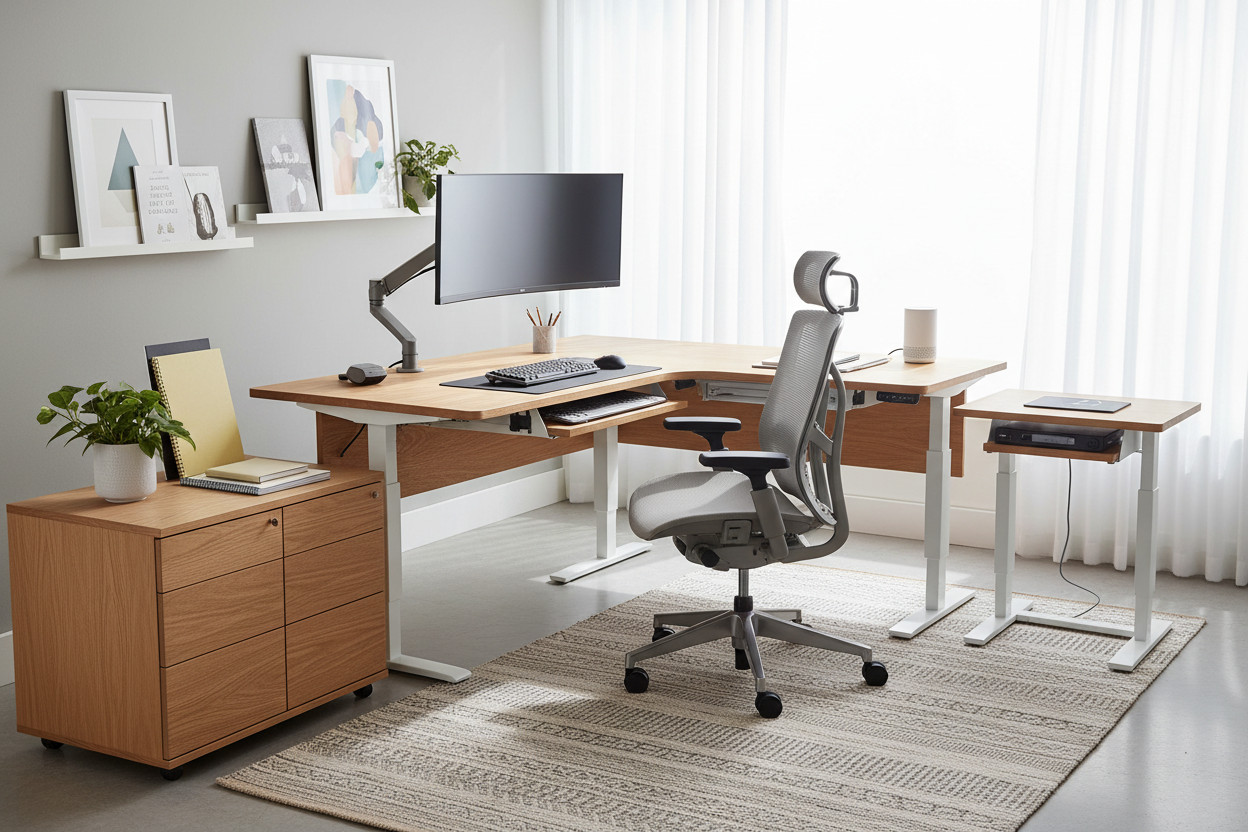
Entering the professional world brings excitement, but without the right physical environment, mental fatigue creeps in faster than you expect. Many new professionals underestimate how a poorly designed space impacts output. Determining what do you need to start working effectively from home requires more than just a laptop and a Wi-Fi connection; it demands a curated blend of ergonomics, lighting, and spatial planning.
Quick Decision Guide: The Essentials
- The Chair: Prioritize lumbar support and adjustability over style. Look for a synchronous tilt mechanism.
- The Desk: Ensure a minimum depth of 24 inches for monitor distance. Solid wood offers longevity; laminate offers durability.
- Lighting: Layer your lighting. Combine ambient overhead light with a dedicated task lamp (3000K-4000K color temperature).
- Storage: Vertical shelving reduces floor footprint in smaller apartments.
- Acoustics: Incorporate soft textures (rugs, curtains) to dampen echo during video calls.
The Foundation: Investing in Ergonomics
The most critical error I see when you begin your first full time job is allocating the budget to the desk rather than the chair. The chair is the primary interface between your body and your work. While a vintage velvet armchair adds character to a room, it lacks the kinetic support required for an eight-hour shift.
Look for seating with adjustable armrests and seat depth. From a material standpoint, high-quality mesh allows for airflow, preventing heat buildup, whereas top-grain leather offers a sophisticated silhouette that ages beautifully but requires climate control to remain comfortable.
Selecting the Right Desk Surface
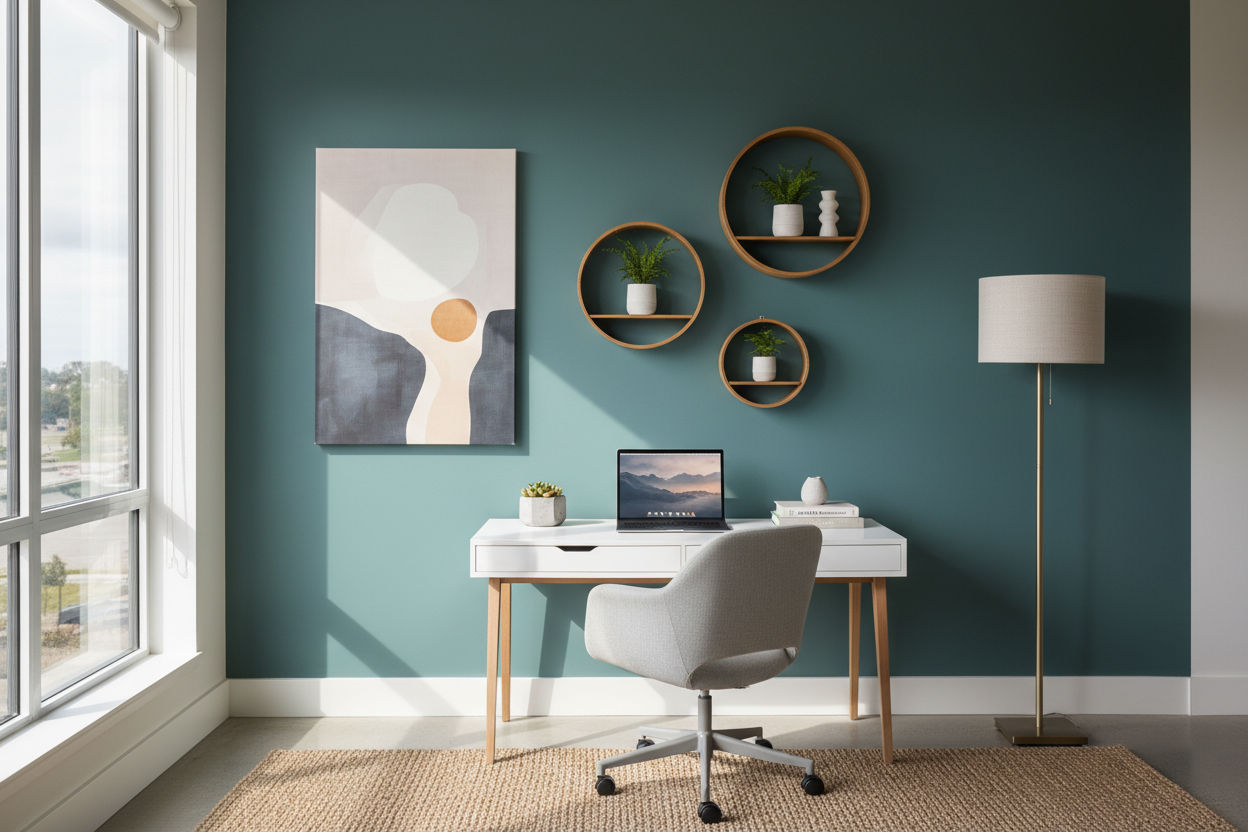
Your desk anchors the room. Visually, you must balance the "weight" of the piece with the room's dimensions. In a compact city apartment, a heavy oak partner's desk will feel oppressive. Instead, opt for a writing desk with slender legs or a wall-mounted floating unit to maintain an open sightline.
Materiality and Durability
Solid wood provides a tactile warmth that veneers cannot replicate, but it reacts to humidity. If you are prone to coffee spills or use heavy equipment, a high-pressure laminate or a tempered glass top might be more practical, though glass can feel cold and clinical. Ensure the finish is matte or satin; high-gloss finishes create glare from overhead lighting, leading to eye strain over time.
Lighting: The Focal Point of Productivity
Lighting is often an afterthought, yet it defines the mood. Relying solely on a ceiling fixture creates harsh shadows. You need task lighting that can be angled away from screens to prevent glare.
When selecting a lamp, consider the CRI (Color Rendering Index). A CRI above 90 ensures that colors look accurate—essential if your new role involves any creative work. Aesthetically, coordinate the metal finish of your lamp with your desk hardware (drawer pulls or legs) for a cohesive, curated look.
My Personal Take on what do you need to start working
Early in my career, I fell into the "aesthetic trap." I purchased a stunning, mid-century modern teak desk with a glass top because it looked incredible in the showroom. It was a mistake.
Here is the unpolished truth: Glass surfaces are a nightmare for optical mice; I had to use a mousepad which ruined the sleek look I was paying for. Worse, the glass was perpetually cold on my forearms during winter mornings, and it amplified the clicking sound of my keyboard, which became distracting during calls. When clients ask me now, I always steer them toward wood or linoleum-topped desks. The tactile experience of a warm, matte surface makes a surprising difference in how welcoming your workspace feels at 8:00 AM.
Conclusion
Curating your workspace is an investment in your career longevity. By focusing on ergonomic integrity and material quality, you create a sanctuary that fosters focus rather than fatigue. Start with the chair, build around the light, and choose a desk that fits your life.
Frequently Asked Questions
How much space do I really need for a home office?
You don't need a dedicated room. A niche or corner with at least 48 inches of width is sufficient for a standard desk and chair movement. The key is visual separation from your living area.
Is solid wood always better than veneer?
Not necessarily. High-quality architectural veneers over MDF are more stable in fluctuating temperatures and less prone to warping than solid wood, often at a better price point.
What is the best desk depth for a laptop setup?
While 24 inches is standard, if you only use a laptop, you can get away with a console table depth of 18-20 inches, provided you have adequate legroom underneath.

Dejar un comentario
Este sitio está protegido por hCaptcha y se aplican la Política de privacidad de hCaptcha y los Términos del servicio.