










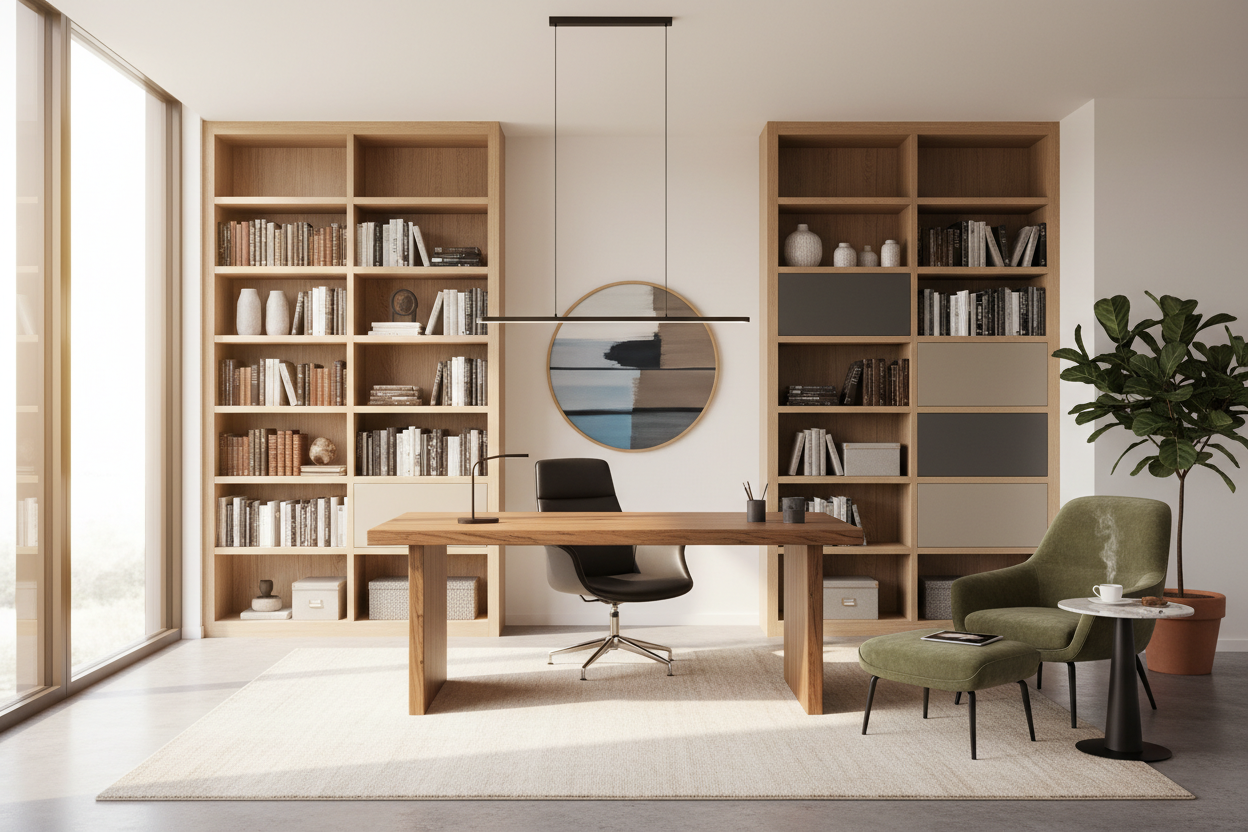
Most people realize their workspace isn't working when they find themselves migrating to the kitchen island by 2 PM. Trying to balance a home & office environment often results in a room that feels either entirely corporate or too relaxed to actually get anything done.
Whether you are trying to squeeze a workstation into a living room corner or dedicating a full spare bedroom to your career, finding the right home and office furniture is a delicate balancing act. Today, I am going to walk you through how to source, scale, and style your workspace so it feels like a natural extension of your house rather than a cubicle.
Quick Decision Guide
- Prioritize ergonomics over aesthetics for seating: A beautiful dining chair will ruin your posture in a week; always invest in dedicated home office seating.
- Measure your clearance: Always leave at least 36 inches behind your desk for your chair to roll back without hitting a wall or a home office dresser.
- Mix, don't match: Avoid buying a matching 'home office complete' set. Layering textures and finishes gives a higher-end, residential feel.
- Check commercial ratings: Even for home work furniture, look for pieces tested for daily use to ensure you are getting durable office furniture.
Space Planning: Making the Layout Work
The Visual Weight of Your Desk
In standard North American suburban homes, a massive, formal office furniture setup can instantly overwhelm a room. If you are placing your desk in a dual-purpose space, pay attention to visual weight. A solid, floor-to-desk wood base feels heavy and imposing. Instead, opt for residential office desks with open metal or tapered wood legs. This allows light to pass through the room, making your office setup furniture feel integrated rather than intrusive.
If you have the luxury of a dedicated room, you can explore larger home office solutions. A popular layout is a home office with desk and couch. To pull this off, float the desk in the center of the room facing the door, and anchor the sofa against the back wall. This creates a commanding focal point while offering a comfortable spot to read or take casual calls.
Style & Coordination: Breaking the Cubicle Mold
Selecting Decorative Home Office Furniture
The biggest mistake I see clients make is heading straight to a business furniture store and buying pieces that belong under fluorescent lights. Your office at home furniture should speak the same design language as your living room. If your house leans mid-century modern, look for warm walnut finishes and brass hardware. If it is transitional, painted cabinetry and soft, upholstered seating work beautifully.
When you shop home office furniture, look for pieces that hide their function. A beautiful credenza can house a printer and files just as well as a metal filing cabinet. Matching home office furniture to your existing trim and flooring ensures the transition from home to office feels seamless.
Navigating the Market: Sourcing Your Pieces
Where to Buy Office Furniture for Home
Clients constantly ask me where can I buy home office furniture that actually lasts. The truth is, the market is flooded with cheap, engineered wood pieces that chip after a month of use. If you are searching for home office furniture nearby, skip the big-box discount stores. Instead, look for a dedicated office furniture seller or a commercial furniture showroom that also caters to residential clients.
For those buying online home office furniture, always check the materials. Solid wood or high-quality veneers over MDF will outlast basic particleboard. If you need a quality desk furniture piece quickly, searching for an office chair supply store or a nearby office furniture shop often yields better ergonomic options than generic furniture retailers. Do not be afraid to ask an office furniture provider about the rub-count on their fabrics or the weight capacity of their drawer glides.
A Designer's Honest Take
I learned a hard lesson early in my career while designing a beautiful, moody home study. I sourced a stunning, matte black executive desk from a high-end home office furniture company. It looked incredible in the photos.
What I did not account for was the reality of daily work. Every single fingerprint, coffee cup ring, and speck of dust showed up instantly on that matte black surface. My client was wiping it down three times a day. Furthermore, the desk was 84 inches long and barely made the turn up their standard 1990s colonial staircase—we literally had to remove the door frame to get it inside. It taught me that when you purchase office furniture, you have to prioritize livability over pure aesthetics. Now, I always steer clients toward forgiving wood grains or textured laminates for their primary work surfaces, no matter how much they love a stark, solid color.
Frequently Asked Questions
Where is the best place to buy office furniture?
The best stores for home office furniture depend on your budget. For seating, always go to a specialized office furniture provider or commercial showroom so you can test the ergonomics. For desks and storage, reputable home office websites and local design boutiques offer better residential styles than big-box office supply chains.
How do I choose office desks and chairs for home?
Start with the chair. Ensure it has adjustable lumbar support, seat depth, and armrests. Once you know your chair's height and arm clearance, you can shop for residential office furniture that accommodates it. A desk should typically sit 29 to 30 inches off the floor.
Is commercial furniture better than in-home office furniture?
Commercial pieces are built to withstand heavy, 40-hour-a-week use, meaning they are incredibly durable. However, they often lack the warmth of decorative home office furniture. The sweet spot is blending a commercial-grade ergonomic chair with a high-quality residential desk.

Dejar un comentario
Este sitio está protegido por hCaptcha y se aplican la Política de privacidad de hCaptcha y los Términos del servicio.