










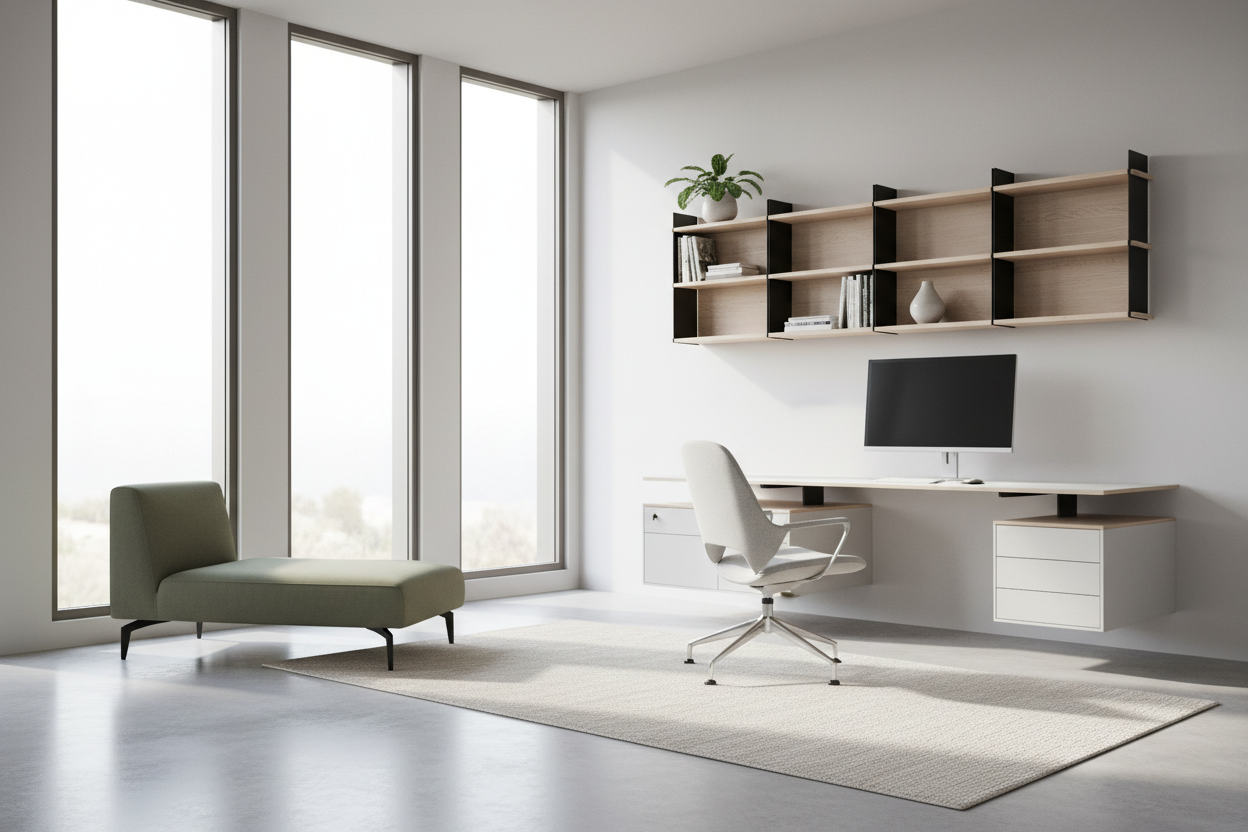
Working from home sounded great until your dining room table became a permanent paper graveyard and your back started aching from that 'aesthetic' dining chair. We have all been there. When you are trying to carve out a productive zone in a residential space, it is easy to end up with a room that feels like a sterile corporate cubicle shoved into your guest bedroom.
If you are searching for home office setups ideas that actually blend with your home's architecture while supporting eight hours of deep work, you need a strategic approach. Today, we are going to break down exactly how to balance visual weight, ergonomics, and spatial flow so you can build a workspace you actually want to spend time in.
Quick Decision Guide
- Prioritize monitor placement: The top of your screen should sit at or slightly below eye level to prevent neck strain.
- Float the desk: If space allows, pull the desk away from the wall to create a commanding position facing the door.
- Layer lighting: Combine ambient overhead lighting with a dedicated, adjustable task lamp to reduce eye fatigue.
- Anchor with a rug: Use a low-pile area rug to define the workspace visually, especially in open-concept living areas.
- Hide the cables: Invest in under-desk cable management trays; visual clutter directly translates to mental clutter.
Mastering the Floor Plan
When clients ask me for at home office setup ideas, the first thing I look at is the floor plan. Most people instinctively shove their desk flush against a wall. While this saves floor space in a tiny apartment, it often leaves you staring at blank drywall for forty hours a week.
The Power of the 'Command Position'
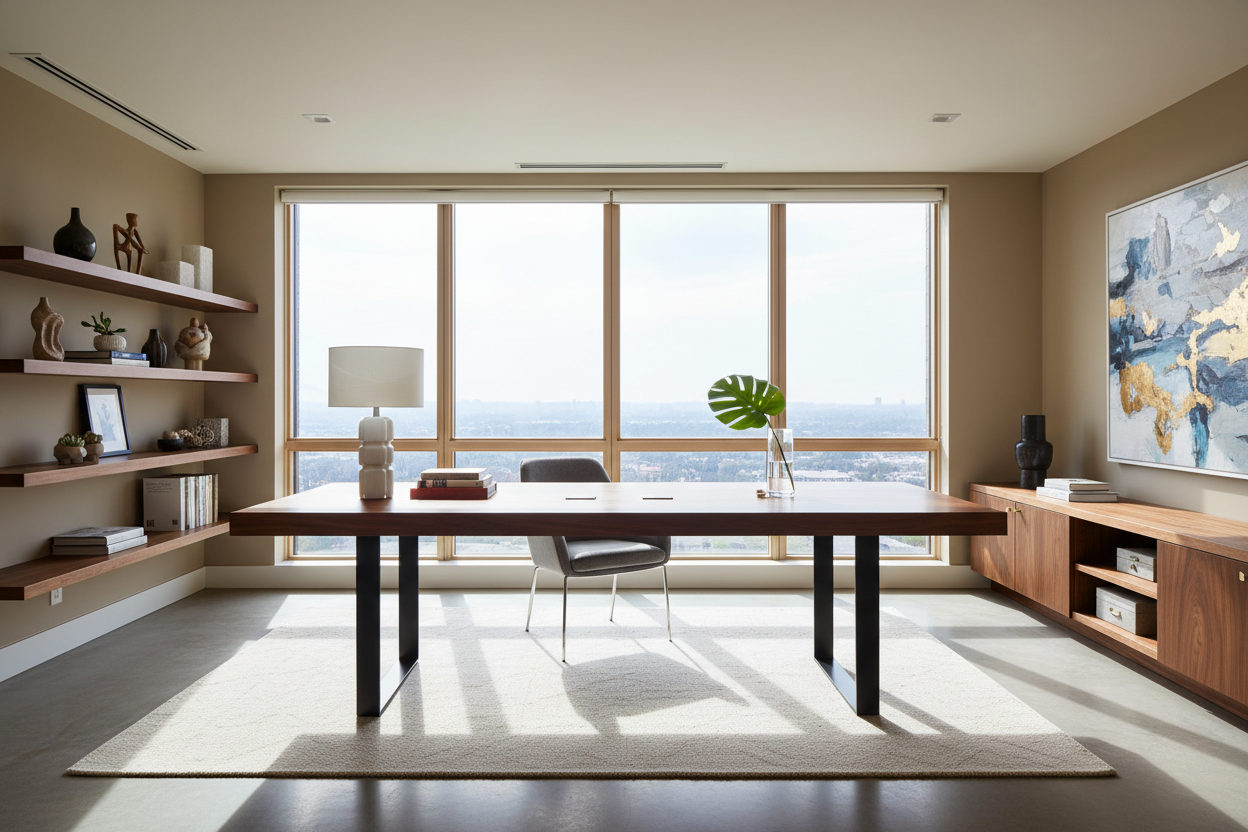
In interior design, we often borrow the concept of the 'command position' from Feng Shui. Whenever possible, position your desk so you have a clear view of the door but aren't sitting directly in line with it. If you have a larger suburban room, floating a solid wood desk in the center of the space instantly gives the room a high-end, executive feel. Just remember to leave at least 36 inches of clearance behind the desk so your chair can roll back comfortably without hitting a wall or bookshelf.
Ergonomics That Don't Ruin Your Aesthetic
There is a massive disconnect between beautiful Pinterest photos and reality. A vintage wooden chair might look stunning, but it will destroy your lumbar spine by Tuesday. You need pieces that support the physical demands of your workday. Look for ergonomic chairs with adjustable seat pans and breathable mesh, but opt for frames in white, gray, or polished aluminum instead of standard corporate black to keep the silhouette light.
The Screen Strategy
We need to talk about home office monitor ideas. A massive 34-inch curved monitor is a productivity powerhouse, but it dominates the visual landscape of a room. To minimize its visual weight, mount it on a high-quality pneumatic monitor arm rather than using the bulky factory stand. This frees up crucial desk real estate and allows you to push the screen completely out of the way when you are doing analog work or taking a video call.
Blending the Office with Your Home
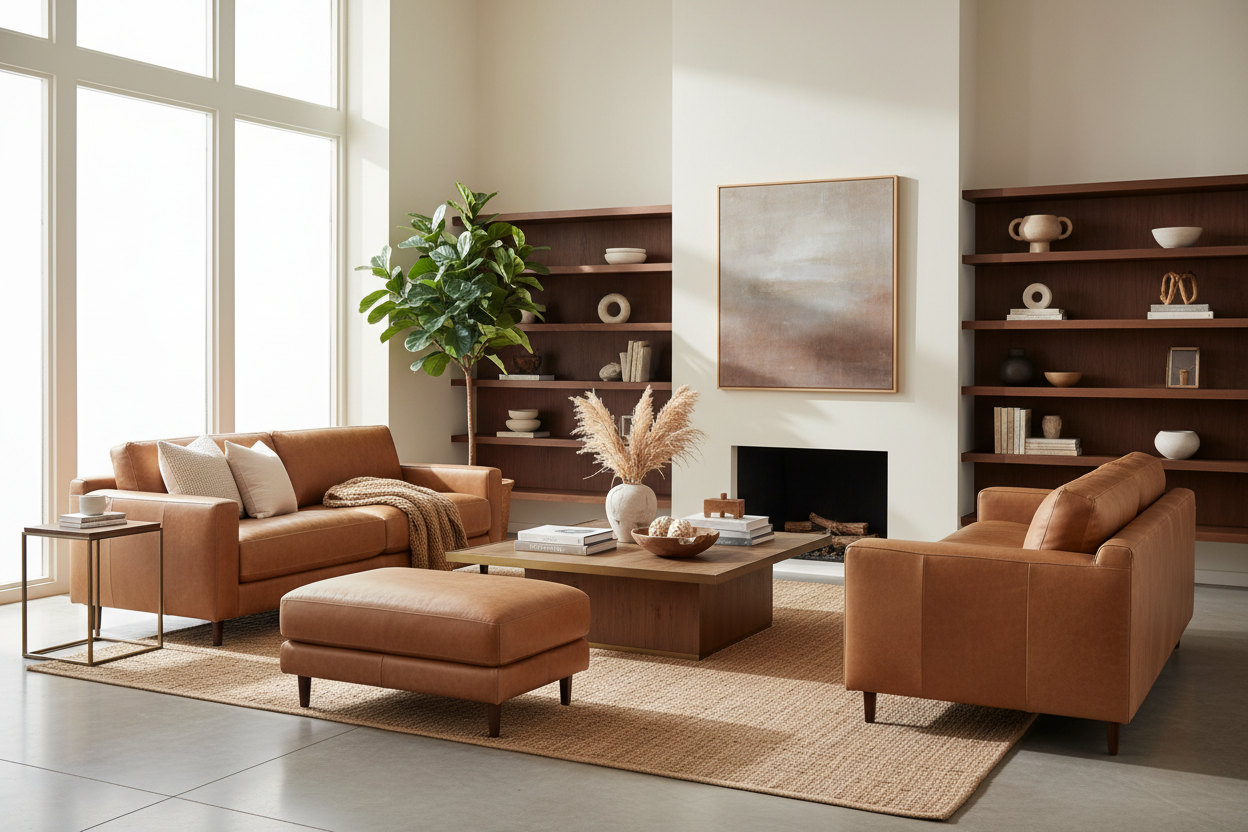
The secret to amazing home office setups is treating the space like a natural extension of your home's existing style. If your house leans transitional, a sleek glass-and-chrome desk will feel jarring. Instead, opt for a warm walnut veneer or a painted wood finish that speaks to your living room furniture.
When brainstorming cool office setup ideas, think about texture layering. A stark white desk needs grounding. Add a leather desk pad, a woven linen pinboard, or a ceramic table lamp. These tactile elements soften the harsh lines of laptops and monitors, bridging the gap between 'tech hub' and 'residential sanctuary.'
Designer's Honest Take
Early in my career, I designed a spectacular home office for a client in Toronto featuring a custom, wall-to-wall matte black lacquered desk. It photographed beautifully. But I learned a hard lesson about practicality: matte black surfaces show absolutely every fingerprint, speck of dust, and coffee ring. The client was wiping it down three times a day.
For my own home workspace, I finally ditched the 'invisible' glass desk. Glass desks look great for small spaces because they lack visual bulk, but the reality of seeing a tangled nest of power cords and my own knees on every Zoom call drove me crazy. I swapped it for a solid white oak desk with built-in cable routing. It takes up more visual space, but the mental peace of hidden wires is worth the trade-off.
Frequently Asked Questions
How deep should a home office desk be?
For a standard setup with a laptop and a single monitor, a depth of 24 inches is the absolute minimum. If you use dual monitors or a large drafting setup, aim for 30 to 36 inches of depth so you aren't sitting too close to the screens.
How can I make a small bedroom office work?
Utilize vertical space. Install floating shelves above the desk for storage instead of relying on bulky filing cabinets. Choose a desk with a slim profile and hairpin legs to keep the floor visible, which tricks the eye into thinking the room is larger.
Is a standing desk worth the investment?
Yes, but only if you actually use it. If you buy one, invest in a dual-motor frame for smoother, quieter lifting. Keep in mind that standing desks expose all your cables when raised, so a robust cable management spine is a mandatory add-on.

Dejar un comentario
Este sitio está protegido por hCaptcha y se aplican la Política de privacidad de hCaptcha y los Términos del servicio.