










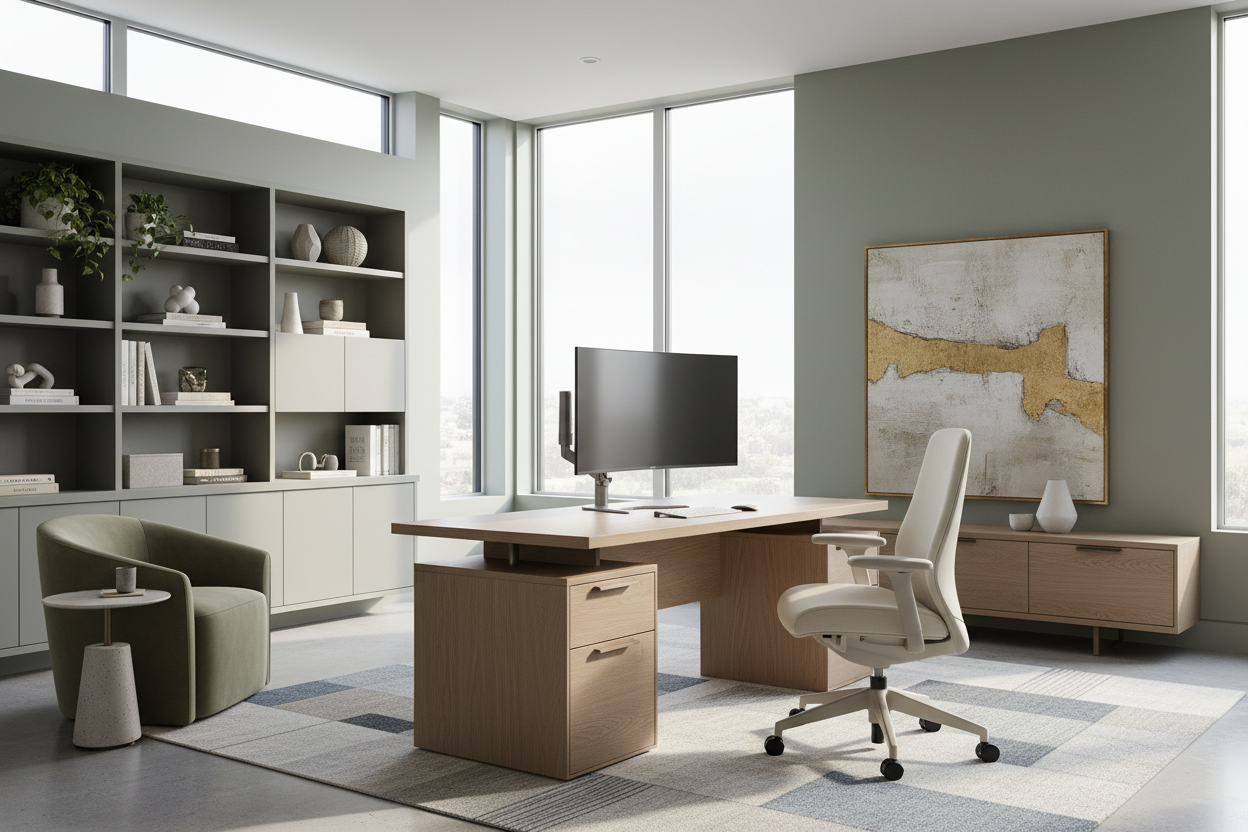
We have moved past the era where a laptop on the kitchen island suffices as a workspace. The modern dilemma involves carving out a dedicated zone that fosters deep work without disrupting the aesthetic continuity of your residence. Whether you are converting a spare bedroom or claiming a niche in the living area, successful home offices design requires a marriage of rigid ergonomics and soft residential styling.
Key Pillars of a Functional Workspace
Before selecting finishes, consider these fundamental elements to ensure your space performs as well as it looks:
- Ergonomics: Prioritize chair mechanisms and desk heights that support a neutral posture (90-degree elbow and knee angles).
- Lighting Layers: Combine ambient overhead light with specific task lighting to reduce eye strain and screen glare.
- Acoustics: Incorporate soft furnishings like rugs or drapery to dampen echo and absorb background noise.
- Material Durability: Choose work surfaces that resist heat (from laptops) and abrasion (from writing or equipment).
- Flow & Zoning: Position the desk to face the room or a window (the "power position") rather than a blank wall.
Mastering the Layout and Flow
The foundation of any office house design lies in space planning. We want to avoid the "cubicle effect." In residential settings, the desk does not always need to be pushed against a wall. Floating your desk in the center of the room, anchored by an area rug, immediately elevates the home office concept from a utility closet to an executive suite.
For smaller footprints, consider office space ideas home owners often overlook, such as utilizing vertical space. Floor-to-ceiling joinery or floating shelves draw the eye upward, making a compact room and office design feel more expansive while providing essential storage for files and tech clutter.
Materiality: Wood, Glass, and Synthetics
When curating in home office designs, the tactile experience is paramount. A solid walnut desk offers warmth and develops a patina over time, grounding the room with a sense of permanence. However, be wary of softwoods like pine for the primary writing surface, as they dent easily under the pressure of a ballpoint pen.
Conversely, while a glass desk might seem sleek for a modern office design in home environments, it lacks acoustic absorption and can feel cold to the touch during early mornings. High-pressure laminates or engineered quartz can offer the durability needed for heavy daily use while mimicking natural stone or wood grains effectively.
Lighting: The Invisible Design Element
Bad lighting is the silent killer of productivity. A comprehensive home office room design must address color temperature. Aim for bulbs around 3500K to 4000K; this range mimics natural daylight, keeping you alert without the harsh, clinical feel of 6000K commercial lighting. Layering is critical here. An architectural floor lamp provides general glow, while an articulated task lamp focuses light exactly where your documents are, reducing the contrast between your bright screen and the dark room.
My Personal Take on Home Offices Design
Lessons from My Own Projects
Early in my career, I designed a stunning, minimalist workspace for a client that relied heavily on a high-gloss lacquer finish for the desk and cabinetry. It looked incredible in the portfolio photos. However, three months later, I visited the client and noticed the surface was a nightmare of fingerprints, dust motes, and micro-scratches from their ceramic coffee mug.
It taught me a valuable lesson I now apply to every at home office design: matte and satin finishes are your friends. They hide the reality of daily life. Now, I always test materials for "touchability." If a surface feels cold or clammy, or if it shows oil from a single touch, I won't specify it for a high-contact area like a desk, no matter how beautiful it looks in the showroom.
Creating Your Sanctuary
Ultimately, the best ideas office layouts are the ones that invite you to sit down. By investing in quality materials, respecting the ergonomics of your body, and controlling the lighting, you transform a simple room into a productivity engine. Don't just build an office; curate a space that respects your workflow.
Frequently Asked Questions
How do I integrate an office into a bedroom without ruining the relaxation vibe?
For a seamless office remodel ideas in a bedroom, use "zoning" tactics. A folding screen, a distinct area rug, or even a different wall color behind the desk can visually separate the "work" zone from the "sleep" zone. Ideally, choose a desk with closing cabinetry so technology can be hidden at night.
What is the ideal desk depth for a home setup?
Standard office design home guidelines suggest a minimum depth of 24 inches (60 cm) for laptop work. However, if you use multiple monitors, aim for 30 inches (76 cm) to ensure the screens are at a comfortable focal distance to prevent eye strain.
Is a custom built-in better than freestanding furniture?
It depends on your goals. Built-ins maximize every inch of space, which is excellent for small office in home design layouts. However, freestanding furniture offers flexibility, allowing you to reconfigure the room or take the pieces with you if you move, often retaining better resale value.


Dejar un comentario
Este sitio está protegido por hCaptcha y se aplican la Política de privacidad de hCaptcha y los Términos del servicio.