










I remember standing in the middle of our new 'great room' with a tape measure and a sinking feeling in my chest. On the floor plan, an open-concept living area sounds like a dream, but in reality, it felt like standing in a warehouse. My 75-inch TV, which looked massive in our old apartment, now looked like a postage stamp stuck to a 20-foot stretch of drywall. I realized quickly that a standard console wasn't going to cut it; I needed a 144 inch entertainment center just to keep the room from swallowing my furniture whole.
Quick Takeaways
- A 12-foot unit is the best way to anchor walls longer than 15 feet without custom construction.
- Massive consoles balance out giant 85-inch TVs so they don't look like 'black holes' on the wall.
- Freestanding units cost about 70% less than hiring a custom carpenter for built-ins.
- Styling 144 inches requires grouping decor in 'zones' to avoid a cluttered runway look.
Our Living Room Looked Like an Empty Bowling Alley
When we moved into this builder-grade modern home, the 'great room' was the selling point. High ceilings, recessed lighting, and a wall so long you could practically practice your golf swing against it. But once we moved our existing furniture in, the vibe shifted from 'modern luxury' to 'sad waiting room.' The echo was real. Every time the dog barked, it sounded like he was in a canyon.
We tried the usual tricks. We bought a bigger rug—a 10x14 monster that cost more than my first car. We added floor plants that promptly died because they were too far from the windows. Nothing worked because the focal point of the room—the media wall—was completely out of scale. A standard 60-inch or even 72-inch TV stand left five feet of dead space on either side. It made the room feel unfinished, like we’d run out of money halfway through furnishing it.
I spent weeks browsing Pinterest, looking at 'large wall solutions.' Most of them involved complex gallery walls that looked like a nightmare to dust, or floating shelves that I knew I’d never level correctly. I finally realized that the only way to fix the proportions of a 20-foot wall was to meet it with equal force. I needed something that spanned at least 60% of that horizontal space.
Custom Built-Ins Cost How Much?
My first instinct was to call a local carpenter. I wanted that high-end look where the cabinetry goes wall-to-wall. The guy came over, took three measurements, and handed me a quote for $8,200. And that was for basic MDF, not even solid oak. I nearly choked on my coffee. For a house we might only live in for five to seven years, sinking nearly ten grand into a non-portable fixture felt like a bad investment.
That’s when I started looking for a freestanding entertainment center that could mimic that built-in look without the permanent price tag. I needed something modular or extra-wide that wouldn't sag in the middle under the weight of my husband's 'essential' sound system. The search for a 12-foot unit is surprisingly difficult because most big-box stores stop at 80 inches. You have to specifically hunt for those 'extra-wide' or 'modular' configurations to get the scale right.
The Logistics of a 144 Inch Entertainment Center
Let’s talk numbers, because 144 inches is exactly 12 feet. That is a lot of furniture. Before you hit 'buy,' you have to check your wall. If your wall is 15 feet or longer, 12 feet of console is actually perfect. It gives you 1.5 feet of 'breathing room' on each side for a floor lamp or a tall plant. If your wall is exactly 12 feet, do not do this. It will look like you wedged a semi-truck into a garage.
If you measure and realize 12 feet is just too much, a wood grain color entertainment center at roughly 8 feet (95 inches) is often the 'Goldilocks' size for medium-sized rooms. But for my cavernous space, we committed to the full 144. The logistics of assembly were... an adventure. Most of these units ship in three or four separate boxes. You’ll spend an afternoon with an Allen wrench, but the result is a piece of furniture that looks like it was born in the room.
One thing people forget is cable management. When you have 12 feet of surface, your power outlets are inevitably going to be behind the unit. Make sure the piece you pick has cord cutouts in every section, not just the middle. We had to use a heavy-duty power strip and snake it through the back panels before we pushed the whole thing against the wall. Don't make the mistake of plugging everything in last—you won't want to move this beast once it's loaded with books.
How to Decorate 12 Feet of Console Without It Looking Messy
The biggest fear with a 144 entertainment center is that it will look like a long, flat runway of random junk. You can't just sprinkle three picture frames and a candle across 12 feet and call it a day. I learned that the hard way; at first, it looked like a yard sale. You have to think in 'clusters.'
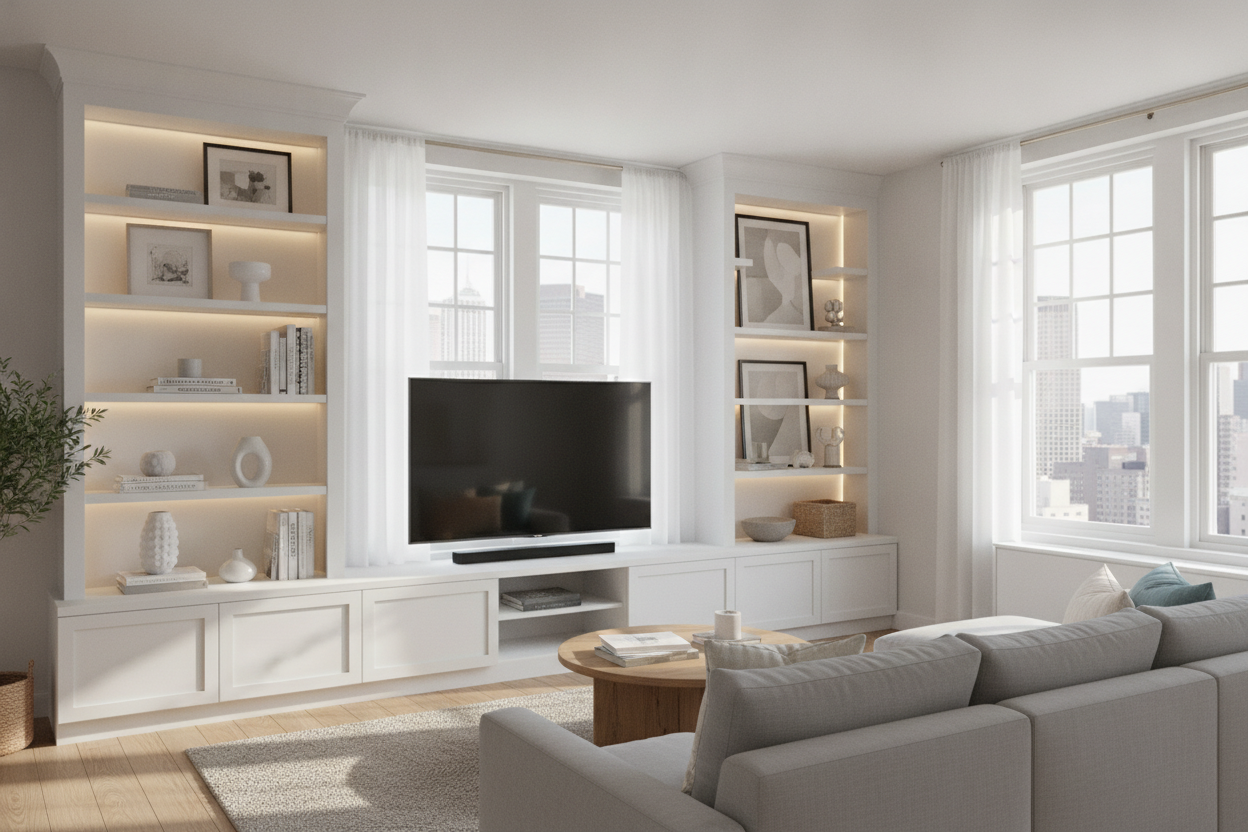
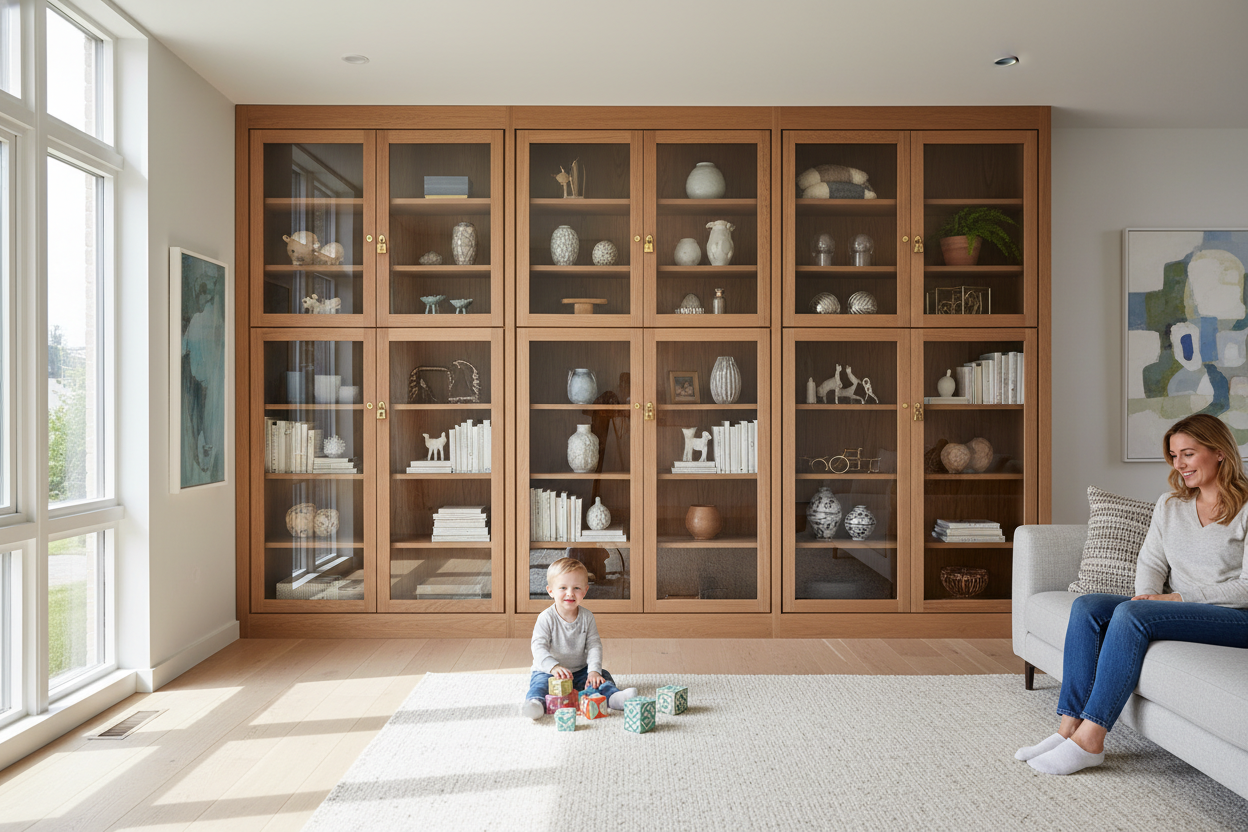
I broke my unit into three zones. The center zone is for the TV and the soundbar. The left and right zones are for 'visual weight.' On one side, I stacked oversized art books—the kind that are too big for a normal bookshelf. On the other, I used a tall table lamp and a ceramic vase. By creating different heights, the eye moves across the unit instead of just seeing a flat line. If you're struggling, I highly recommend reading up on styling a bookcase and entertainment center to get the balance right. It’s about mixing textures—wood, glass, and greenery—so the unit feels like a curated gallery rather than a storage locker.
My honest mistake? I tried to put too many small things on it at first. Tiny tchotchkes get lost on a 12-foot stage. Go big. Large bowls, thick books, and substantial lamps are your friends here. If it's smaller than a grapefruit, it probably doesn't belong on a 144-inch console unless it's part of a very tight group.
So, Was the Giant Console Worth It?
In the end, the giant unit didn't make the room feel smaller—it made it feel intentional. Before, the room felt like a collection of furniture floating in space. Now, the 12-foot unit acts as an anchor that holds the sofa and the rug in place. It turned a 'blank wall problem' into a 'design feature.'
If you're on the fence about whether is a tv stand and entertainment center worth the space, consider your floor plan. In an open-concept home, furniture is your architecture. Without walls to define the 'living' area versus the 'walkway,' a massive console does the heavy lifting for you. It’s been six months, and I don't regret a single inch of it. The echo is gone, the TV looks like it belongs, and I saved about six grand compared to the custom route.
FAQ
How many boxes does a 144-inch unit usually ship in?
Most of these are modular, so expect 3 to 4 large, heavy boxes. Make sure you have a clear path to the living room before they arrive, because they aren't easy to maneuver around tight corners.
Can I assemble this by myself?
Technically, you could, but I wouldn't. You need two people to align the sections and push the unit against the wall without scratching your floors. It took my husband and me about three hours from start to finish.
Will a 144-inch center fit an 85-inch TV?
Perfectly. In fact, it’s one of the few sizes that makes an 85-inch TV look proportional. On a smaller stand, a giant TV can look top-heavy and precarious.

Dejar un comentario
Este sitio está protegido por hCaptcha y se aplican la Política de privacidad de hCaptcha y los Términos del servicio.