










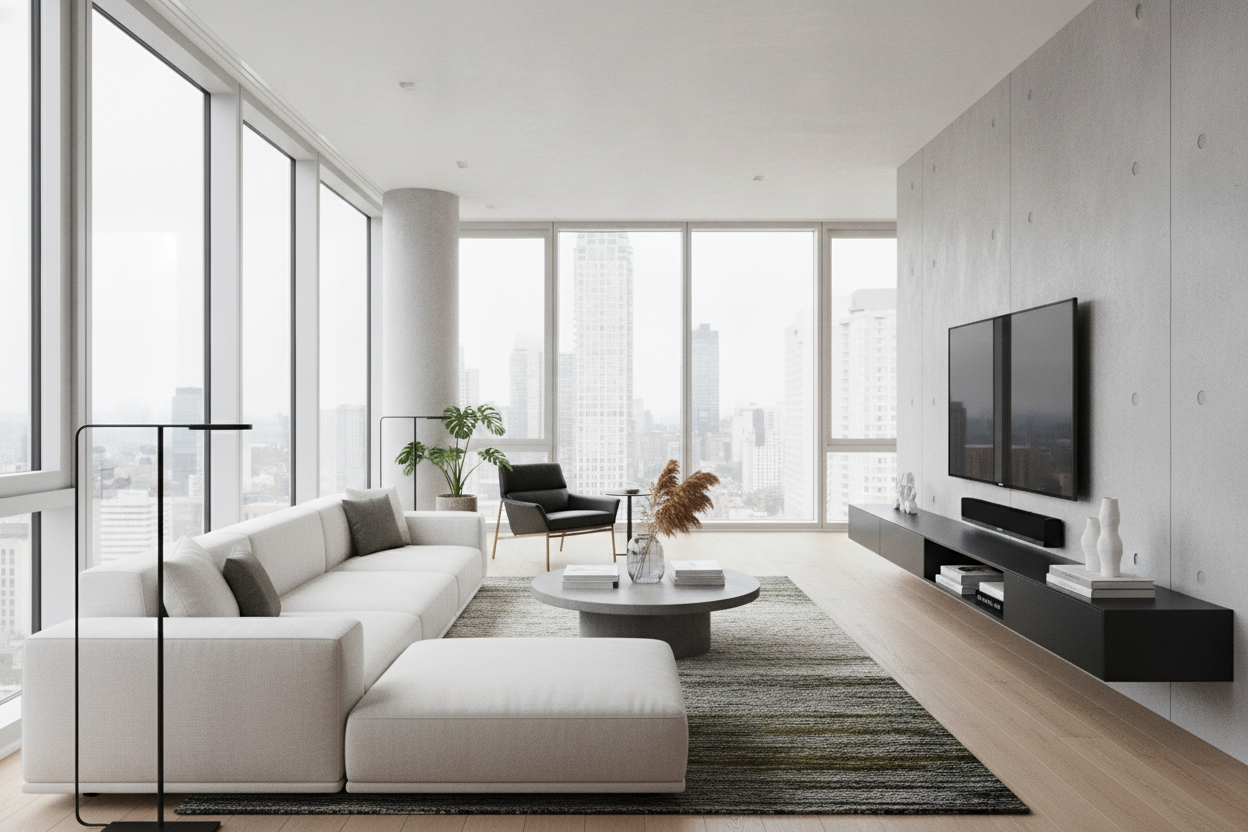
I spent three years living in a Brooklyn apartment that was essentially a 12-foot wide hallway with a window at the end. My living room was the 'middle' section of this hallway, and for the longest time, it felt like a tech-filled obstacle course. Every time I tried to squeeze past the coffee table to get to the kitchen, I’d bang my shin on a corner or trip over a stray HDMI cable. It wasn't until I ditched the floor-bound furniture for black floating tv stands that the room finally started to breathe.
- Floor Space is Sanity: Getting furniture off the floor creates a continuous line of sight that makes narrow rooms feel wider.
- Visual Integration: A black finish helps the console 'disappear' into the TV screen when it's turned off.
- Cable Management: Floating units usually have better-integrated paths for hiding the 'spaghetti' mess of wires.
- Cleaning Win: You can actually run a vacuum or a Roomba under the TV without moving a 60-pound cabinet.
My Living Room Felt Like a Tech-Filled Bowling Alley
In a narrow room, every inch of floor space is a premium asset. I originally started with one of those bulky traditional TV stands I found on clearance. It was a massive, honey-oak beast that sat 22 inches deep. In a 12-foot room, that one piece of furniture ate up nearly 15% of the walkable width. It felt heavy, it felt cluttered, and it made the whole seating area feel like a cramped waiting room at a tire shop.
The problem with floor-based consoles in small spaces is that they create a hard 'stop' for your eyes. When you see the legs of a stand touching the floor, your brain registers exactly where the wall begins and the floor ends. By switching to a floating model, I regained about six square feet of visible floor. It sounds like a small number, but visually, it’s the difference between a claustrophobic hallway and a modern lounge. I could finally stretch my legs out without kicking the MDF baseboard of my media center.
Why I Chose a Floating Media Console Black Over Light Oak
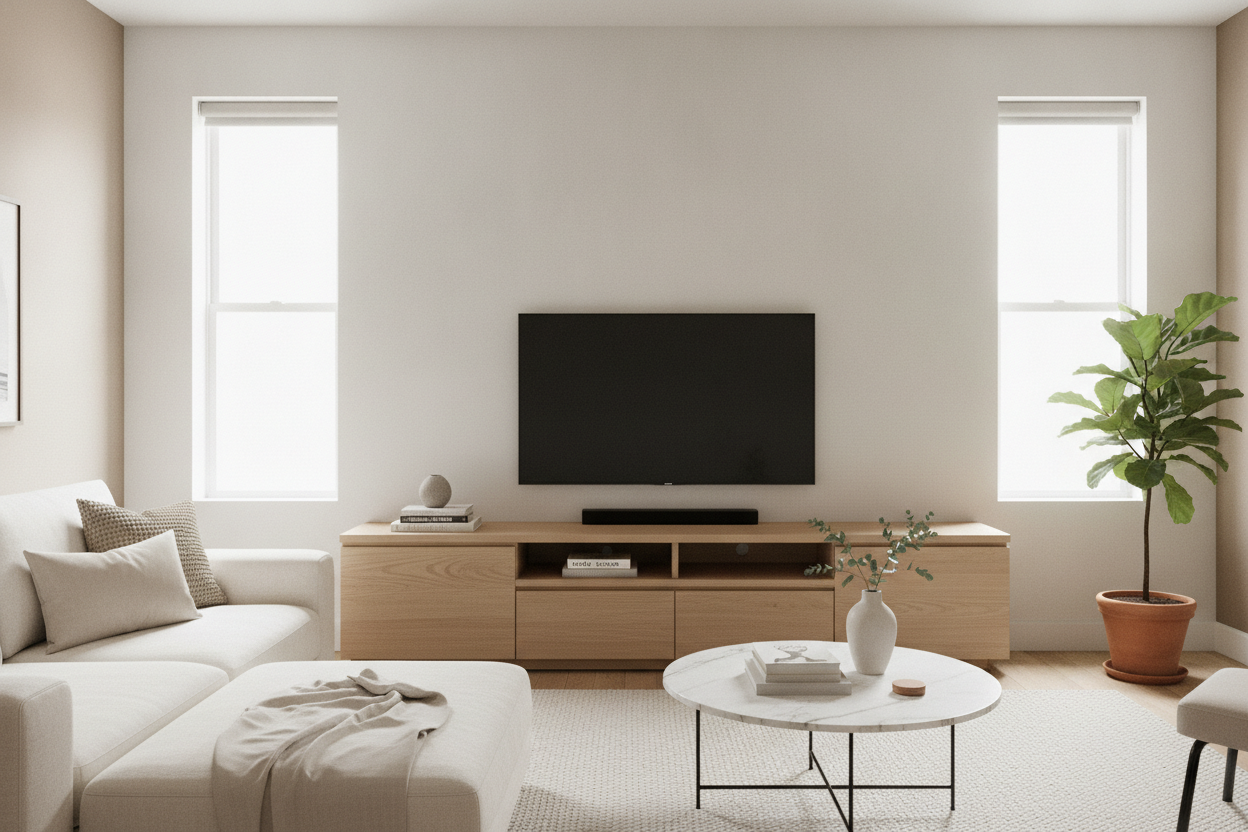
I know the common wisdom: 'Use light colors to make a small room feel bigger.' That works for paint, but for media furniture, it’s a lie. When you have a 55-inch or 65-inch black glass rectangle hanging on your wall, a light oak or white stand underneath it creates a high-contrast 'sandwich' that draws the eye straight to the clutter. It looks like a series of stacked boxes rather than a cohesive design.
Choosing a floating media console black finish was a strategic move. When the TV is off, the console and the screen blend into a single, vertical architectural element. It doesn't shout for attention. Instead of two separate objects competing for space, you get one clean, dark column that feels like it was built into the wall. I opted for a matte finish because, let's be real, glossy black is a magnet for fingerprints and cat hair. A wall-mounted media console in a dark charcoal or deep black hides the shadows of the cables and the devices inside much better than a pale wood grain ever could.
Does a Floating Black TV Shelf Actually Hide the Cord Chaos?
The biggest fear everyone has with wall-mounting is the 'dangling wire' nightmare. We’ve all seen it: a beautiful TV ruined by a single grey power cord hanging down like a tail. When I installed my floating black tv shelf, I realized that the shelf itself is only half the battle. You have to commit to the cord management. I ended up using a paintable cord channel that I matched to my wall color, which runs from the TV directly into the top of the shelf.
Inside the shelf, I had to be ruthless. I used to keep every gaming console I’ve owned since 2004 hooked up. Now, I only keep what I actually use. I spent a long time debating whether a simple floating shelf for TV is enough for my setup. If you just have a soundbar and a streaming stick, a shelf is fine. But if you have a receiver, a PlayStation, and a router, you need a floating unit with actual cabinets. The black finish acts as a natural shadow box, so even if the internal cable management isn't 'Instagram-perfect,' you can't see the mess from the sofa.
The Stud-Finder Reality Check (Please Don't Use Drywall Anchors)
Here is the part where I get bossy: do not, under any circumstances, trust drywall anchors to hold your media center. I don't care if the box says the anchors are rated for 75 pounds. Vibration from a subwoofer, the weight of a cat jumping on the ledge, or even just the tension of heavy HDMI cables will eventually pull those anchors through the gypsum. I’ve seen it happen, and it usually happens at 2:00 AM.
When I mounted my unit, I spent twenty minutes just mapping out the studs with a decent magnet-based finder. If your studs don't line up perfectly with the pre-drilled holes in your console, drill new holes in the console's backplate. It’s better to have a slightly off-center hole in the wood than to have your entire entertainment system collapse. I also learned the hard way to use a level—not the tiny one that comes in the box, but a real 24-inch carpenter's level. If a floating shelf is off by even an eighth of an inch, it will look like the whole room is melting.
FAQ
How high should I mount my floating TV stand?
Standard advice is to keep the center of your TV at eye level when seated. Usually, this means the top of your floating stand should be about 20 to 24 inches off the floor. Don't pull a 'r/TVTooHigh' and mount it like a menu board at a fast-food joint.
Can I mount a floating console on a plaster wall?
Yes, but it's trickier than drywall. You absolutely must hit the lath or the studs. If you have old, crumbly plaster, I’d suggest mounting a piece of 3/4-inch plywood to the studs first, then mounting the console to that plywood for extra stability.
Will a black console show more dust?
Yes. If you are a 'dust once a month' person, matte black will expose your secrets. Keep a microfiber cloth in one of the drawers and give it a five-second wipe-down every time you sit down to watch a movie.

Dejar un comentario
Este sitio está protegido por hCaptcha y se aplican la Política de privacidad de hCaptcha y los Términos del servicio.