










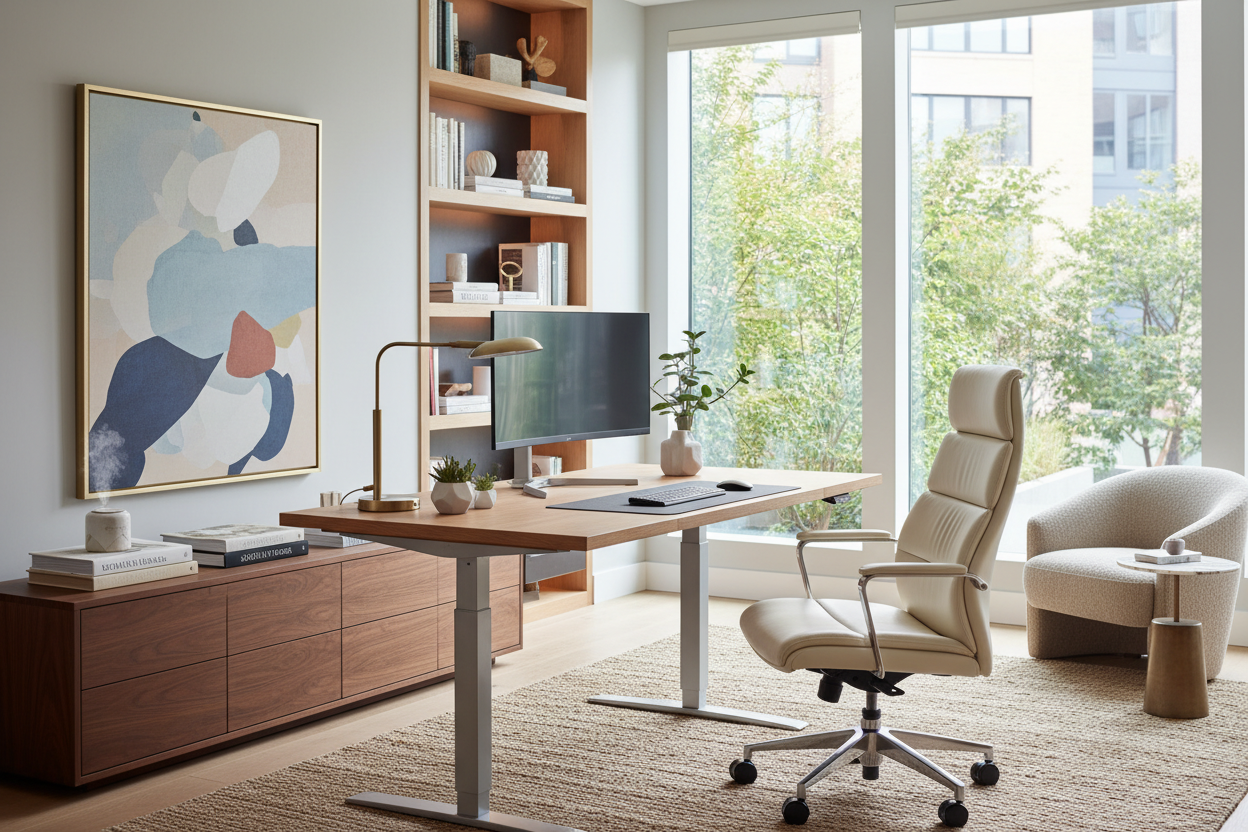
We have all seen the Pinterest boards: pristine, minimalist desks with nothing but a MacBook and a succulent. But when you actually sit down to work, reality sets in. The chair is too rigid, the lighting casts shadows on your video calls, and there is nowhere to hide your paperwork. Creating a stylish home office is not just about selecting beautiful furniture; it is about orchestrating a balance between high-end aesthetics and rigorous functionality. As designers, we treat the workspace as a machine for living—it must perform as beautifully as it looks.
Key Features of a refined Workspace
Before you purchase a single piece of furniture, consider these four pillars of design. This checklist ensures your space remains functional behind the aesthetic appeal:
- Ergonomic Silhouette: Prioritize chairs with adjustable lumbar support hidden within high-quality upholstery rather than exposed plastic mechanisms.
- Lighting Layers: Combine ambient overhead lighting with focused task lighting (aim for 3000K-4000K color temperature).
- Material Integrity: Choose solid woods (walnut, oak) or high-grade veneers over hollow-core laminates for longevity and tactile warmth.
- Visual Weight: Balance heavy items (like an executive desk) with lighter elements (like open shelving) to avoid crowding the room.
Selecting the Anchor Piece: The Desk
The desk dictates the flow of the entire room. In a classy home office, the desk should command attention without dominating the floor plan. If you are aiming for a sense of permanence and authority, look for a writing desk with a 'modesty panel'—this allows you to float the desk in the center of the room rather than pushing it against a wall.
Materiality and Texture
Avoid the temptation of purely decorative finishes if this is a high-traffic zone. While a high-gloss lacquer looks stunning in photos, it is a nightmare for dust and fingerprints. Instead, opt for matte-finished natural wood or leather-topped desks. These materials patina over time, adding character rather than showing wear. For a trendy home office that feels modern, consider a desk with mixed media—such as a walnut top on a blackened steel base—to introduce industrial sophistication.
The Seating Dilemma: Form vs. Function
This is where most homeowners compromise incorrectly. Do not buy a dining chair for an eight-hour workday. However, you also do not need a bulky, mesh 'spaceship' chair that ruins your design scheme. Look for 'executive conference' style chairs. These often feature mid-century modern silhouettes, leather or velvet upholstery, and concealed height adjustment levers. They offer the necessary ergonomic support while maintaining a residential, rather than corporate, visual language.
Lighting: The Invisible Design Element
Poor lighting causes eye strain and makes even expensive furniture look flat. A stylish home office relies on layered illumination. Start with a statement pendant or chandelier for general ambiance. Then, add a dedicated task lamp with an articulated arm. Crucially, pay attention to the CRI (Color Rendering Index) of your bulbs; a high CRI (90+) will make your wood grains pop and your paint colors look true to life.
My Personal Take on Stylish Home Offices
I learned the hard way that 'sleek' often equals 'impractical.' Early in my career, I designed a home office for a client featuring a stunning, custom-fabricated glass desk. It was architecturally beautiful—completely transparent, making the small room feel massive.
Two weeks later, the client called me. The issue wasn't the look; it was the tactile experience and the acoustics. He told me, 'My optical mouse doesn't track on the glass without a pad, my forearms are freezing because the glass stays cold, and every time I set my coffee mug down, it makes a loud clack that echoes on my conference calls.' We ended up having to cover that beautiful glass with a massive custom leather blotter, essentially hiding the feature we paid a premium for. Now, I always advise clients to prioritize 'touch'—if a material feels cold or loud, it doesn't belong in a workspace, no matter how trendy it looks.
Conclusion
Designing a workspace is an investment in your own productivity. By selecting materials that age gracefully and prioritizing lighting that protects your eyes, you create a space that invites you to work. Remember, a truly stylish home office is one that you don't want to leave at the end of the day.
Frequently Asked Questions
How do I hide cables in a floating desk arrangement?
If your desk is in the center of the room, use a floor outlet if possible. If not, run cables down a single desk leg and use a cord cover that matches your flooring. Many high-end desks now come with integrated 'raceways' or hidden compartments underneath the tabletop to stow power strips.
Can I use a rug in a home office with a rolling chair?
Yes, but the pile height matters. Stick to low-pile or flat-weave rugs (like vintage kilims or wool blends). High-pile or shag rugs will catch the casters and make movement frustrating. Alternatively, use a transparent glass chair mat, though these can sometimes disrupt the visual continuity of the floor.
What is the best paint finish for a home office?
I generally recommend a matte or eggshell finish for walls to reduce glare from your computer screens. However, painting the ceiling in a slightly higher gloss or a contrasting color can add a layer of unexpected sophistication to a classy home office.


Dejar un comentario
Este sitio está protegido por hCaptcha y se aplican la Política de privacidad de hCaptcha y los Términos del servicio.