










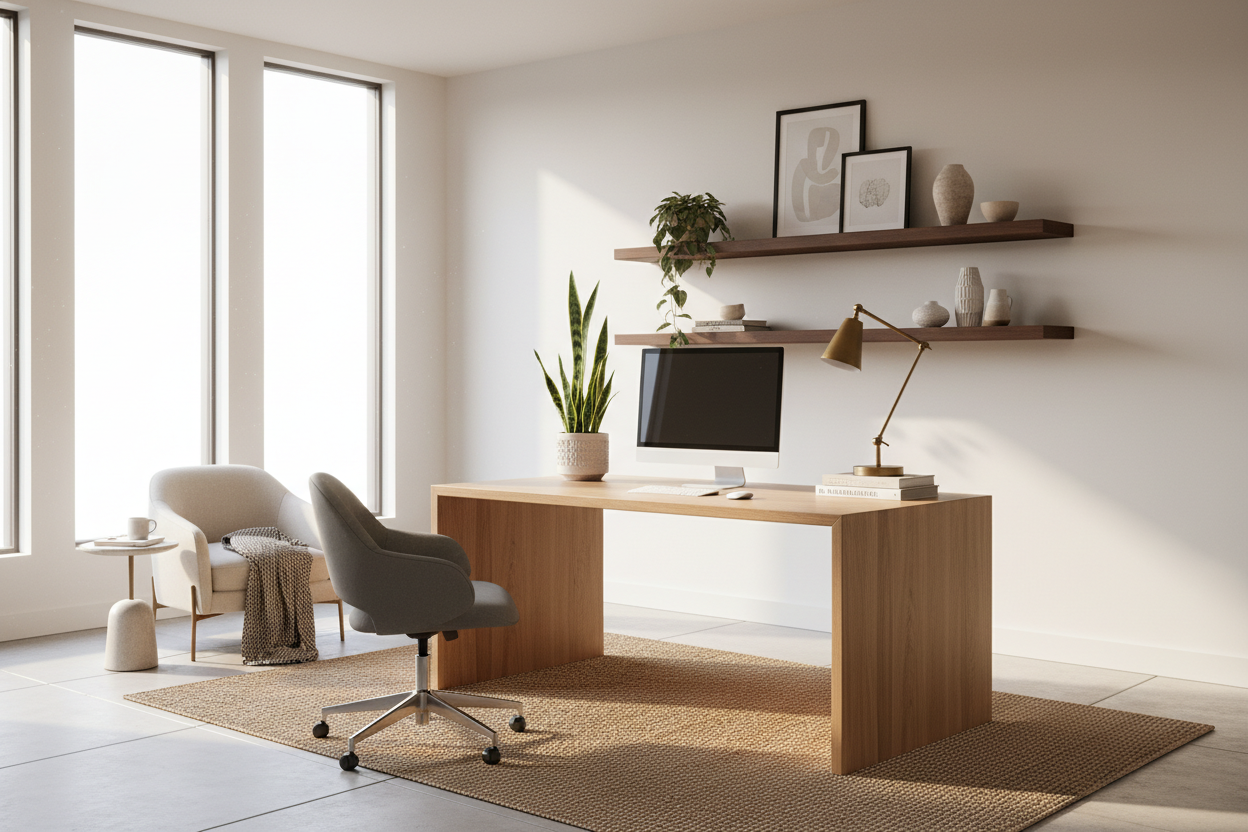
We have all experienced that sterile, uninspiring feeling of a makeshift workspace. It drains creative energy before the morning coffee even kicks in. The difference between a room that feels like a cubicle and one that inspires deep work lies entirely in the atmosphere you cultivate. Curating the right home office vibes is not merely about purchasing a trendy chair; it is about psychological anchoring—telling your brain it is time to focus while maintaining the tactile comfort of home.
Essential Components for a Curated Workspace
- Lighting Temperature: Layering ambient (3000K) and task lighting (4000K) to reduce eye strain.
- Material Tactility: Balancing hard surfaces (wood, glass) with soft textiles (rugs, drapery) for acoustic dampening.
- Ergonomic Silhouette: Choosing furniture that supports posture without sacrificing the room's visual flow.
- Biophilic Elements: Integrating organic shapes and greenery to lower cortisol levels.
Mastering the Sensory Experience
Lighting: The Foundation of Mood
Lighting is often the most undervalued element in interior design, yet it dictates the entire home office vibe. Avoid relying solely on overhead recessed cans, which cast unflattering shadows and create a clinical atmosphere. Instead, aim for a layered approach.
I always advise clients to invest in an architectural desk lamp with adjustable Kelvin settings. During high-focus tasks, a cooler light (around 4000K) mimics daylight and keeps you alert. However, for late-afternoon administrative work, shifting to a warmer glow (2700K-3000K) helps transition your mind toward the evening. Visually, consider the silhouette of the fixture; a sculptural brass or matte black lamp acts as functional art.
The Tactile Balance: Textures and Acoustics
A common failure in home office design is an overabundance of hard surfaces—hardwood floors, a wooden desk, and a metal cabinet. This creates an echo chamber that makes video calls sound hollow and the space feel cold.
To correct this, introduce texture. A wool or jute rug anchors the desk and dampens sound. Consider window treatments; heavy linen drapes add softness and control glare on your monitor. When selecting a desk chair, look beyond the mesh. High-performance fabrics or top-grain leathers offer durability while adding a layer of sophistication that purely utilitarian office furniture lacks.
Spatial Planning and Flow
The Command Position
Your orientation within the room dramatically impacts your sense of security and authority. In design theory, we call this the 'Command Position.' Ideally, you should face the door or have a clear view of the entry point, but never sit directly in line with it. This setup reduces subconscious anxiety about what is happening behind you.
If your room requires you to face a wall, float the desk in the center of the room instead. This allows you to utilize the wall behind you for a credenza or a curated bookshelf, creating a professional backdrop for virtual meetings while keeping your main sightlines open.
My Personal Take on Home Office Vibes
I learned a hard lesson about finishes during a project for a tech executive in Seattle. We were chasing a very sleek, modern look and selected a stunning, high-gloss lacquer desk in deep navy. It looked incredible in the renderings.
However, within two weeks of installation, I got a call. The issue wasn't the style—it was the functionality. The high-gloss finish acted like a mirror for the overhead lighting, creating a blinding glare during Zoom calls. Furthermore, the client was obsessed with the fingerprints; every time he touched the desk, it left a smudge, breaking his focus to wipe it down. We ended up swapping it for a satin-finish walnut piece. The lesson? Always prioritize matte or satin finishes for horizontal surfaces. The home office vibe is instantly ruined if you are constantly battling glare or polishing away your own existence.
Conclusion
Creating a workspace that resonates with you is about balancing the pragmatic needs of your profession with the aesthetic desires of your personality. By thoughtfully selecting materials, mastering your lighting, and respecting the flow of the room, you turn a spare room into a sanctuary of productivity. It is time to stop working in a space that barely functions and start designing one that works for you.
Frequently Asked Questions
How do I maintain a professional vibe in a dual-purpose room?
If your office doubles as a guest room, use a room divider or a decorative screen. This physically separates the 'work' zone from the 'rest' zone, helping you mentally switch off at the end of the day while hiding monitors from guests.
What is the best desk depth for a proper layout?
For a functional setup, aim for a desk depth of at least 24 to 30 inches. This provides enough distance for your monitor to sit at arm's length, preventing eye strain, while leaving space for a keyboard and notepad.
Can dark colors work in a small home office?
Absolutely. While white expands a space, dark colors like charcoal or forest green can blur the corners of a room, creating an illusion of infinite depth. This creates a moody, 'library-esque' atmosphere that is conducive to deep focus.


Dejar un comentario
Este sitio está protegido por hCaptcha y se aplican la Política de privacidad de hCaptcha y los Términos del servicio.