










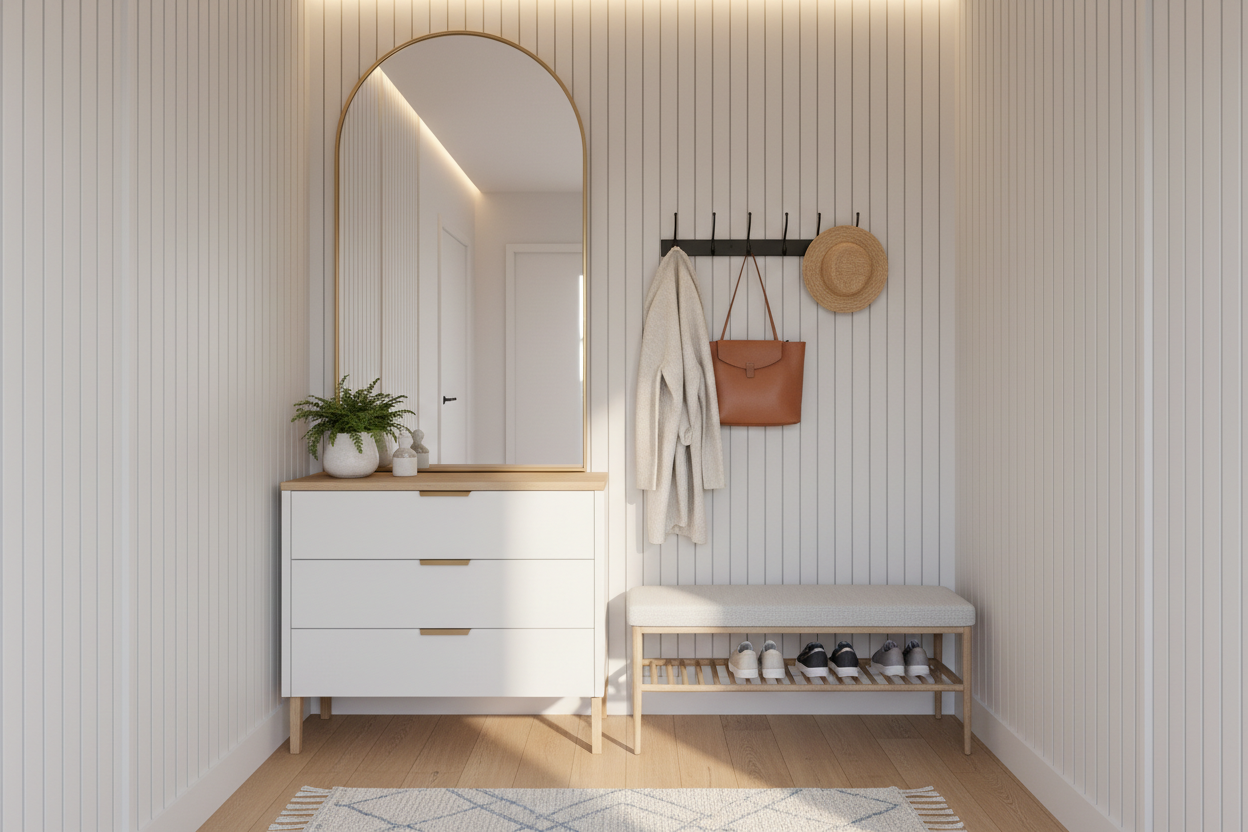
The hallway is often the most neglected space in a home, treated merely as a thoroughfare rather than a destination. Yet, it sets the tone for the rest of your house. The challenge with most entryways, particularly in apartments or older homes, is a severe lack of square footage. You need a place to drop your keys, store your shoes, and check your reflection, but you also need to walk through the door without shimmying sideways. The secret to mastering this balance isn't just buying smaller versions of big items; it is selecting specific furniture for small hall layouts that prioritizes verticality and shallow depth.
I learned this lesson the hard way in my first city apartment. The hallway was a long, windowless tunnel barely three feet wide. Determined to make it stylish, I bought a gorgeous, standard-depth oak console table. It looked beautiful until I actually tried to live with it. I spent two years bruising my hip on the corner every time I carried groceries in. Eventually, I replaced it with a floating shelf and a wall-mounted shoe rack. The difference was immediate. The space felt twice as big, and the traffic flow was finally unobstructed. That experience taught me that in a narrow space, every inch of floor visibility counts.
Measuring for Success: The 36-Inch Rule
Before you fall in love with a piece of small hallway furniture, you have to get the tape measure out. A comfortable walkway requires a minimum of 36 inches (about 90 cm) of clearance. If your hall is 48 inches wide, you have a foot of play to work with. If your hall is only 40 inches wide, you are looking for pieces that are no deeper than 4 to 6 inches.
Ignoring these measurements creates a claustrophobic tunnel effect. When the furniture protrudes too far, it visually shrinks the width of the floor, making the ceiling feel lower and the walls closer together. Your goal is to maintain that clear path. If you cannot maintain a 30-inch clearance at the absolute minimum, you should abandon floor-standing furniture entirely and look exclusively at wall-mounted solutions.
The Power of the Slim Console
The console table is the anchor of most entryways, but standard sizes are the enemy here. You specifically need to hunt for "narrow depth" or "slim" consoles. Ideally, you want a piece that is between 8 and 12 inches deep. These pieces provide just enough surface area for a mail tray, a lamp, and a bowl for keys without encroaching on your walking path.
Material choice plays a massive role in how small furniture for hallway areas is perceived. In tight quarters, visual weight is just as heavy as physical weight. A solid, dark wood cabinet absorbs light and feels heavy. Conversely, a console made of acrylic, glass, or thin metal legs allows the eye to travel through the piece to the wall behind it. This transparency tricks the brain into thinking the space is emptier than it actually is. If you need storage, look for open shelving or consoles with drawers that have simple, flush hardware to avoid snagging clothing as you walk by.
Vertical Storage is the Only Way Up
Floor space is premium real estate, so you have to build up. This is where small hall furniture design has evolved significantly in recent years. The most efficient invention for narrow halls is the tip-out shoe cabinet. Unlike standard racks that stick out 14 inches to accommodate the length of a shoe, tip-out cabinets store footwear vertically. They often have a depth of only 6 to 7 inches.
Beyond shoes, consider the coat rack. A standing coat tree has a wide footprint and can easily tip over in a busy corridor. Wall-mounted hooks or a peg rail running the length of the hall are far superior options. A peg rail offers flexibility; you can hang coats, bags, or even artwork from it, and when it's not in use, it sits flush against the wall, taking up zero space.
Seating Strategies for Tight Spaces
Everyone wants a spot to sit and put on their shoes, but a bench is often too bulky for a narrow hall. If you are committed to having seating, look for a dual-purpose piece. A storage ottoman that slides completely under your console table when not in use is a brilliant workaround. Alternatively, look for drop-leaf seats or wall-mounted folding chairs (similar to jump seats) that snap back flat against the wall when you stand up.
Lighting and Mirrors: The Support System
While not strictly furniture, mirrors are the best friend of small hallway furniture. Placing a large mirror above your slim console does two things: it serves a practical purpose for last-minute checks, and it bounces light around the narrow space, effectively doubling the visual width of the hall. Pair this with wall sconces rather than a floor lamp. Floor lamps take up valuable footprint; sconces or pendant lights keep the floor clear and draw the eye upward, emphasizing ceiling height rather than narrow walls.
Cohesion and Clutter Control
The quickest way to ruin the utility of a small hall is clutter. Because the space is condensed, a pile of three letters looks like a mountain of trash. The furniture you select must have a dedicated "landing zone" purpose. If you buy a table with no drawers, you must add a basket or tray. If you install hooks, ensure there is a limit to how many coats live there permanently.
When selecting your pieces, try to match the color of your furniture to your walls. A white shoe cabinet against a white wall melts into the architecture, reducing visual noise. This monochromatic approach allows the furniture to serve its function without demanding attention, making the hallway feel serene rather than chaotic.
Final Thoughts on Layout
Designing a functional entryway in a tight footprint requires editing. You cannot have it all. You might have to choose between a bench and a console, or between a shoe rack and a decorative plant. Start with the absolute necessities—usually keys and shoes—and build your layout around those distinct needs. By focusing on shallow depths, vertical storage, and visual lightness, you can turn even the most cramped corridor into a welcoming entrance.
Frequently Asked Questions
How deep should a console table be for a narrow hallway?
For a narrow hallway, aim for a console table that is 12 inches deep or less. If your hallway is exceptionally tight (under 36 inches wide), look for ultra-slim options around 8 inches deep or consider a wall-mounted floating shelf instead.
What is the best type of shoe storage for a small hall?
Tip-out shoe cabinets are the superior choice for small halls because they store shoes vertically, requiring only 6 to 10 inches of depth. They keep shoes hidden, reducing visual clutter, and often provide a surface on top for keys and decor.
Can I use dark furniture in a small hallway?
You can, but it requires careful placement. If you choose dark small hall furniture, ensure you have excellent lighting and perhaps a mirror nearby to offset the visual weight. Generally, lighter colors or materials like glass and acrylic help the space feel larger and more open.

Dejar un comentario
Este sitio está protegido por hCaptcha y se aplican la Política de privacidad de hCaptcha y los Términos del servicio.