










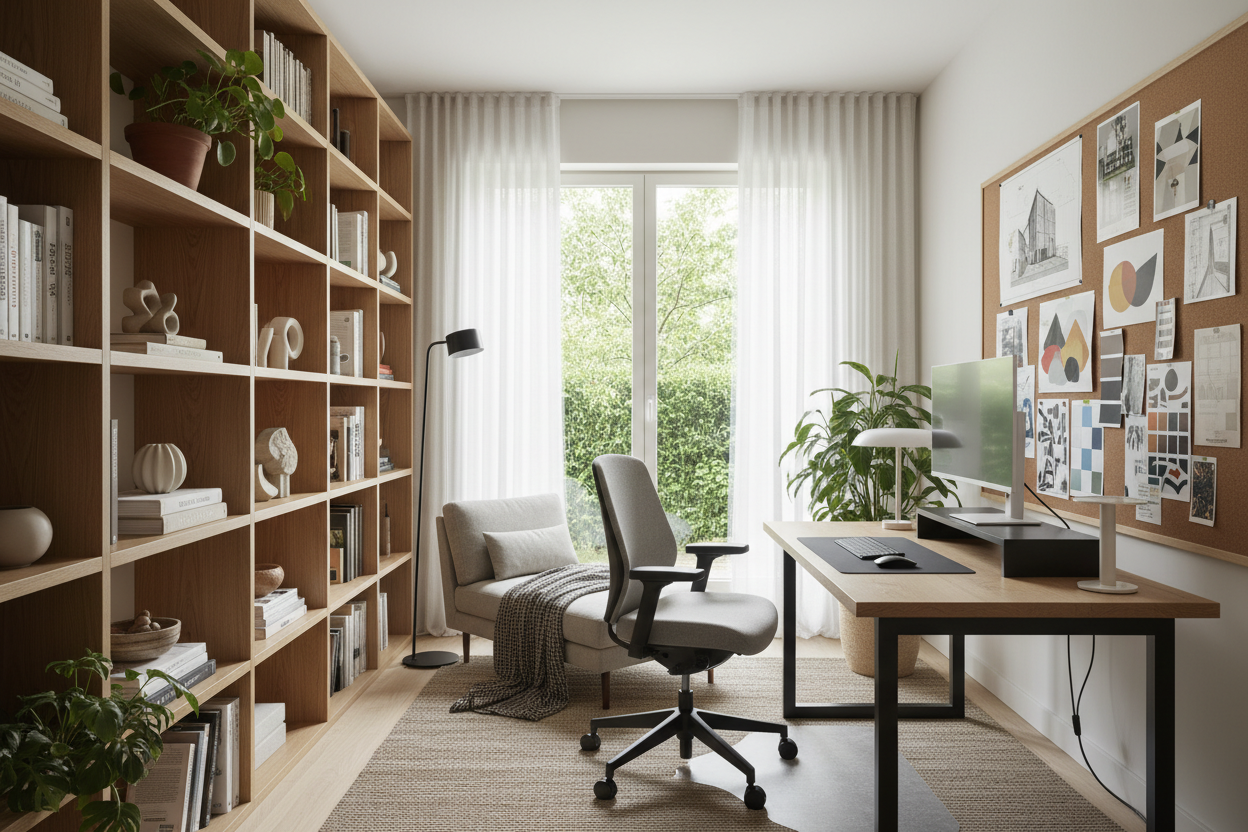
We have all scrolled through endless feeds of pristine, minimalist workspaces, saving image after image, only to realize our own reality involves tangled cords and a dining chair that hurts after an hour. The disconnect between a curated image and a functional workspace is often vast. Finding genuine inspiration for home office design isn't just about aesthetics; it is about solving the specific ergonomic and spatial puzzles that your daily workflow presents.
Key Features to Look For
Before buying a single piece of furniture, use this checklist to filter your design choices. These are the non-negotiables for a professional-grade setup:
- Ergonomics First: Prioritize chairs with lumbar support and adjustable armrests over purely sculptural pieces.
- Material Durability: Look for scratch-resistant surfaces (high-pressure laminate or solid hardwood) if you use heavy equipment.
- Lighting Layers: Ensure a mix of ambient (overhead) and task lighting (desk lamp) to reduce eye strain.
- Acoustics: Incorporate soft furnishings like rugs or upholstered panels to dampen echo in video calls.
- Storage Volume: Calculate your file and tech storage needs before selecting a desk silhouette.
Translating Office Furniture Inspiration into Reality
When you browse office furniture inspiration, you often see floating desks with zero clutter. In the real world, we have hard drives, monitors, and coffee cups. The first step in professional design is choosing the right anchor piece: the desk.
The Desk: Material and Scale
For a unique home office, move away from the standard particle board. Solid wood offers longevity and can be refinished, but it reacts to humidity. If you are looking for home office desk inspiration that creates a modern, airy feel, glass is popular, but be warned: it offers zero cable management. A better alternative is a desk with a modesty panel and integrated grommets. This maintains the visual lines while hiding the chaos of wires.
Layout: The Core of Home Office Interior Design Inspiration
Home office design inspo often ignores the most critical element: the "power position." In design psychology, you should never sit with your back to the door. It creates subconscious unease.
Positioning for Light and Focus
Ideally, position your desk perpendicular to a window. Facing the window directly can cause contrast glare on your screen, while having the window behind you creates a silhouette effect on Zoom calls. Proper office room inspiration always accounts for the path of natural light throughout the day.
Styling: Elevating Your Home Office Decor Inspo
To create a truly inspired home office, you must soften the hard edges of technology. This is where the "resimercial" trend (residential meets commercial) shines. Introduce texture through a vintage kilim rug or linen drapery. These elements absorb sound and make the room feel less sterile.
Visual balance is key. If your desk is heavy and dark (visual weight), pair it with a lighter, open-frame shelving unit. If your room is small, utilize vertical space with wall-mounted hutches to draw the eye upward, making the footprint feel larger.
Lessons from My Own Projects: The "Vintage" Trap
I feel compelled to share a personal failure from my own home workspace to save you the trouble. A few years ago, I fell in love with a mid-century modern teak desk. It was beautiful—sleek lines, warm patina, absolute home office interior design inspiration gold. I bought it immediately.
However, I didn't account for the height. Vintage desks from the 1950s are often an inch or two lower than modern standards because they were designed for writing by hand, not typing on a keyboard raised by a laptop stand. For three months, I struggled with shoulder tension because my ergonomics were off by a mere 1.5 inches. I eventually had to swap it for a height-adjustable standing desk. The lesson? Measure your elbow height relative to the keyboard before you fall in love with the aesthetic. Comfort must always trump style in a room you spend eight hours a day in.
Conclusion
Curating a workspace is a balance of discipline and creativity. By prioritizing ergonomics and smart material choices, you can build a space that looks good and works hard. Don't just copy a picture; build a room that supports your career.
Frequently Asked Questions
How do I find inspiration for home office layouts in a small bedroom?
Focus on verticality. Look for "ladder desks" or wall-mounted floating units. These provide workspace without occupying valuable floor square footage, keeping the room open.
What is the best lighting temperature for a home office?
Aim for a color temperature between 3500K and 4000K (Cool White). This mimics daylight and promotes alertness, whereas warm white (2700K) can make you feel too relaxed or sleepy.
Is custom joinery worth it for a home office?
If you have an awkward alcove or distinct architectural features, custom millwork is the best investment. It maximizes every inch of storage and increases property value, unlike freestanding furniture.


Dejar un comentario
Este sitio está protegido por hCaptcha y se aplican la Política de privacidad de hCaptcha y los Términos del servicio.