










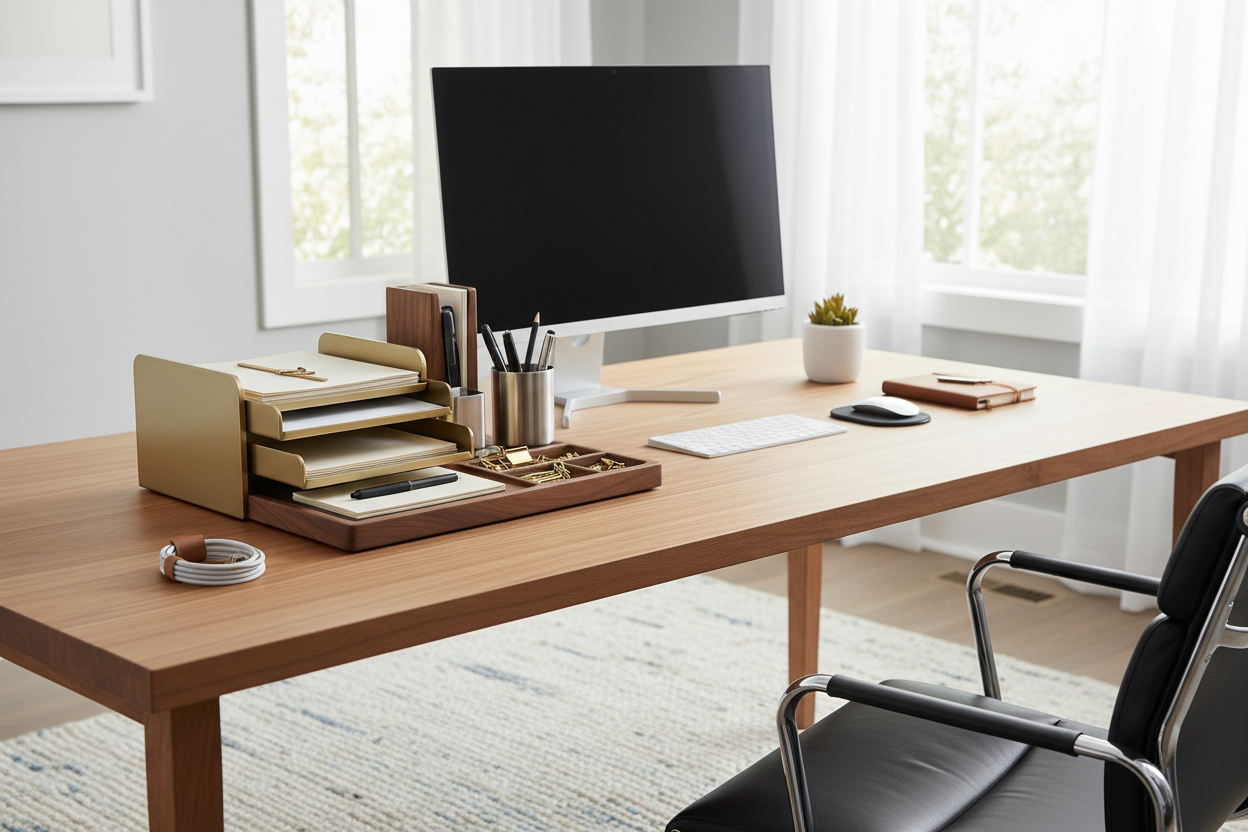
There is a distinct tension between creativity and chaos. In my years designing executive suites and home studies, I have found that the state of a surface often dictates the quality of the work produced upon it. A cluttered surface creates visual noise that distracts the mind, yet a sterile desk feels devoid of life. The solution lies in a well-chosen **desktop office supply organizer**—a piece that serves as both a functional vessel for your tools and a sculptural element that anchors your workspace.
Key Features to Look For
- Material Integrity: Prioritize solid woods (walnut, oak) or high-grade metals over brittle plastics for longevity and tactile appeal.
- Modular Capability: Look for a stylish desk organizer set that allows you to separate components based on your dominant hand and workflow.
- Footprint vs. Capacity: Ensure the tabletop office organizer offers vertical storage to save precious surface area without dominating the visual field.
- Protective Base: A quality desk accessory holder must have a felt or cork bottom to prevent scratching your desktop finish.
Defining Your Material Palette
When selecting a home office desktop organizer, treat it as you would a piece of furniture. It must converse with the existing decor, not shout over it. For a warm, mid-century modern aesthetic, a wood veneer or solid bamboo notebook desk organizer brings an organic texture that softens the harshness of computer monitors.
Conversely, for an industrial or minimalist professional desk organizer, matte black powder-coated steel or brushed brass offers a sleek silhouette. I often advise clients to avoid the standard wire mesh found in a typical work cubicle organizer; while functional, it lacks the visual weight necessary to make a space feel intentional.
Zoning and Ergonomics
Placement is just as critical as the product itself. A computer desk with organizer integration is ideal, but if you are retrofitting an existing table, think in zones. Your primary tools—pens, stylus, notepad—should reside in a nice desk organizer placed within your immediate reach radius (usually 14-16 inches).
Managing the Paper Trail
Even in a digital age, paper persists. A dedicated desk organizer for notebooks or an office desk rack is essential for keeping current projects vertical. Stacking papers horizontally creates "sedimentary layers" of neglect. A vertical desktop notebook organizer forces you to see exactly what needs attention, turning storage into a workflow management tool.
The Investment vs. The Quick Fix
It is tempting to search for office organization supplies cheap to solve a clutter problem quickly. However, flimsy plastic creates a "temporary" look that degrades the room's atmosphere. A best buy desk organizer might serve a student well, but a professional environment demands better. High-quality office storage accessories and stationery desk accessories should age well, perhaps even developing a patina over time, much like a good leather chair.
My Personal Take on desktop office supply organizer
I learned a hard lesson early in my career regarding the underside of these accessories. I once sourced a stunning, heavy brass home office desk organiser for a client with a custom-lacquered ebony desk. It looked magnificent.
Three months later, I visited the site and realized I hadn't checked the bottom of the organizer. It had raw, rough metal edges that had micromanaged to etch a web of fine scratches into the lacquer every time the client shifted it to clean. Now, I personally flip every desk accessory holder over before specifying it. If it doesn't have a velvet or cork backing, I either apply high-density felt pads myself or pass on the item entirely. It is these unpolished details that determine whether an object is a luxury or a liability.
Conclusion
Curating your workspace is an act of self-respect. By selecting a a desk organizer that balances architectural beauty with pragmatic storage, you are not just tidying up; you are setting the stage for your best work. Clear the decks, invest in quality, and let your environment support your ambition.
Frequently Asked Questions
How do I choose a work table organizer for a small desk?
For compact spaces, verticality is your friend. Avoid wide, sprawling sets. Look for a work cubicle organizer style that stacks upwards, utilizing wall space or corners, keeping the central work zone clear for your laptop and arms.
What is the best material for a professional desk organizer?
For a C-suite or high-end home office look, leather-wrapped wood or solid walnut are superior choices. They absorb sound (unlike metal) and add warmth, elevating the perceived value of your office organization accessories.
Can I mix and match stationery desk accessories?
Absolutely. In fact, a curated mix often looks more designer-grade than a "matchy-matchy" kit. Try pairing a wooden desktop notebook organizer with a brass pen cup. The contrast in textures adds depth to the vignette.


Dejar un comentario
Este sitio está protegido por hCaptcha y se aplican la Política de privacidad de hCaptcha y los Términos del servicio.